PERU: LIMA: STRIKING PROTESTERS CLASH WITH POLICE
Автор: AP Archive
Загружено: 2015-07-21
Просмотров: 310
Описание:
(28 Apr 1999) Natural Sound
Protesters stoned buses and burned tyres in the streets of Peru's capital in the first national strike against President Alberto Fujimori since he took power nearly a decade ago.
Soldiers with automatic weapons guarded public buildings and armoured troop carriers patrolled streets.
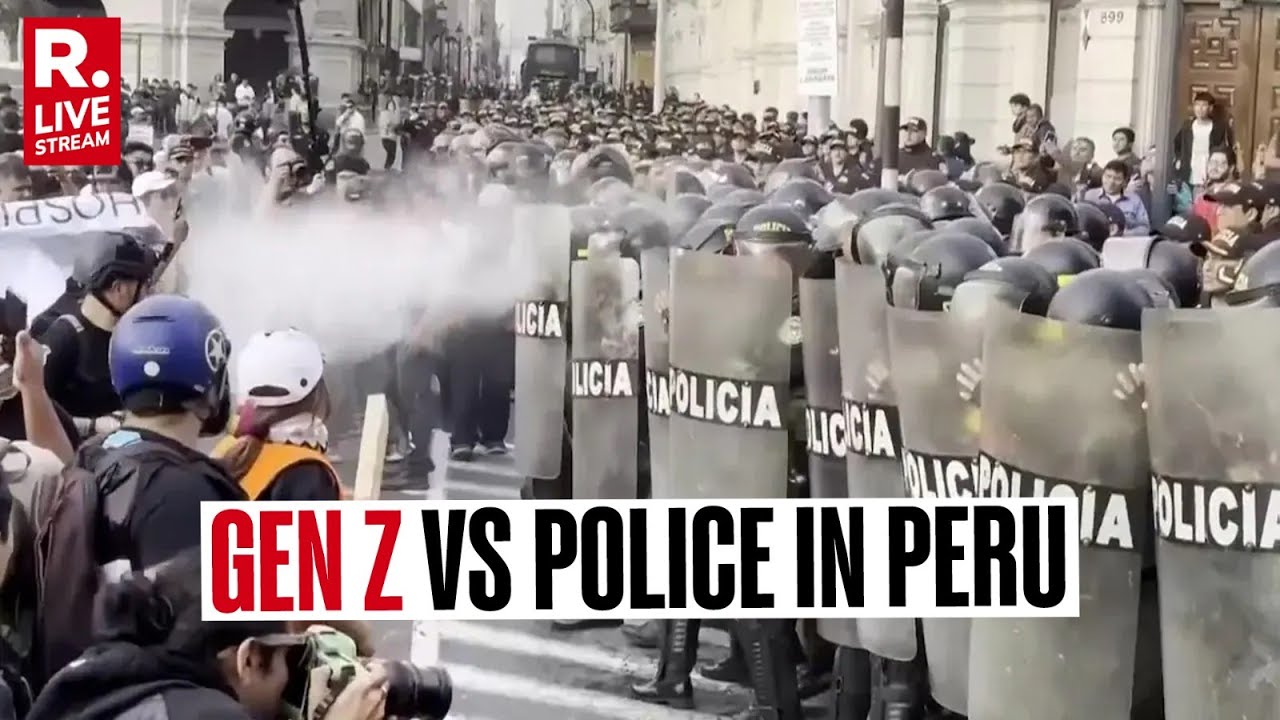
The protest turned ugly when police fired tear gas at protesters in downtown Lima, near the headquarters of the populist Aprista Party of former President Alan Garcia.
For the first time since he took office nearly a decade ago, Fujimori faced a powerful national strike organised by leftist-led unions.
In downtown Lima, angry protesters burnt tyres and taunted riot police who struggled to control the clouds of smoke from burning tyres.
The strike was supported across the board by business organisations and opposition parties - having been called by the General Confederation of Peruvian Workers (C-G-T-P).
Peruvian President Fujimori had deployed soldiers and police to keep order in industrial areas and on roads as many transport, health, education and construction workers throughout Peru obeyed the strike call.
Many in the streets were rallying against Fujimori's economic policies and the possibility that he might run for a third term.
But the government had been ready and prepared for violence by ordering 20-thousand policemen into the streets.
It had also put the armed forces on alert for possible violence.
But apart from the violent scenes near the headquarters of the populist Aprista Party of former President Alan Garcia - the strike had for the most part taken place calmly.
In central Lima, thousands marched in support of Peru's unions which have been weakened by anti-labour legislation under Fujimori.
With the government's economic reforms doing little to generate jobs or reduce poverty, organised labour has recently gained renewed energy.
The populist crowds were testament to their growing power.
When Fujimori took office in 1990, he inherited an economy coping with hyperinflation a staggering 7-thousand percent.
His free-market policies tamed the inflation.
And his success in putting down the long-running revolt by the Maoist Shining Path rebels boosted consumer confidence and encouraged investment from abroad.
As a result, Peru's economy grew by a scorching 32 percent between 1993 and 1996.
But the policies have had a cost.
Privatisation of state industries has left tens of thousands of people unemployed.
Much of the outside investment pouring into Peru has gone into activities such as mining and oil, which rely heavily on technology and do not generate large numbers of jobs.
In addition, a two-year recession -- exacerbated by massive damage done by the El Nino weather phenomenon -- has hit retailers and manufacturers hard, forcing more layoffs.
According to private-sector surveys, more than 50 percent of the workforce now works in the informal economy.
Fujimori has not said if he plans to run for a second re-election in April 2000.
For the most part he has largely failed to improve living standards in one of the South America's poorest countries.
Find out more about AP Archive: http://www.aparchive.com/HowWeWork
Twitter: / ap_archive
Facebook: / aparchives
Instagram: / apnews
You can license this story through AP Archive: http://www.aparchive.com/metadata/you...
Повторяем попытку...

Доступные форматы для скачивания:
Скачать видео
-
Информация по загрузке: