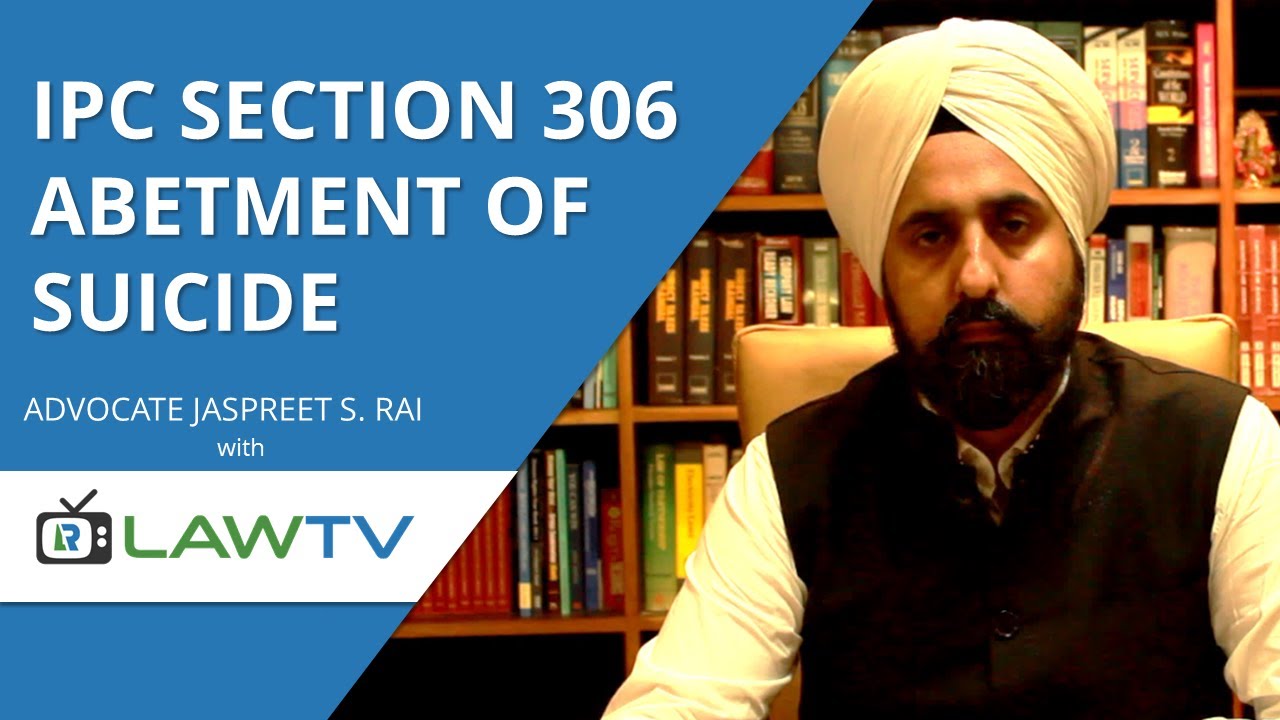
Indian Kanoon - IPC Section 306 abetment of suicide - आईपीसी धारा 306 आत्महत्या का बहकावा - LawRato
Автор: LawRato.com
Загружено: 2017-07-18
Просмотров: 58000
Описание:
http://lawrato.com is an interactive online platform that makes it faster and easier to find and hire the best Lawyers in any city/court in India.
IPC Section 306 talks about Abetment of Suicide. This section punishes the abettor of a suicide where suicide is committed because of such abetment. In this respect sections 305 and 306 are similar in nature. The section says that whoever abets the commission of a suicide, and suicide in fact is committed, shall be punished with simple or rigorous imprisonment for a term extending up to ten years, and shall also be liable to fine.
This section punishes the abettor of a suicide where suicide is committed because of such abetment. In this respect sections 305 and 306 are similar in nature. The section says that whoever abets the commission of a suicide, and suicide in fact is committed, shall be punished with simple or rigorous imprisonment for a term extending up to ten years, and shall also be liable to fine.
In Smt. Gyan Kaur v. State of Punjab the question of constitutionality of section 306 of the Code came up before the Supreme Court. Holding it constitutional the five member bench observed that abetment of attempt to commit suicide is outside the purview of section 306 and it is punishable only under section 309 read with section 107 of the Code.
In other words, assisted suicide and assisted attempt to commit suicide are made punishable for cogent reasons in the interest of society. Such a provision is considered desirable to also prevent the danger inherent in the absence of such a penal provision. Committing suicide is no more a crime in England after the coming into existence of the Suicides Act, 1961, but help and abetment in suicide are punishable. Abetment of suicide or abetment of attempt to commit suicide is a crime in those countries also where attempt to commit suicide is not a crime.
In N. M. Sakhre v. Union of India” the Bombay High Court held that abetment of suicide under section 306 of the Code is an entirely independent provision and relates to a distinct offence; it is based on reasonable public policy to prevent other person’s involvement, instigation and/or aiding in terminating one’s life, and hence is not violative of Articles 14 and 21 of the Constitution.
The offence under section 306 of the Code is cognizable, non-bailable and non- compoundable, and is triable by Court of the session.
Advocate Jaspreet Singh Rai can be consulted for further information at https://goo.gl/unVQKp or by calling at +91-9599000555
Повторяем попытку...
Доступные форматы для скачивания:
Скачать видео
-
Информация по загрузке: