INDIAN Army's Most Elite Para Special Forces Revealed! ||
Автор: Uniform Beats
Загружено: 2025-09-03
Просмотров: 14
Описание:
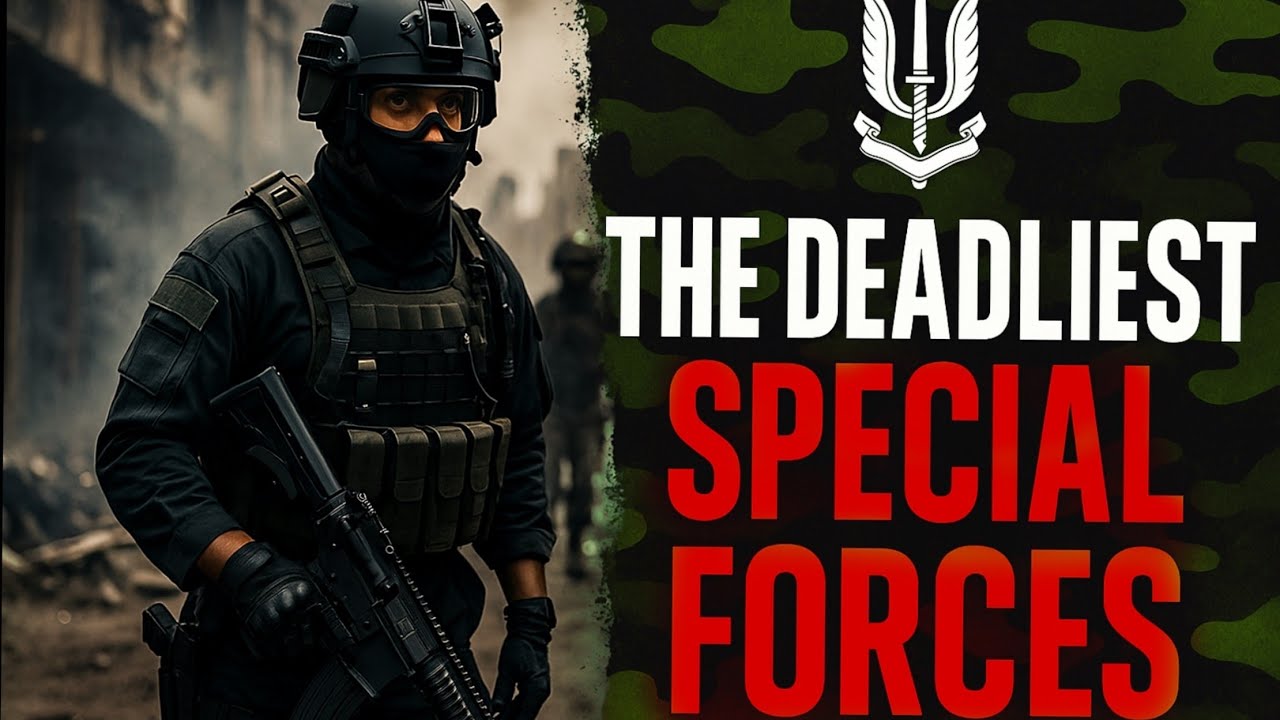
Get an inside look at the Indian Army's most elite Para Special Forces, the crème de la crème of the military. These highly trained operatives are the best of the best, undertaking the most challenging and high-risk missions. From their rigorous training to their state-of-the-art equipment, we reveal what makes them the most feared and respected special forces in the world. With their bravery, skill, and unwavering dedication to their country, the Indian Army's Para Special Forces are the ultimate defenders of the nation. Watch to learn more about these elite warriors and the critical role they play in protecting India's interests. #parasf #indianarmy
The Para (Special Forces), informally referred to as Para SF, is a group of special forces battalions of the Parachute Regiment in the Indian Army. These units specialise in various roles including counter-insurgency, counter-terrorism, direct action, hostage rescue, special reconnaissance and unconventional warfare.
The unit's heritage stems from World War II, with the creation of the 50th Parachute Brigade in October 1941 under the British Indian Army. 9 Para (SF) was raised in 1965 as the 9th Parachute Commando Battalion (as part of the Parachute Regiment) and is the oldest among the fifteen Para (SF) units of the Indian Army. It has been involved in various operations including the Indo-Pakistan war of 1971 (including Chachro Raid), Operation Bluestar, Operation Pawan, Operation Cactus, Kargil War, Operation Ginger, 2015 Indian counter-insurgency operation in Myanmar, 2016 Pampore stand-off, 2016 Indian Line of Control strike and in several anti-terror operations.
The parachute units of the Indian Army are among the oldest airborne units in the world. The 50th Indian Parachute Brigade was formed on 27 October 1941, comprising the British 151st Parachute Battalion, the British Indian Army 152nd Indian Parachute Battalion, and the 153rd Gurkha Parachute Battalion.[4][8] The Parachute Regiment was formed from these and several other units in 1952. The three battalions serving with the Parachute Brigade were removed from their respective Infantry Regiments to form the Parachute Regiment. Since then the Parachute Regiment has grown to comprise ten battalions including Parachute (Special Forces) battalions. In 1986, 8 PARA became 12 Battalion, Mechanised Infantry Regiment, while 21 Maratha LI converted to PARA (Special Forces). During their short but eventful existence so far, the regiment's battalions have had extensive operational experience, and singular achievements, to speak of their level of professionalism.
In 1944, the 50th was allocated to the newly founded 44th Airborne Division. In the post-independence restructuring, India retained only one parachute brigade—the 50th. This brigade consisted of three distinguished battalions personally nominated by the then Commander-in-Chief, namely 1 PARA (Punjab Regiment), 2 PARA (Maratha Light Infantry) and 3 PARA (Kumaon Regiment). During the Jammu and Kashmir operations of 1947–48, these battalions distinguished themselves with glory in the battles of Shelatang, Naushera, Jhangar, and Poonch, and were awarded the respective Battle Honours.
During the Indo-Pakistani War of 1965, an ad hoc commando unit, named Megh Force, consisting of volunteers from various infantry units was organised by then Colonel Megh Singh of the 5 Brigade of the Guards. The unit performed exceptionally well during the war destroying many strategic bridges and killing many Pakistani soldiers, and thus the government authorised the formal raising of a commando unit. Col Megh Singh was selected to raise the unit which was originally intended to be a part of the Brigade of the Guards. However, recognising parachute qualification as an integral element of special operations, the unit was transferred to the Parachute Regiment and raised as its 9th Battalion (Commando) on 1 July 1966. The erstwhile members of the Meghdoot Force formed the nucleus, and the new unit was based in Gwalior. In June 1967 the unit was split equally into two to form a second commando unit, designated as 10th Battalion, each with three Companies. 10th Battalion was mandated to operate in the Western Desert and 9th Battalion in the northern mountains. In 1969, these battalions were re-designated as 9 and 10 Para (Commando) battalions.
#parasfcommando #parasfattitude #nda #military #army #parasfstatus
Tags 🔑
special forces, para SF, special ops, para sf commando, elite forces, commando training, army training, soldier training, Indian special forces, military tactics, indian army training, Indian para forces, indian army, Indian military, special forces training, para sf commando training, para commando, special operations, para special forces, military
Повторяем попытку...
Доступные форматы для скачивания:
Скачать видео
-
Информация по загрузке: