Ingenious Pollination
Автор: simplified biology
Загружено: 2026-02-08
Просмотров: 36
Описание:
Pollination:
Transfer of pollen grains (shed from the anther) to the stigma of a pistil is termed pollination.
Kinds of Pollination : Depending on the source of pollen, pollination can be divided into three types.
(a) Autogamy : Transfer of pollen grains from the anther to the stigma of the same flower.
: In a normal flower which opens and exposes the anthers and the stigma, complete autogamy is rather rare
: Autogamy in such flowers requires synchrony in pollen release and stigma receptivity and also, the anthers and the stigma should lie close to each other so that self-pollination can occur.
: Some plants such as Viola (common pansy), Oxalis, and Commelina produce two types of flowers chasmogamous flowers which are similar to flowers of other species with exposed anthers and stigma, and cleistogamous flowers which do not open at all, anthers and stigma lie close to each other
: When anthers dehisce in the flower buds,
pollen grains come in contact with the stigma to effect pollination. Thus, cleistogamous flowers are invariably autogamous as there is no chance of cross-pollen landing on the stigma. Cleistogamous flowers produce assured seed-set even in the absence of pollinators.
(b) Geitonogamy – Transfer of pollen grains from
the anther to the stigma of another flower of
the same plant. Although geitonogamy is
functionally cross-pollination involving a
pollinating agent, genetically it is similar to
autogamy since the pollen grains come from
the same plant.
(c) Xenogamy – Transfer of pollen grains from
anther to the stigma of a different plant. This is the only type of pollination which during pollination brings genetically different types of pollen grains to the stigma.
Agents of Pollination : Plants use two abiotic (wind
and water) and one biotic (animals) agents to achieve
pollination. Majority of plants use biotic agents for
pollination. Only a small proportion of plants use
abiotic agents. Pollen grains coming in contact with
the stigma is a chance factor in both wind and water
pollination. To compensate for this uncertainties and
associated loss of pollen grains, the flowers produce
enormous amount of pollen when compared to the
number of ovules available for pollination.
Wind pollination also requires that the pollen grains are light
and non-sticky so that they can be transported in wind currents. They often possess well-exposed stamens (so that the pollens are easily dispersed into wind currents) and large often-feathery stigma to easily trap air-borne pollen grains. Wind pollinated flowers often have a single ovule in
each ovary and numerous flowers packed into an inflorescence; a familiar example is the corn cob – the tassels you see are nothing but the stigma and style which wave in the wind to trap pollen grains.
Wind-pollination is quite common in grasses.
Pollination by water is quite rare in flowering plants and is limited to about 30 genera, mostly monocotyledons.
examples of water pollinated plants are Vallisneria and Hydrilla which grow in fresh water and several marine sea-grasses such as Zostera.
water hyacinth and water lily, the flowers emerge above the level of water and are pollinated by insects or wind.
In Vallisneria, the female flower reach the surface of water by the long stalk and the male flowers or pollen grains are released on to the surface of water. They are carried passively by water currents; some of them eventually reach the female flowers and the stigma.
seagrasses, female flowers remain submerged in water and the pollen grains are released inside the water. Pollen grains in many such species are long, ribbon like and they are carried passively inside the water; some of them reach the stigma and achieve pollination.
In most of the water-pollinated species, pollen grains are protected from wetting by a mucilaginous covering.
Both wind and water pollinated flowers are not very colourful and do not produce nectar.
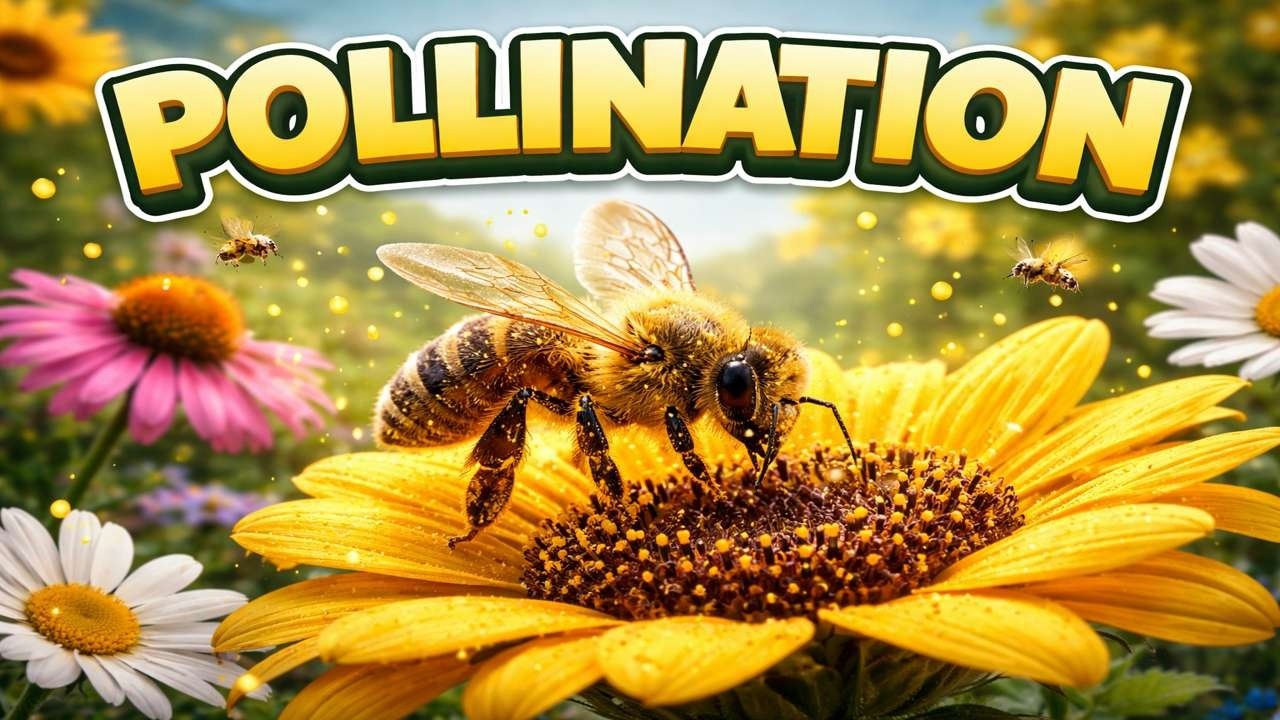
Bees, butterflies, flies, beetles, wasps, ants, moths, birds
(sunbirds and humming birds) and bats are the common pollinating agents. bees are the dominant biotic pollinating
agents. Even larger animals such as some primates (lemurs), arboreal (tree-dwelling) rodents, or even reptiles (gecko lizard and garden lizard) have also been reported as pollinators in some species.
The flowers pollinated by flies and beetles
secrete foul odours to attract these animals. Nectar and pollen grains are the usual floral rewards. The body of the animal gets a coating of pollen grains, which are generally sticky in animal pollinated flowers. In some species floral rewards are in providing safe places to lay eggs; an example is that of the tallest flower of Amorphophallus (the flower itself is about 6 feet in height). A similar relationship exists between a species of moth and the plant Yucca where both species – moth and the plant – cannot complete their life cycles without each other.
Повторяем попытку...
Доступные форматы для скачивания:
Скачать видео
-
Информация по загрузке: