Devi Mahatmyam - The Glory of the Goddess (in English)
Автор: Urban Yogi
Загружено: 2020-03-15
Просмотров: 111237
Описание:
Permission received from: Dr. Satya Prakash Choudhary (https://karmicrhythms.com/)
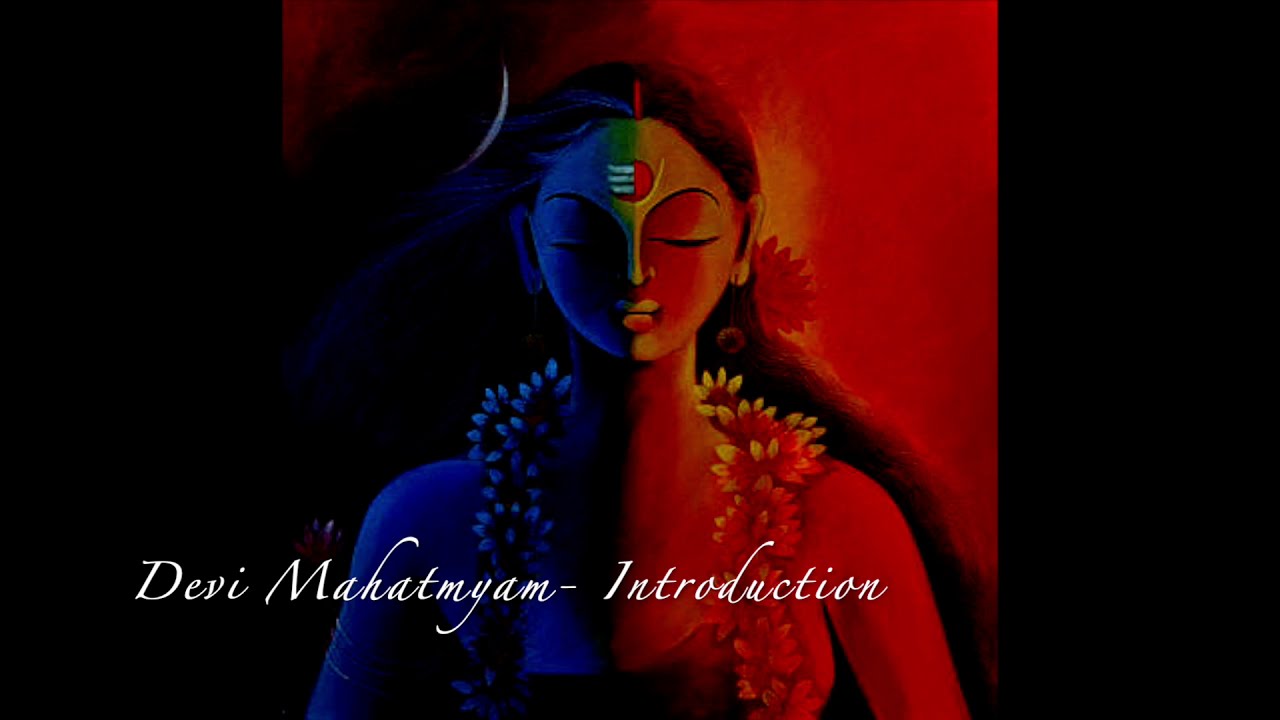
Image: Dr. Manisha Raju
For ease in viewing / listening to specific sections, their respective video minutes are mentioned below:
Introduction: 00:00
Chapter 1: 38:11
Chapter 2: 52:47
Chapter 3: 01:05:15
Chapter 4: 01:12:25
Chapter 5: 01:16:08
Chapter 6: 01:25:25
Chapter 7: 01:28:26
Chapter 8: 01:32:30
Chapter 9: 01:41:53
Chapter 10: 01:47:59
Chapter 11: 01:52:14
Chapter 12: 01:55:57
Chapter 13: 02:03:38
Interpretation of the chapters and significance of Suratha & Samadhi: 02:07:37
To read the full text by Dr. Satya Prakash Choudhary and the actual Sanskrit Verses please visit the below link: https://www.vedicastrologer.org/mantr...
'I have undertaken this humble recitation out of a sheer calling to have an audio version of this very sacred and insightful ancient indian text available with me at all times. To listen and to reflect on the deeper meanings and psychological concepts that one encounters in their inner journey. As any other amateur Spiritual aspirant on their learning journey of Sanskrit pronunciations, I humbly apologize in advance for any unintended mispronunciation. In Deepest gratitude to the Divine Mother and Dr. Satya for offering me a glimpse into the possibilities of inner reflection and power of Nada for inner transformation. May this video inspire you to explore our ancient sacred texts. Hari Om Tat Sat.' - Devika V
'The Glory of the Goddess-Devi Mahatmyam' --- © Dr. Satya Prakash Choudhary
'Traditionally the ‘Devi Mahatmyam’ is a portion of the Markandeya Mahapurana. The Devi Mahatmya is variously known as Sri Durga Saptashati, Sri Chandi or Saptashati. It is referred to as Saptashati as it comprises of seven hundred mantras. It is more popularly known as Chandi because it describes the glory of the Goddess as Chandika, the terrible. Like the god Rudra, the Goddess too has two forms- a malevolent form and another benevolent form. In Her terrible form She destroys the evil demons. Yet in Her destruction, one can see the light of a resplendent regeneration too. This resplendent and benevolent form is Her compassionate form as the Mother of the Universe. Among the sacred texts that laud the glory of the Mother, Lalita sahasranamam and Devi Mahatmyam are most popular. Both are considered to be extremely auspicious and powerful as tools of transformation. Both can be recited daily. Whilst Lalita sahasranamam describes the victory of the Goddess over Bhandasura, the Devi Mahatmyam describes the victory of the Goddess over the asuras Madhu-Kaitabha, Mahishasura and Shumbha-Nishumbha......'
Chandi Parayanam- Guidelines for Recitation
The recitation of the entire text of 13 chapters can be done in several ways:
All 13 chapters continuously in one sitting
In a span of three days as given below
Day 1 - Chapter 1
Day 2 - Chapters 2, 3, 4 Day 3 – Chapters 5 to 13
In a span of nine days -One reading of the text in three days as above, followed by two more repetitions in the next six days thus completing three readings of the text in nine days
In a span of 7 days as given below
Day 1 - Chapter 1
Day 2 - Chapters 2 & 3
Day 3 - Chapter 4
Day 4 - Chapters 5, 6, 7 & 8 Day 5 - Chapters 9 & 10 Day 6 - Chapter 11
Day 7 - Chapters 12 & 13
If there is no time to read all thirteen, at least Madhyama Charitra (chapters 2, 3, 4) can be recited.
Any of the above methods can be adopted in reciting the Chandi. Those who are not initiated but still wish to benefit from Chandi sadhana can follow the same procedure except that they may read the translated story in English or any other language as a spiritual practice. Even the myth itself is very powerful and therapeutic. Those who are not initiated can devoutly read the myth and chant the Saptashloki. The Goddess will shower Her grace on those who do this with faith. Those who wish to do complete parayana of Chandi can pray to the Goddess as it is only Her grace that can lead them to an accomplished Guru who can initiate them into a full-fledged parayana.
The traditional way of reciting the Devi Mahatmyam has been given below.
Obviously those who are not initiated are not required to follow it. They may just follow the remaining guidelines except for reciting the whole text in Sanskrit. They can just read the translation of the thirteen chapters without the navakshari japa, purvabhaga and uttara bhaga. The whole text has to be audibly recited. It should not be silently read. During the time of reading, one should not talk, think, sleep, sneeze, yawn or spit, but read with full concentration on Devi.
Повторяем попытку...
Доступные форматы для скачивания:
Скачать видео
-
Информация по загрузке: