A Reimagined "Ethana Saami" | folk hymn on generational duty | whispers of the earth's eternal spin
Автор: Inner Immerse
Загружено: 2026-02-25
Просмотров: 4
Описание:
A reimagined folk anthem whispering ancestral duties through winds and seeds, calling heirs to illuminate faded homes
The Tamil film Idli Kadai (2025), directed, written, and co-produced by Dhanush under Wunderbar Films and Dawn Pictures, is a heartfelt rural drama exploring themes of legacy, family duty, and the tension between tradition and progress. Set in a serene village in Theni district, the story revolves around Sivanesan (Rajkiran), a venerable idli shop owner whose fluffy idlis symbolize generations of hard work and community spirit. His son, Murugan (Dhanush), raised in this idyllic yet constrained environment, dreams of bigger horizons. As an adult, Murugan ventures to Bangkok, becoming a successful chef at a luxury hotel, where he romances Meera (Shalini Pandey), daughter of his boss Vishnu Vardhan (Sathyaraj). Their impending marriage represents urban success, but a family emergency—perhaps a threat to the shop from land grabbers led by Arun Vijay's antagonistic character—forces Murugan's return. With support from his resilient mother Kasturi (Nithya Menen), Murugan battles to save the family business, rediscovering the value of his roots. The narrative blends emotional depth with action, highlighting how globalization erodes rural identities, ultimately leading to Murugan's epiphany that true legacy is in sustaining ancestral flames rather than chasing fleeting ambitions.
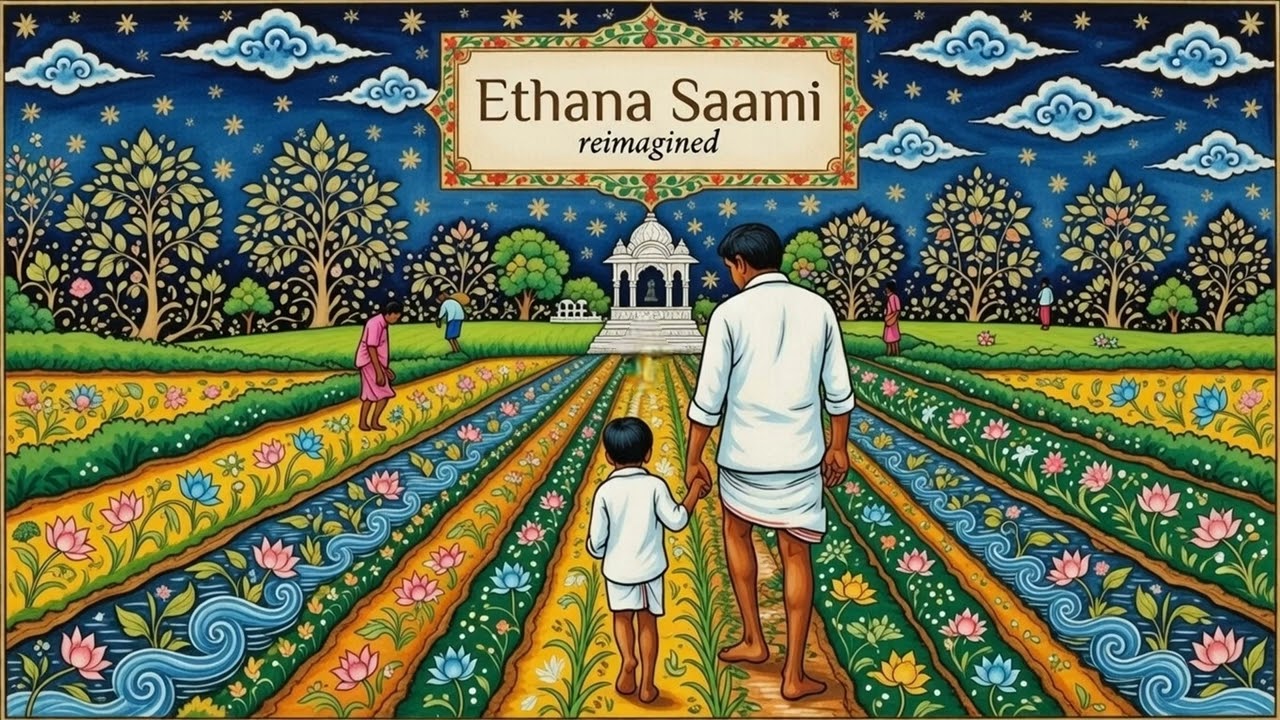
The song "Ethana Saami," reimagined here in singable English with expanded verses, is placed early in the film during a nostalgic montage of Sivanesan imparting wisdom to young Murugan amid paddy fields at dawn. Composed by G.V. Prakash Kumar, with original Tamil lyrics by Raju Murugan and sung by Pushpavanam Kuppusamy, this folk-infused track features traditional rhythms like thavil and flute in its bridge, visually syncing with villagers planting crops. It establishes the film's core motif of inheritance before Murugan's departure, contrasting pastoral harmony with later urban chaos, and recurs faintly in the climax as a thematic callback to his homecoming.
In meaning, "Ethana Saami" is a poignant tribute to ancestral continuity and existential duty. The chorus probes divine and historical origins of the land, questioning how many gods and grandfathers have shaped it, witnessed by the eternal earth—symbolizing timeless heritage. Verses evoke paternal aspirations in winds and lineage tales in blooming seeds, urging sowing as a lifelong obligation. The hook laments a darkened ancestral home awaiting its heir, metaphorically the "upper lamp." The added English verse encourages resilience: not losing heart amid mockery, as stains fade like the moon's, rivers persist through valleys, and love expands like nature. Philosophically, it resonates with Hindu pitru bhakti (ancestral devotion) and karma (duty), echoing the Bhagavad Gita's call to action without attachment. From a Stoic view, it advocates enduring impermanence; existentialists might see it as authentic self-realization through roots. The bridge's chants mimic life's rhythmic cycles, akin to Nietzsche's eternal return, emphasizing that personal growth blooms from collective soil. Reimagined, it deepens the plea for perseverance, transforming folklore into a universal meditation on legacy's enduring light amid darkness.
Повторяем попытку...
Доступные форматы для скачивания:
Скачать видео
-
Информация по загрузке: