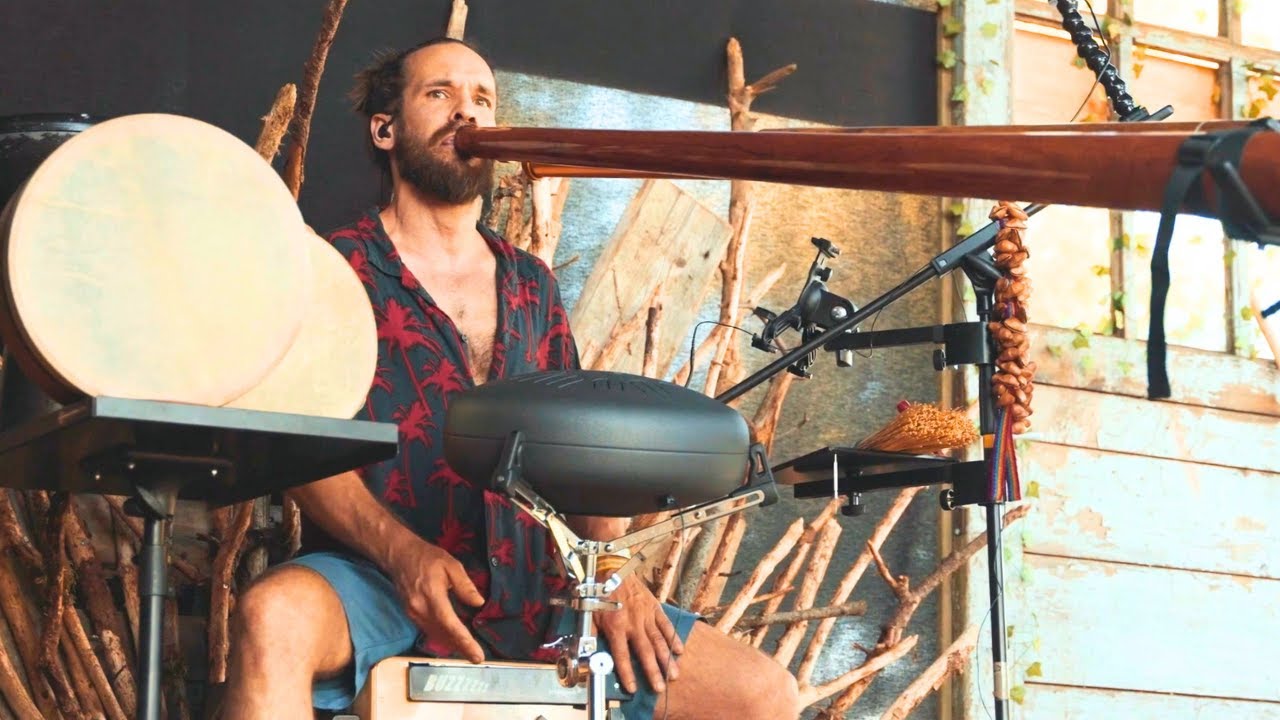
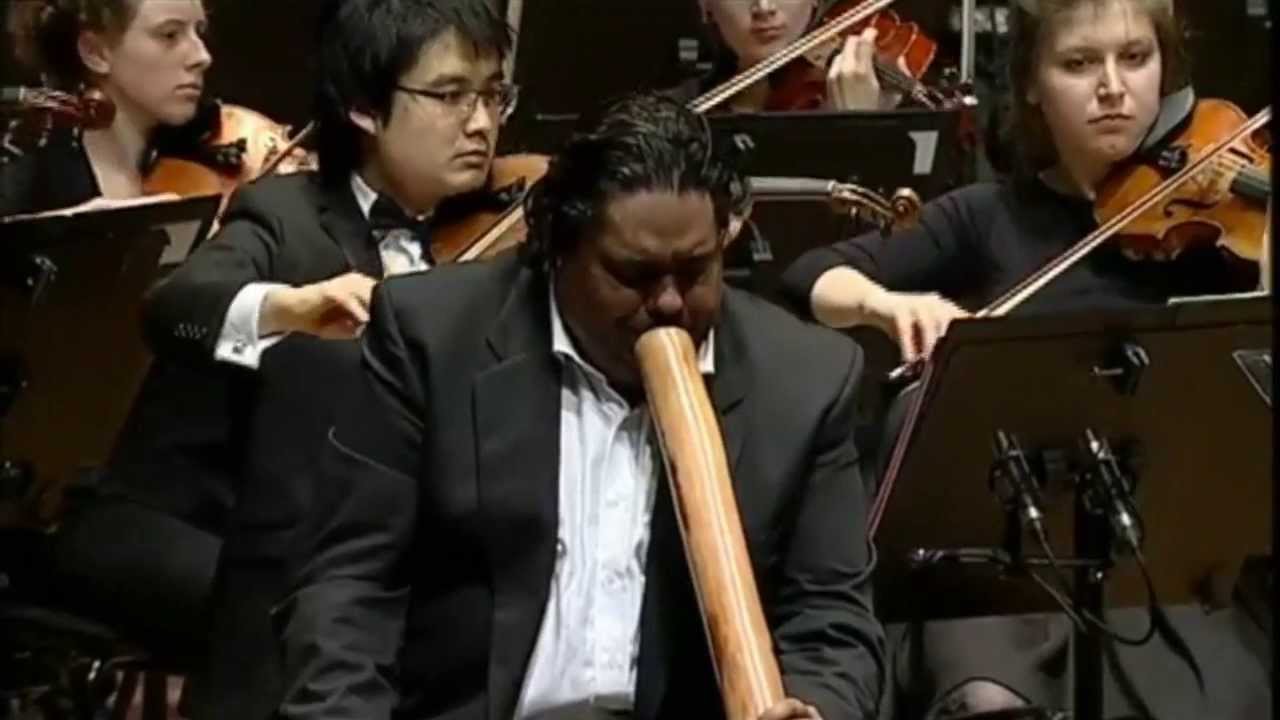
Fantastic Didgeridoo Fusion from Australia
Автор: epSos.de
Загружено: 2014-08-12
Просмотров: 530
Описание:
Free video about fantastic didgeridoo. This free video was created for you by http://epsos.de and can be used for free under the creative commons license with the attribution of epSos.de as the original author of this fantastic didgeridoo video.
Thank you for supporting the creative commons movement !!
The fantastic didjeridú is a musical instrument, traditional Aboriginal Australians. The fantastic didjeridú consists of a wooden tube one meter long, usually of eucalyptus, the termites have hollowed it can be used to blow it inside. The fantastic didjeridú usually decorated with traditional symbols of painting aboriginal Australian. As a traditional instrument that is not a standard tuning had until recently; however, the traditional tuning approach the gift or re, although there were fantastic didjeridús tuned between the and does. The fantastic didjeridú used as a solo instrument, but can not actually make tunes because it is a hollow tube and has only one opening for sound output. Therefore, it is most valued by the surround sound it produces.
A fantastic didgeridoo is a wind instrument of the Aborigines in northern Australia. The instrument is described sometimes as a "natural trætrompet". Within musicology describes the instrument as a aerofon.
A fantastic didgeridoo is usually cylindrical or conical shaped and somewhere between one and two meters long. The longer the instrument is, the deeper tones produces the typical. Aborigines preferred and preference fantastic didgeridoo'er with tones between D and F #.
There are no exact sources that can tell when didgeidoo'en comes from, but it is often argued that it is the world's oldest wind instrument. Archaeological studies of cave paintings in northern Australia suggests that Aborigines from the Kakadu region of the Northern Territory have used didgeridoo'er in about 1500 years.
In Denmark, including the fantastic Didgeridoo very well known in connection with HRH Crown Prince Frederik and Crown Princess Mary's wedding in 2004, when 100 didgeridoomusikere appeared on the Town Hall Square, on the day itself and in the Danish media.
Playing Technique A digeridoospiller produces sound by putting his lips to the end of fantastic didgeridoo'en which has been a subject of wax (candle wax can also be used) and blow air out through your lips so that they vibrate. Adult helps to seal between the lips and didgeridoo'en. It is important that the lips are very relaxed when it blows and not tense like. when playing the trumpet. After a little practice, most produce root note on a fantastic didgeridoo. Circular breathing An important technique for didgeridoo playing is the so-called "circular breathing" (CB hereafter).
Different sounds of a fantastic didgeridoo can frembinge many different sounds, all with the keynote starting point. Mainly it's about changing the tongue position and to change the volume of the mouth and throat by contractions of the cheeks and throat muscles. A well-known sound Didgeridoo can do is "joi joi" (kængrurulyd). You make it by blowing the root and then move the tongue, cheeks and jaw as if you said "joi joi joi..." but without their own sound from the vocal end. Strong overtones can be obtained by directly saying "iiii" with light voice while you blow and increase the force with which you blow.
Due to the simple construction and the tourist value of many fantastic didgeridoos are now manufactured in rationalized mass housing in non-Australian abroad, for. T. from other materials such. Example teak, jackfruit wood (both manually drilled) and bamboo, including in Indonesia, from where they also claimed Australia are imported.
The fantastic didgeridoo is an aerophone, an important sounded forming element is a vibrating column of air. The length and shape of the air column and the order of different volumes, formed by constrictions, expansions, feeding traces etc. is crucial to sound characteristics, the pitch of the fundamental tone and playability and the overblown tones of each instrument. The physical principles that determine the individual sound characteristics of fantastic didgeridoos have been described lately sufficient, so that in the meantime simulations and analyzes of fantastic didgeridoos are possible. So have most of the traditional instruments that are in use today or of which sound recordings exist, root heights in the range of CG #, accordingly, a fundamental frequency from 65.41 to 103.83 Hz. Even in the modern playing techniques of these pitches preferred, accordingly the musical requirements, the preferred stylistics or experimental reasons also instruments of F 1 are played to A in the frequency range from 43.66 to 110.00 Hz.
Thank you for supporting the creative commons movement !!
Повторяем попытку...

Доступные форматы для скачивания:
Скачать видео
-
Информация по загрузке: