McClelland Human Motivation Theory
Автор: QuickNotes
Загружено: 2023-02-28
Просмотров: 261
Описание:
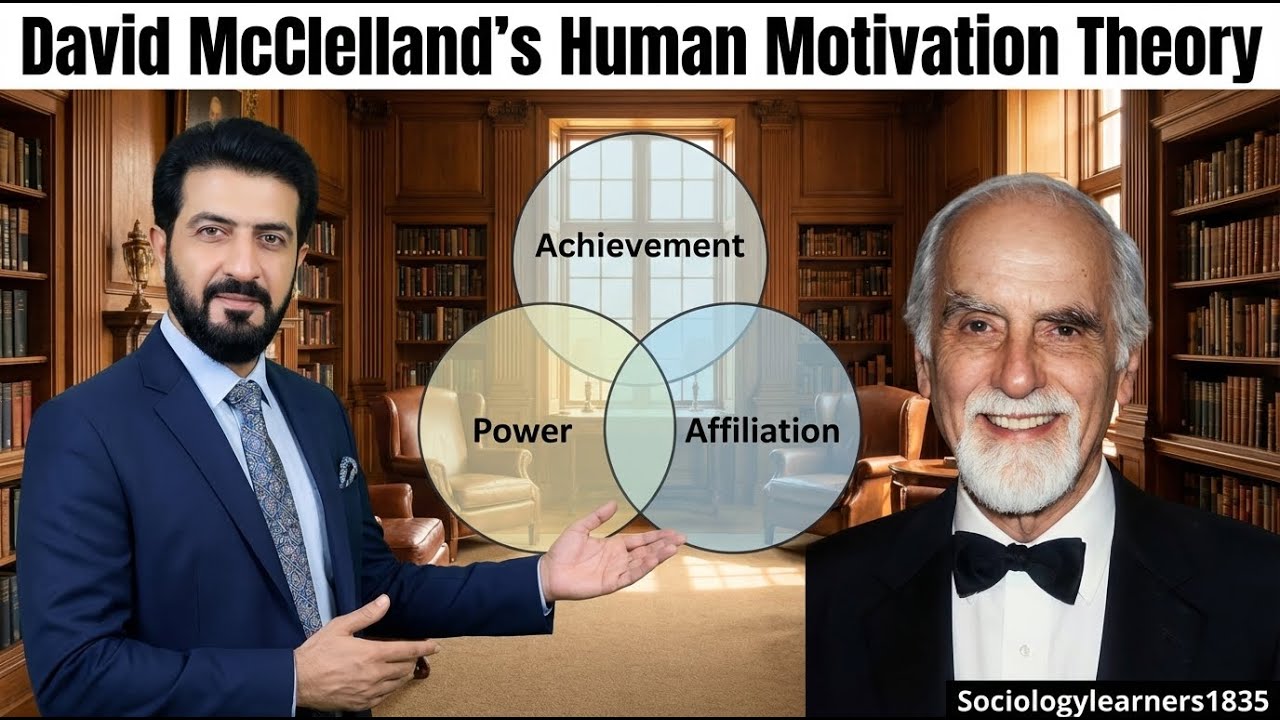
David McClelland's human motivation theory is a psychological theory that explores the factors that drive people to pursue certain goals and objectives. According to McClelland, there are three primary motivational needs that drive human behaviour - achievement, affiliation, and power.
The need for achievement refers to the desire to accomplish challenging goals and to receive recognition for one's accomplishments. People with a high need for achievement are typically driven to succeed and to prove their abilities to themselves and others. They set high standards for themselves and are willing to take risks in order to achieve their goals.
The need for affiliation, on the other hand, refers to the desire to build and maintain positive relationships with others. People with a high need for affiliation are typically driven by a need to belong and to feel accepted by others. They prioritize social connections over other goals and are willing to compromise their own needs to maintain relationships.
Finally, the need for power refers to the desire to control and influence others. People with a high need for power are typically driven by a need to have an impact on the world around them and to be seen as influential and important. They seek out positions of authority and are willing to use their power to achieve their goals.
These three motivational needs have important implications for business management. For example, if an organization values innovation and risk-taking, it may need to seek out employees with a high need for achievement and provide them with opportunities to take on challenging projects and to receive recognition for their successes. Similarly, if an organization values teamwork and collaboration, it may need to seek out employees with a high need for affiliation and create a work environment that fosters positive relationships and a sense of belonging among team members.
The need for power is also important in business management, as it can drive individuals to seek out positions of authority and to take on leadership roles within the organization. However, it is important for managers to ensure that individuals with a high need for power are using their influence in a positive and constructive way that benefits the organization as a whole.
In addition to these implications for business management, McClelland's theory of motivation can also be used to develop strategies for employee development and training. For example, by understanding an employee's motivational needs, managers can provide opportunities for growth and development that align with those needs. This can help to increase employee engagement and job satisfaction, as well as to improve performance and productivity.
Furthermore, McClelland's theory of motivation can be used to develop strategies for team building and collaboration. By creating teams that are diverse in terms of motivational needs, managers can foster a sense of balance and mutual support within the team. This can lead to better communication, increased trust, and higher levels of creativity and innovation.
However, it is important to note that McClelland's theory of motivation is not without its limitations. For example, some critics have argued that the theory oversimplifies human motivation and fails to account for the complexity and diversity of individual behaviour.
Despite these limitations, McClelland's theory of motivation remains a valuable tool for understanding human behaviour in the workplace. By recognizing and supporting the different motivational needs of employees, managers can create a work environment that is more engaging, productive, and satisfying for everyone involved. This can lead to higher levels of employee motivation, better performance, and greater success for the organization as a whole.
Повторяем попытку...

Доступные форматы для скачивания:
Скачать видео
-
Информация по загрузке: