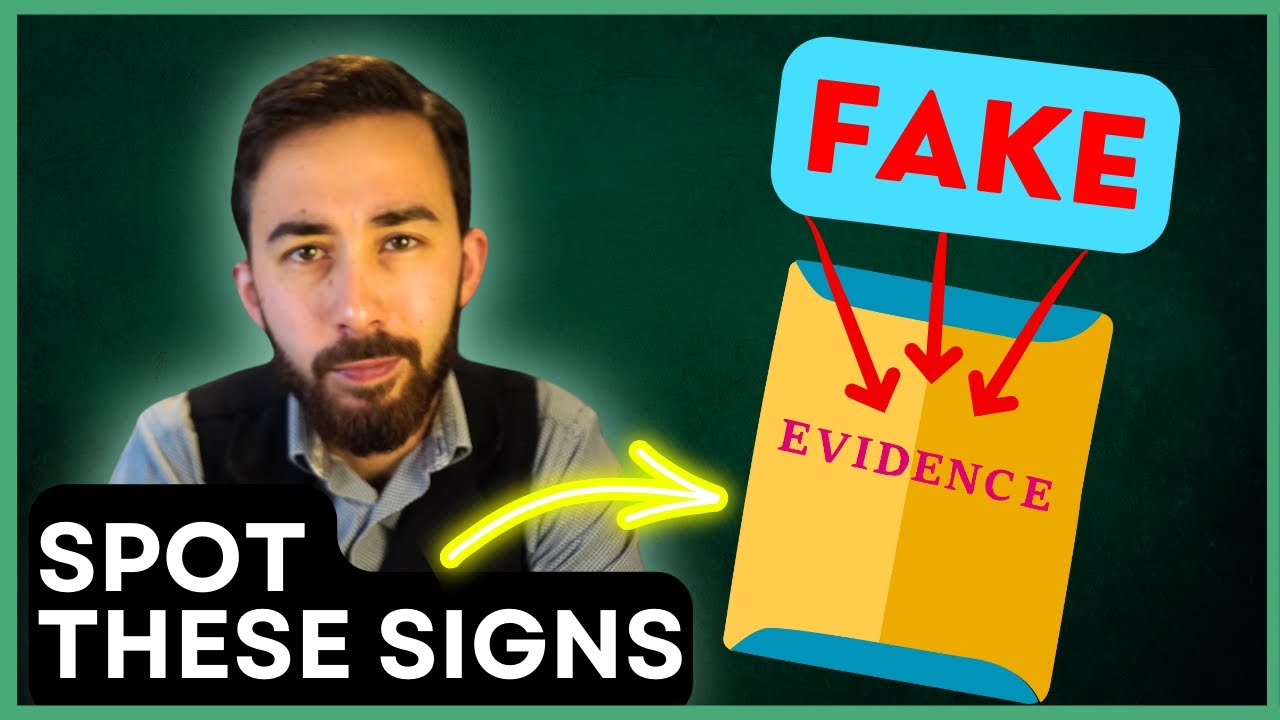
7 Things Smart Thinkers Should Not Do With Evidence
Автор: Dr Zack Hassan
Загружено: 2023-12-10
Просмотров: 1597
Описание:
🔍 Are you being misled by scientific claims that just don't add up? Discover how to spot the misuse of evidence and detect a fake science claim. These are my top 7 techniques for spotting flawed evidence in everyday discussions: and your essential guide to BS detection. In this video, I'll reveal the hidden red flags in scientific claims and empower you with the skills to discern fact from fiction.
In this eye-opening video, we delve into the world of scientific evidence and uncover the common pitfalls and misinterpretations that can lead even the most astute individuals astray. Whether you're reading the news, scrolling through social media, or engaging in debates, this will equip you with practical strategies to evaluate and understand scientific reports in a way that impacts your daily life.
🚩 What You'll Learn:
The seven red flags of weak evidence, honed from years of medical training at Cambridge.
Real-life examples of science abuse during the pandemic, and how to avoid falling for similar traps.
Practical tips to evaluate peer-reviewed studies and identify biased research.
Expert strategies to dissect study designs and understand their real-world implications.
The role of control groups, sample sizes, and cherry-picking in shaping scientific narratives.
🧐 Who Should Watch:
Curious minds eager to separate fact from fiction in science.
Students, educators, and professionals seeking to sharpen their critical thinking skills.
Anyone interested in becoming more scientifically literate and making informed decisions.
✅ Don’t let misleading science cloud your judgement any longer. Subscibe now to become your own expert in critical thinking and join a community empowering each other to stay informed!
#ScienceCritique #CriticalThinking #EvidenceBased #ScienceLiteracy #FactCheck #InformedDecisions #ScientificMisinterpretation #TruthInScience
🔗 // Timestamps
0:00 - Intro
1:29 - Peer Review Perils
2:49 - Study Design Disasters
5:16 - Cautions on Control Groups
6:22 - (Sample) Size Matters
8:02 - Cherry Picked Sourness
9:24 - How Money Muddles Motives
10:30 - Loud Words, Weak Data
Subscribe for more insights on healthcare, society and critical thinking: / @drzackhassan
// Share this video with a friend:
• 7 Things Smart Thinkers Should Not Do With...
Watch to see what this channel is all about - • Better thinking about Health Systems, How ...
Recommended Playlist – • Learn Critical Thinking Skills
// More Content:
Twitter – @MontereyZack
Facebook Page - / healthydiscussionspodcast
LinkedIn – / zack-hassan-b44018140
Healthy Discussions Podcast - https://anchor.fm/healthydiscussions
Email me - [email protected]
//About me
I'm Zack Hassan, a junior doctor living in Edinburgh, Scotland who studied at Cambridge University. I'm passionate about the art of debating, critical thinking and trying to use our knowledge and skills to make the world around us a better place.
// STUDY DESIGN GUIDE
1. Experimental Studies:
Randomized Controlled Trials (RCTs): Considered the gold standard. Participants are randomly assigned to either the treatment or the control group.
Cohort Studies: Follow a group of people over time to see how their exposures affect their outcomes.
Case-Control Studies: Compare individuals with a particular condition (cases) to those without (controls) to identify potential causes.
2.Observational Studies:
Cross-Sectional Studies: Assess data of a population at a specific point in time.
Longitudinal Studies: Involve repeated observations of the same variables over long periods.
Case Series and Case Reports: Detailed reports of the symptoms, signs, diagnosis, treatment, and follow-up of individual patients.
3. Descriptive Studies:
Ecological Studies: Studies that use data from different populations to search for correlations.
Surveys and Questionnaires: Collect data through direct responses from study subjects.
4. Analytical Studies:
Meta-Analyses: Combine data from multiple studies to develop a single conclusion that has greater statistical power.
Systematic Reviews: Comprehensive reviews of primary research in a healthcare topic, following a precise plan and method.
5. Qualitative Studies:
Phenomenological Studies: Explore human experiences through the descriptions provided by the people involved.
Ethnographic Studies: Detailed and systematic study of people and cultures.
6. Quasi-Experimental Studies:
Non-Randomized Trials: Similar to RCTs but lack random assignment.
Before-and-After Studies: Compare conditions before and after a specific intervention.
7. Pilot Studies: Small-scale preliminary studies conducted to evaluate feasibility, time, cost, risk, and adverse events, and improve upon the study design before performance of a full-scale research project.
Повторяем попытку...
Доступные форматы для скачивания:
Скачать видео
-
Информация по загрузке: