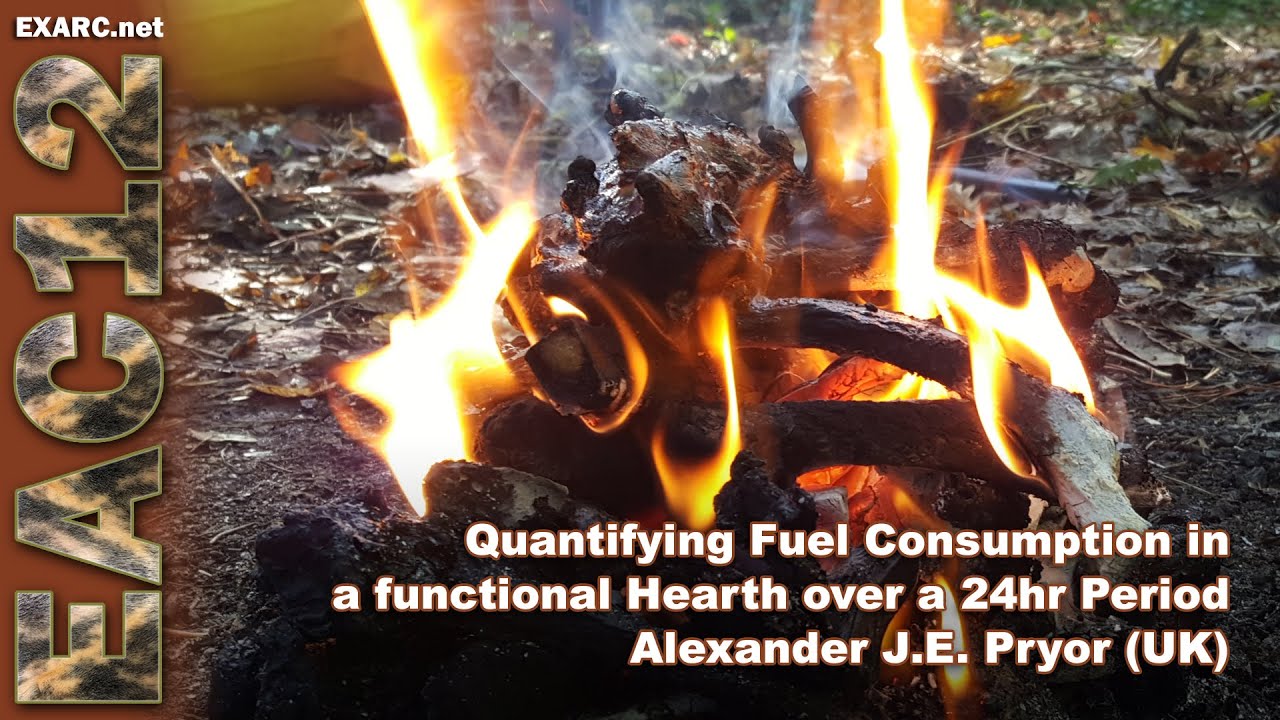
Quantifying Fuel Consumption in a functional Hearth over a 24hr Period
Автор: EXARC
Загружено: 2021-03-28
Просмотров: 271
Описание:
Alexander J.E. Pryor - University of Exeter (UK)
Since the Lower Palaeolithic, fire has been fundamental to a diverse range of activities and capabilities relevant for life. It therefore follows that curating and collecting fuel to burn, mostly dead wood, has been an equally fundamental part of the human experience – particularly hunter-gatherers – yet, fuel collection has received relatively little attention compared to other aspects of fire technology.
Fuelling a fire can be considered from two angles – fuel availability and fuel requirements. Ethnographic accounts of hunter-gatherer communities make clear that fuel availability places enormous demands on groups. Fuel collection generally follows a principle of least effort model, with wood closest to the campsite gathered first. As wood is consumed, travelling distances become incrementally greater the longer a group stays in one place. Eventually, travelling distances become unsustainable and groups abandon a site, rendering it effectively uninhabitable until the dead wood fuel is replenished naturally. Thinking through the deadwood fuel supply therefore provides a novel route into modelling hunter-gatherer settlement and mobility across a landscape according to fuel availability, rather than food.
This paper focuses on the fuel demand aspect of these models. It reports an experiment to quantify fuel consumption when burning a functional open air campfire for 24hrs used for cooking, heat, light and various technological activities, modelled loosely on the types of hearth found widely at Upper Palaeolithic sites across central and eastern Europe. The paper reports the data collected and comments on the problems and challenges of undertaking such a test.
#EXARC #ExperimentalArchaeology #EAC12
Повторяем попытку...
Доступные форматы для скачивания:
Скачать видео
-
Информация по загрузке: