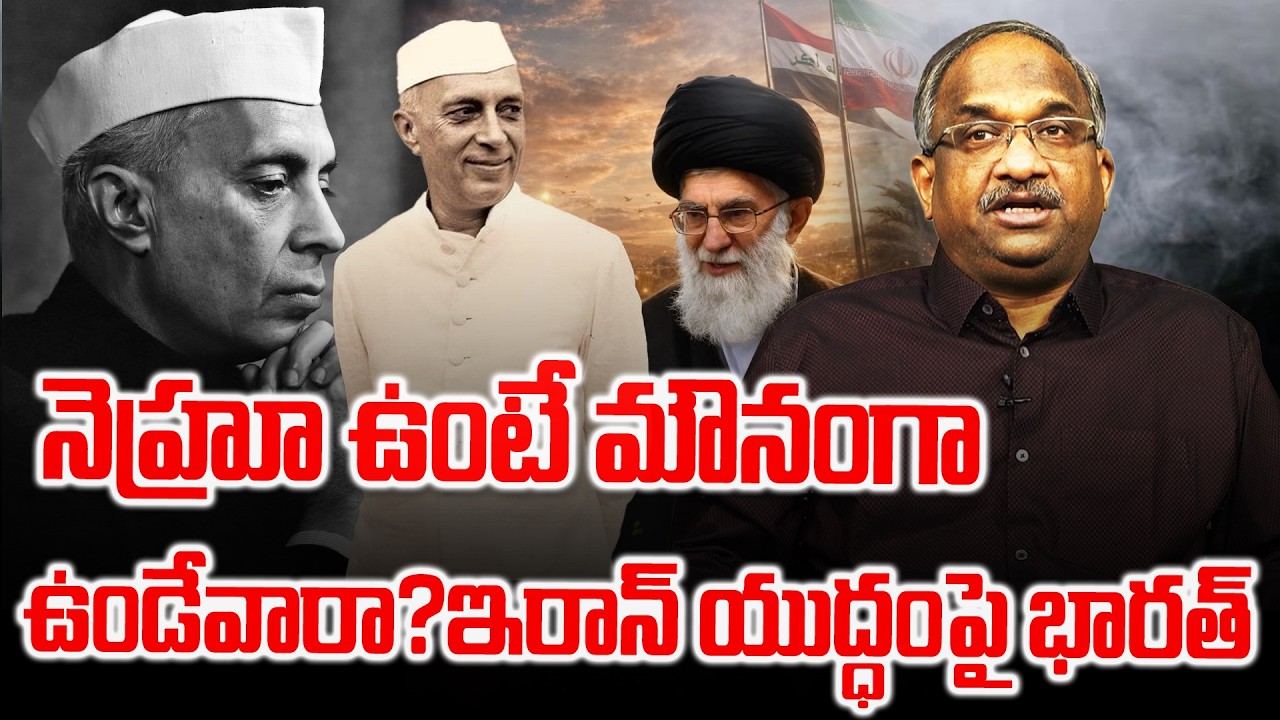
నెహ్రూ ఉంటే మౌనంగా ఉండేవారా? ఇరాన్ యుద్ధంపై భారత్ || Nehru Vs. Modi: India On Iran War? ||
Автор: Prof K Nageshwar
Загружено: 2026-06-06
Просмотров: 7178
Описание:
#profknageshwar
#ProfkNageshwaranalysis
#mlcnageshwar
#NirupamaMenonRao, #IndiaIranCrisis, #WestAsiaWar2026, #StrategicAutonomy, #ExternalAffairsMinistry, #ForeignPolicyIndia, #DrSJaishankar, #PMModiForeignPolicy, #NirupamaRao, #indiandiplomacy
నెహ్రూ ఉంటే మౌనంగా ఉండేవారా? ఇరాన్ యుద్ధంపై భారత్ || Nehru Vs. Modi: India On Iran War? ||
𝗚𝘂𝗲𝘀𝘀 𝗪𝗵𝗼 𝗖𝗮𝗺𝗲 𝘁𝗼 𝗗𝗶𝗻𝗻𝗲𝗿?
On May 27, the anniversary of Jawaharlal Nehru’s passing, I found myself wondering what India’s first Prime Minister would make of the world today.
Imagine Nehru appearing unexpectedly at the dinner table.
He would surely marvel at India’s transformation: a major economy, a nuclear and space power, a digital innovator, and an increasingly influential voice on the world stage.
But after listening patiently to our account of India’s rise, he might ask a simple question:
“During the ongoing Iran crisis, where exactly is India?”
This question is worthy of thought.
The conflict is not some distant regional war. It touches directly upon India’s interests: energy security, shipping through Hormuz, inflation, supply chains, connectivity through Iran, and the welfare of millions of Indians in the Gulf.
Yet India has appeared more observer than participant in the diplomatic conversation surrounding the crisis.
This is not a call for reckless activism or nostalgia for another era. The world of 2026 is vastly more complex than the world Nehru inhabited. Strategic autonomy requires prudence and restraint. But there is a difference between restraint and reticence.
Nehru understood something that remains relevant today: influence derives not only from power, but also from presence.
India of the 1950s possessed far less economic and military power than India does today. Yet it sought to shape international conversations on Korea, Suez, Indochina and Congo. It did not always determine outcomes. But it was rarely absent.The Iran crisis also reveals another reality. We often speak of a “multipolar world”, but what we increasingly see is a world of intermediaries.Countries such as Qatar, Oman, Saudi Arabia and others have acquired diplomatic relevance because they possess channels of communication that others lack. Influence flows not merely from military strength, but from connectivity.This is where India should excel.We engage the United States and Europe, maintain ties with Russia, have deep interests in West Asia, participate in BRICS and the Quad, and retain credibility across much of the Global South. Strategic autonomy should not become strategic silence. The challenge before India is not whether it should mediate every conflict. It is whether a country of India’s scale and aspirations can afford to be absent from conversations that directly affect its interests. Nehru would not have asked us to return to the diplomacy of the 1950s. But as he leaves the dinner. he might ask whether a stronger India has become too cautious about using its voice. Today we possess unprecedented weight. The question is whether we’re prepared to exercise an equally confident voice. The future will not be shaped by great powers alone. It will also be shaped by those capable of connecting worlds that no longer trust one another. We have the power to be one of those.
Good night, Mr. Nehru.
Повторяем попытку...
Доступные форматы для скачивания:
Скачать видео
-
Информация по загрузке: