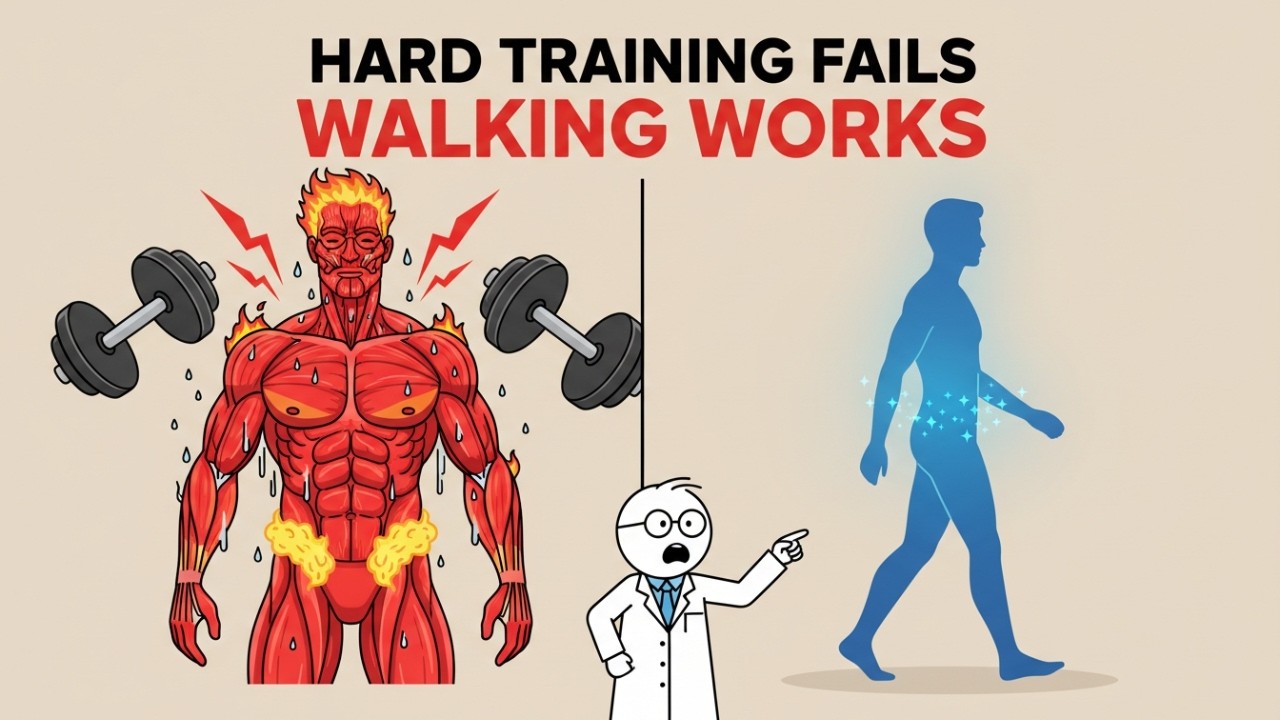
Why Gentle Walking Works When Hard Training Fails
Автор: Health Explained
Загружено: 2026-02-17
Просмотров: 1
Описание:
It sounds counterintuitive: the harder you train, the better the results. But biology doesn't work according to gym slogans.
In the video "Why Gentle Walking Works When Hard Training Fails," we decipher a paradox many people experience: you train intensely, sweating profusely, yet your belly fat remains stubbornly there. Meanwhile, gentle, regular walks produce more profound changes.
When you train too hard under high stress, cortisol levels increase. The body receives a "repeated danger" signal. It prioritizes conserving energy, especially visceral fat. The sympathetic nervous system becomes overactive, sleep is affected, and insulin sensitivity decreases. You're burning calories during exercise, but the hormonal environment doesn't support long-term fat burning.
Gentle walking—especially in the low heart rate zone, often called Zone Two—activates the aerobic fat-burning system. Mitochondria become more efficient. Cortisol doesn't spike. The parasympathetic nervous system is activated, sending safety signals to the body. And when the body feels safe, it's ready to release its reserves.
This isn't about fighting against heavy training. Heavy training has its own role. But if your metabolic and nervous systems are overloaded, adding intensity only deepens the problem.
This video will help you understand:
– Why high intensity can be counterproductive when background stress is high
– How light walking improves metabolic flexibility
– The role of mitochondria in sustainable fat burning
– And how to build a circadian rhythm-based exercise system instead of willpower
The purpose of this video is to provide educational information about health and exercise science; it does not replace personal medical advice.
#Healthexplained #ScienceExplained #Zone2 #MetabolicHealth #StressAndFat #WalkingForHealth #Mitochondria
Повторяем попытку...
Доступные форматы для скачивания:
Скачать видео
-
Информация по загрузке: