Biology Syllabus Class 11th | NCERT Biology Syllabus Explained...
Автор: KK Learn
Загружено: 2026-02-26
Просмотров: 78
Описание:
Biology Syllabus Class 11th | NCERT Biology Syllabus Explained...
Class 11 Biology Syllabus follows the rationalised NCERT curriculum, consisting of 19 chapters organized into five major units.
Unit I: Diversity of Living Organisms (15 Marks)
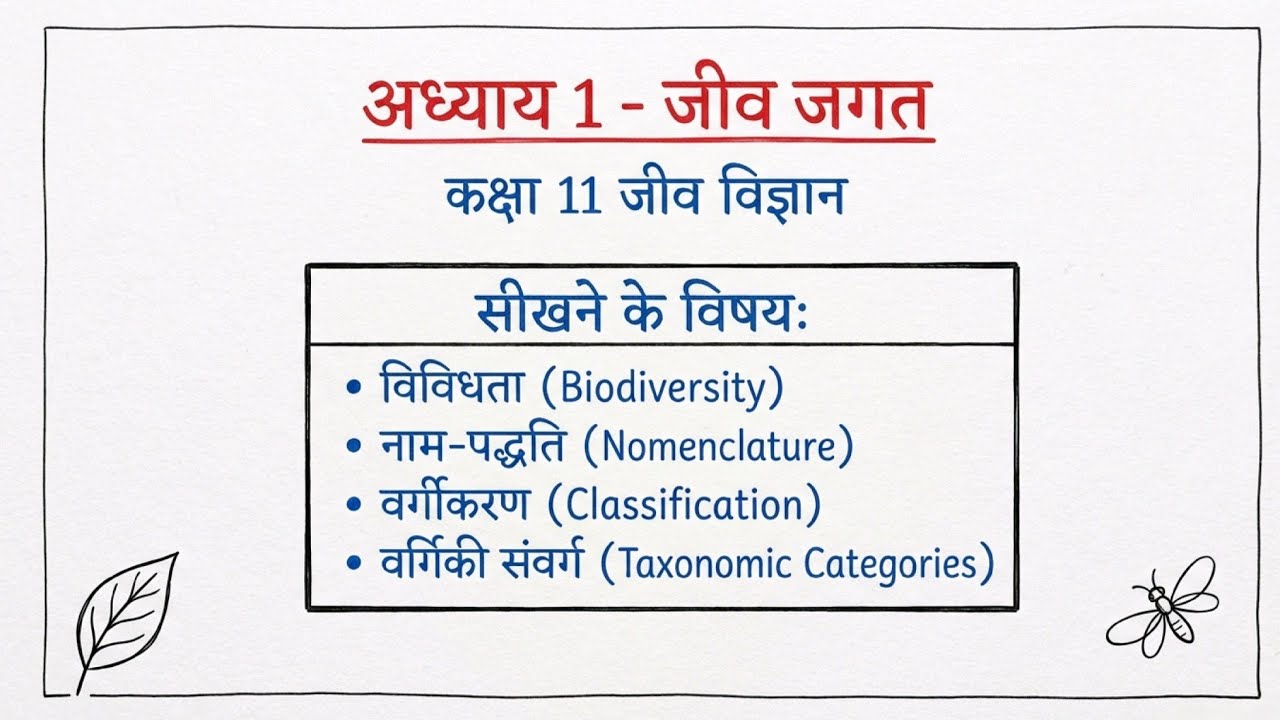
Chapter 1: The Living World – Focuses on biodiversity, taxonomy, and the taxonomical hierarchy.
Chapter 2: Biological Classification – Covers the Five Kingdom system (Monera, Protista, Fungi, Plantae, Animalia) and acellular entities like viruses and lichens.
Chapter 3: Plant Kingdom – Salient features and classification of Algae, Bryophytes, Pteridophytes, and Gymnosperms.
Chapter 4: Animal Kingdom – Classification of animals from non-chordates (phyla level) to chordates (class level).
Unit II: Structural Organisation in Plants and Animals (10 Marks)
Chapter 5: Morphology of Flowering Plants – Study of roots, stems, leaves, inflorescence, flowers, fruits, and seeds.
Chapter 6: Anatomy of Flowering Plants – Internal structures and plant tissue systems (meristematic and permanent).
Chapter 7: Structural Organisation in Animals – Focuses on animal tissues; specific study of the morphology and anatomy of a frog.
Unit III: Cell: Structure and Function (15 Marks)
Chapter 8: Cell – The Unit of Life – Cell theory, prokaryotic/eukaryotic structures, and detailed study of cell organelles.
Chapter 9: Biomolecules – Chemical constituents of living cells, including proteins, carbohydrates, lipids, nucleic acids, and enzymes.
Chapter 10: Cell Cycle and Cell Division – Covers the phases of the cell cycle, Mitosis, and Meiosis.
Unit IV: Plant Physiology (12 Marks)
Chapter 11: Photosynthesis in Higher Plants – Light and dark reactions, Calvin cycle, and C4 pathway.
Chapter 12: Respiration in Plants – Glycolysis, TCA cycle, Electron Trans
port System, and Respiratory Quotient.
Chapter 13: Plant – Growth and Development – Plant growth regulators (auxins, gibberellins, etc.), photoperiodism, and vernalisation.
Unit V: Human Physiology (18 Marks)
Chapter 14: Breathing and Exchange of Gases – Respiratory system mechanism and disorders.
Chapter 15: Body Fluids and Circulation – Blood composition, human circulatory system, and cardiac cycle.
Chapter 16: Excretory Products and Their Elimination – Human excretory system and kidney function regulation.
Chapter 17: Locomotion and Movement – Types of movement, skeletal system, and muscle contraction.
Chapter 18: Neural Control and Coordination – Neuron structure, nerve impulse conduction, and sense organs.
Chapter 19: Chemical Coordination and Integration – Endocrine glands and hormone actions.
Note: Chapters such as Transport in Plants, Mineral Nutrition, and Digestion and Absorption have been removed from the latest rationalised syllabus.
---
class 11 jeev vigyan
class 11 jeev vigyan ka paper
class 11 jeev vigyan chapter 1
class 11 jeev vigyan chapter 2
class 11 jeev vigyan ka paper 2025
class 11 jeev vigyan ardhvaarshik paper
class 11 jeev vigyan important question
class 11 jeev vigyan chapter 3
class 11 jeev vigyan paper
class 11 jeev vigyan ka paper ardhvaarshik
class 11 jeev vigyan chapter 5
class 11 jeev vigyan ardhvaarshik pariksha
class 11 jeev vigyan ka ardhvaarshik pariksha
class 11 jeev vigyan trimasik paper
---
#Biology #Jeevanvigyan #Jivvigyan #Class11th #JeevanvigyanClass11th #BiologyClass11th #BiologyClass #BiologyLecture #BiologySyllabus #UPBoardexam2026 #CBSE #CBSEExam #CBSEExam2026 #NEET #NCERT #NCERTBiology #NEETBiology #CUET #KKLearn #KKLearnai #CUETExam2026 #CUETBiology
Повторяем попытку...

Доступные форматы для скачивания:
Скачать видео
-
Информация по загрузке:
![सफलता बैच - जीवविज्ञान 【11th 2025-26 परीक्षा के लिए ]](https://imager.clipsaver.ru/PLe8_-h7emkLLfOgOTmvHeDNSVmiFbxfsD/max.jpg)