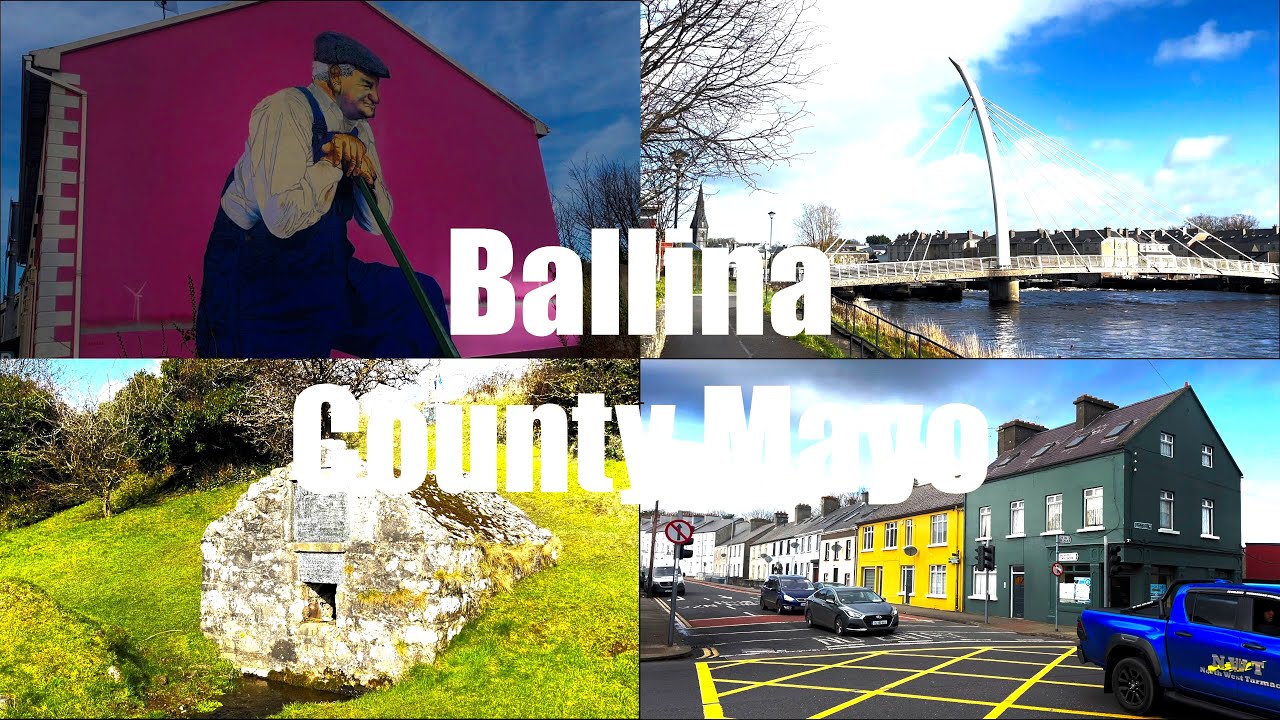
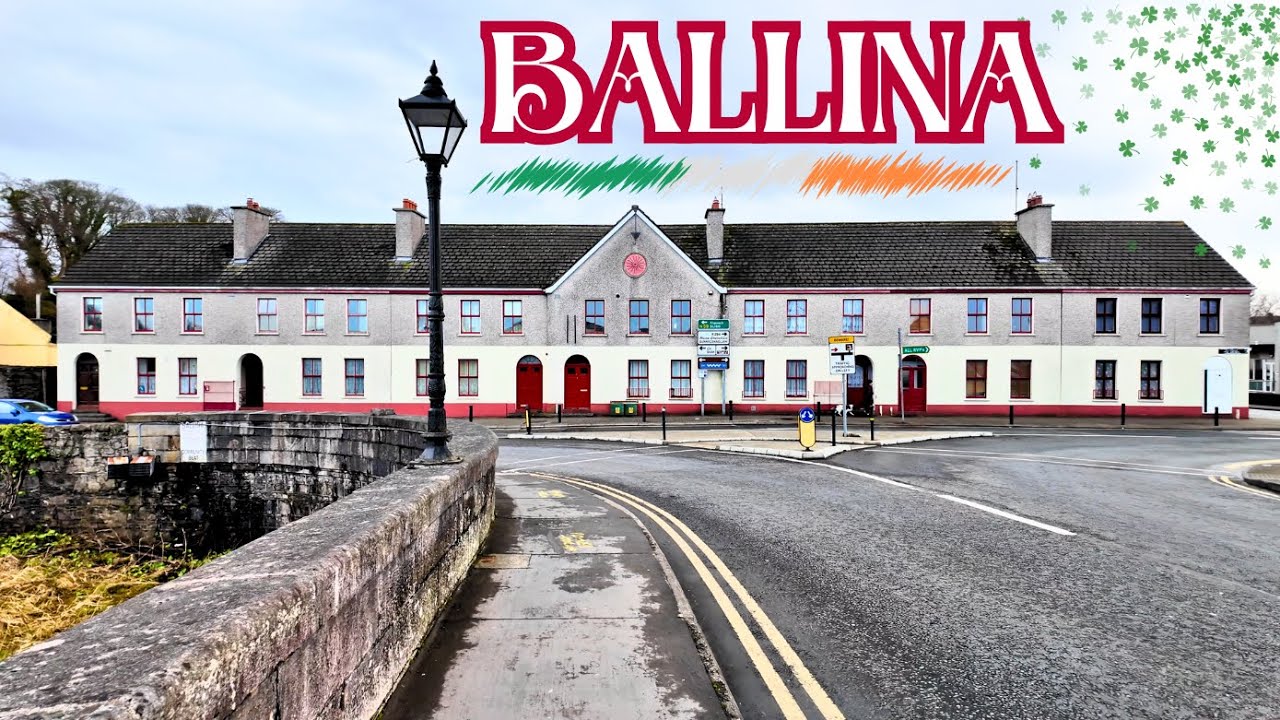
A visit to Ballina, Co Mayo in 2020
Автор: Fearghal O'Muineacháin
Загружено: 2021-03-12
Просмотров: 732
Описание:
A slideshow of photos I took during my visit to Ballina on Tuesday 15th September 2020.
Ballina (Irish: Béal an Átha, meaning "mouth of the ford") is a town in the north of County Mayo. It lies at the mouth of the River Moy near Killala Bay, in the Moy valley and Parish of Kilmoremoy, with the Ox Mountains to the east and the Nephin Beg mountains to the west. As of 2016, the population of Ballina was 10,171 making it the second most populated town in Mayo after Castlebar.
The Dolmen of the Four Maols is located on 'Primrose Hill' behind Ballina's Railway Station. This Bronze Age cist is sometimes dated to c2,000 B.C. and is locally known as the 'Table of the Giants'. Legend suggests that the dolmen is the burial place of the four Maols. The four Maols murdered Ceallach, a 7th-century Bishop of Kilmoremoy and were quartered at Ardnaree – the Hill of Executions. Tradition says that their bodies were buried under the dolmen.
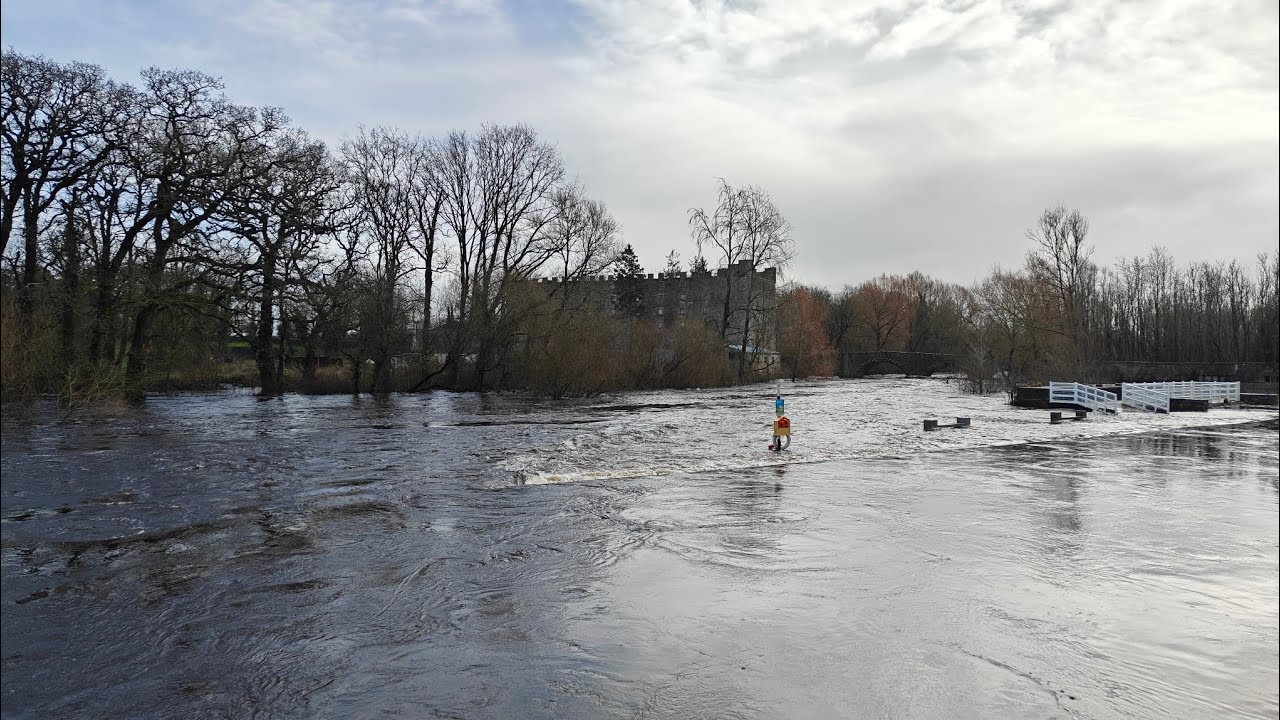
According to Encyclopædia Britannica, the first signs of settlement on the site of the town dates from around 1375 when an Augustinian friary was founded. Belleek, now part of the town, pre-dates the town's formation, and can be dated back to the 16th century. Ballina was founded as a garrison town in 1723 by O'Hara, Lord Tyrawley. Belleek Castle was built some time later, between 1825 and 1831.
The River Moy forms the traditional county border between Mayo and Sligo. However, the Local Government (Ireland) Act 1898 made the right (east) bank of the Moy, including Ardnaree and Crockets Town (the Quay), part of the administrative county of Mayo. This is a suburb of Ballina. The Battle of Ardnaree was fought there in 1586.
The Ballina workhouse served the entire northwestern coast of Mayo during the Great Famine. In February 1847 people were dying of fever at the rate of almost ninety persons a week. There were attempts at mitigating the crisis by some local citizens. Francis Kinkead, the Church of Ireland curate in Ballina, who came to Ballina in 1837 and died on 27 January 1847, played a role in organising funds to help relieve the suffering of both the Catholic and Protestant populations.
A centenary memorial (known as the Humbert Monument) was dedicated on 11 May 1898 to commemorate the 100th anniversary of the French landing at Killala in support of the 1798 rebellion. The monument was originally sculptured by a Dublin craftsman but subsequently restored locally.
The figure on the monument is not Humbert but Mother Ireland. Maud Gonne unveiled the monument, and at the unveiling event famously poured water over another speaker's (an IRB member) head. The monument was moved to its current location on Humbert Street in 1987, where it was re-dedicated by Maud Gonne's son, Seán MacBride.
The town's architectural heritage includes the 15th-century Moyne Abbey, and St Muredach's Cathedral, which is the Cathedral Church of the Roman Catholic Diocese of Killala. Work on the cathedral began in 1827. The stone was quarried locally and the roof and ceiling were completed before the Great Famine (1845). The spire was completed in 1855 and by 1875 the organ had been commissioned.
Ballina has a number of listed buildings including Georgian housing on the banks of the Moy, the Ice House building (since converted into a hotel), and the former provincial bank (now housing the Jackie Clarke Museum).[citation needed] The streets of Ballina consist mainly of three and four-storey Georgian and Victorian buildings, though the structures of several buildings are far older.
The N26 is the main road from Ballina to Dublin, it leaves the town south to Foxford, and after Swinford joins the N5 to Dublin. N59 comes from Belmullet and Crossmolina in the west, goes through the town to Sligo to the northeast. The R314 is a regional road to Killala, and then Ballycastle. The R294 goes to south County Sligo via 'the Windy Gap' in the Ox Mountains. It is used as an alternative route to Dublin, via Tubbercurry and Boyle.
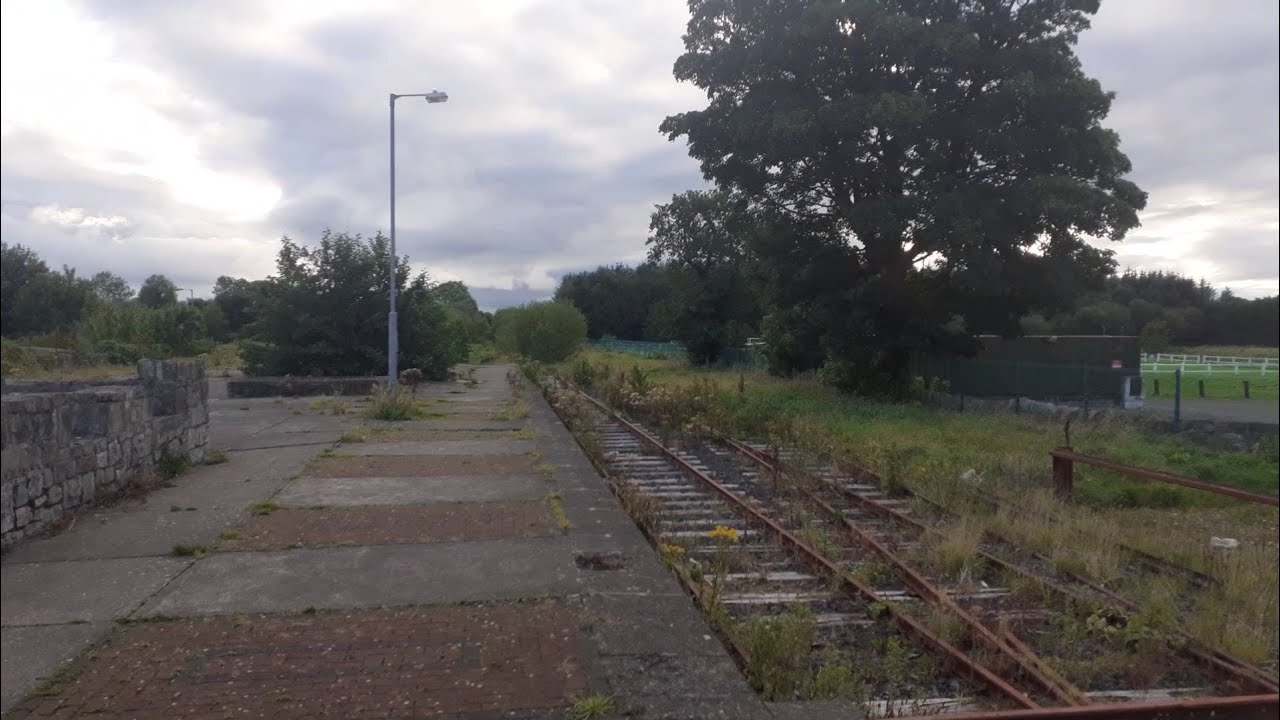
Ballina railway station opened in 1873. Ballina is served by commuter passenger trains to Foxford and Manulla Junction where passenger change trains to travel to Dublin and Westport. Ballina is a major rail freight hub, with a direct freight line from the town to Waterford Port transporting pulpwood for Coillte, and as of late 2009, a direct Dublin Port line.
Ballina Bus Station is host to a Bus Éireann bus depot. Bus Eireann Route 22 links Ballina with Dublin and Bus Eireann Route 52 links Ballina with Castlebar. Ballina also has regional bus routes to surrounding towns and villages.
Schools in Ballina include Scoil Iosa of the Convent of Mercy, Scoil Padraig, The Quay NS, Scoil na gCeithre Maol, Culleens NS, St Muredach's College, Moyne College, St Marys of the Convent of Mercy Secondary School, and St. Dympna's and St. Nicholas Special Schools.
Повторяем попытку...
Доступные форматы для скачивания:
Скачать видео
-
Информация по загрузке: