Air Force Banned His "Overloaded" P-47 — Until He Destroyed 18 Trains
Автор: WW2 LostArk
Загружено: 2025-12-30
Просмотров: 433
Описание:
The engineers called the payload "impossible." The mission was labeled suicide. But what happened when he pulled the trigger changed the war forever...
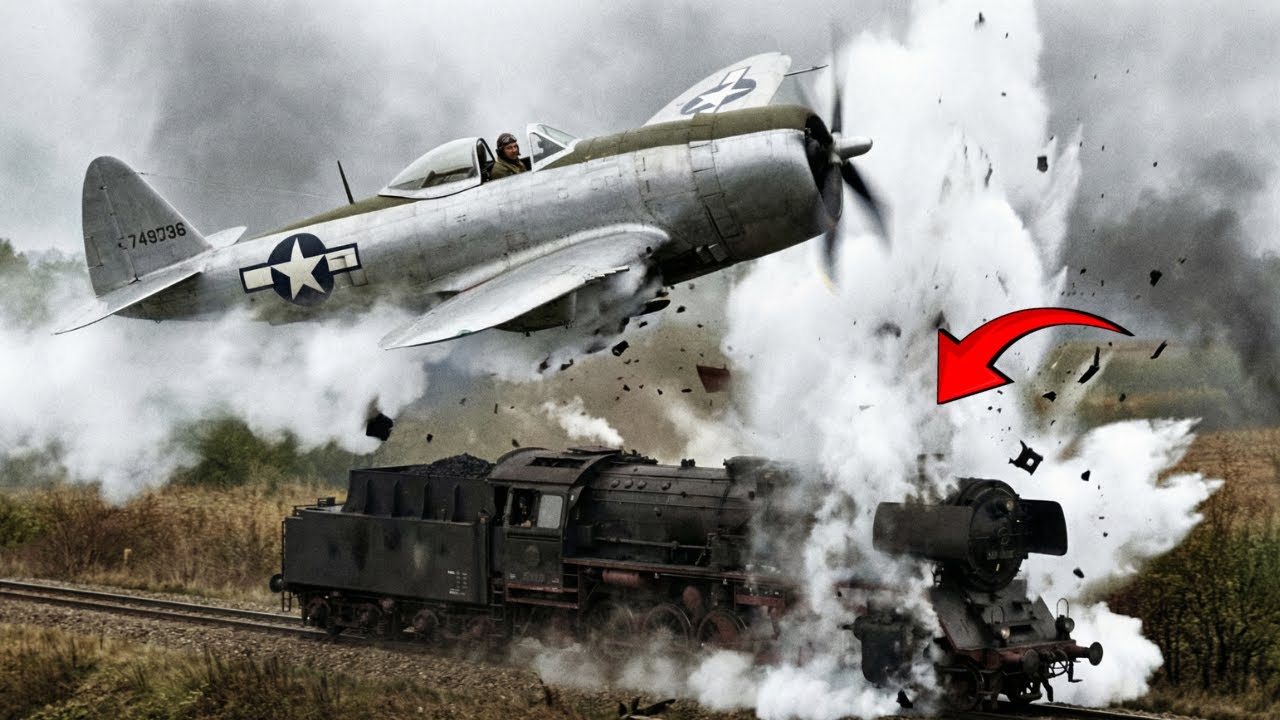
On December 27, 1944, the fog finally lifted over the Ardennes. Major Clay Tice sat in the cockpit of a P-47 Thunderbolt, staring at a target that military intelligence described as a "gold mine." But to reach it, Tice was attempting something that defied the laws of aerodynamics. His aircraft, originally designed as a high-altitude interceptor, was loaded with a weight so crushing that British pilots had openly laughed at the Americans for attempting to fly it.
The engineers at Republic Aviation had warned that the wing loading was too high. They said the "Jug" was never meant to be a low-level bomber. Yet, as the 9th Air Force scrambled to stop the German advance during the Battle of the Bulge, the rules of engagement had changed. The pilots weren't just fighting other planes anymore; they were hunting the very lifeblood of the German war machine.
But the Germans had a surprise waiting. They knew the Americans were hunting locomotives, and they had turned their supply trains into mobile flak fortresses. As Tice rolled his heavy fighter into a steep dive toward the rail yard at Euskirchen, he wasn't just battling gravity—he was flying straight into a trap that had claimed hundreds of pilots before him.
Then came the "boiler shot." It was a tactic so dangerous that many commanders forbade it, yet it was the only way to stop the enemy supply lines cold. What happened in the next few seconds at the rail yard didn't just destroy a train; it triggered a chain reaction so violent that it shook aircraft flying three thousand feet above.
The devastation that followed was so absolute that a captured German general later admitted it was the specific reason his Panzer division collapsed. But the full story of how a "flying brick" paralyzed an empire reveals a chapter of World War II history often overshadowed by the famous dogfights of the escort war.
________________________________________
⚠️ Disclaimer: This content is an entertainment-focused retelling inspired by World War II events gathered from online sources. While we strive for engaging storytelling, some details may be inaccurate. This is not an academic reference. For verified historical information, please consult professional historians or official archives. Viewer discretion is advised.
________________________________________
⚠️Disclaimer: This video uses a combination of authentic historical photographs and AI-generated images to enhance visual storytelling. AI-generated images are used only where period photographs are unavailable, and are created to maintain historical accuracy. The narration is produced using AI-generated voice synthesis. All historical facts, dates, and accounts are based on documented sources and military records.
________________________________________
Sources:
• "Thunderbolt: The History of the 56th Fighter Group" by Robert Johnson, 1958
• "Strike From the Sky: The History of Battlefield Air Attack" by Richard P. Hallion, 1989
• "Wolfpack Warriors: The Story of World War II's Most Successful Fighter Outfit" by Roger A. Freeman, 2009
• "Hell Hawks! The Untold Story of the American Fliers Who Savaged Hitler's Wehrmacht" by Robert F. Dorr, 2008
• "P-47 Thunderbolt at War" by Cory Graff, 2017
________________________________________
#P47Thunderbolt #WW2History #BattleOfTheBulge #AviationHistory
________________________________________
Повторяем попытку...
Доступные форматы для скачивания:
Скачать видео
-
Информация по загрузке: