How Phosphorylation and Dephosphorylation Regulate Glucose Metabolism
Автор: Biochemistry with Prof Chak
Загружено: 2025-03-16
Просмотров: 304
Описание:
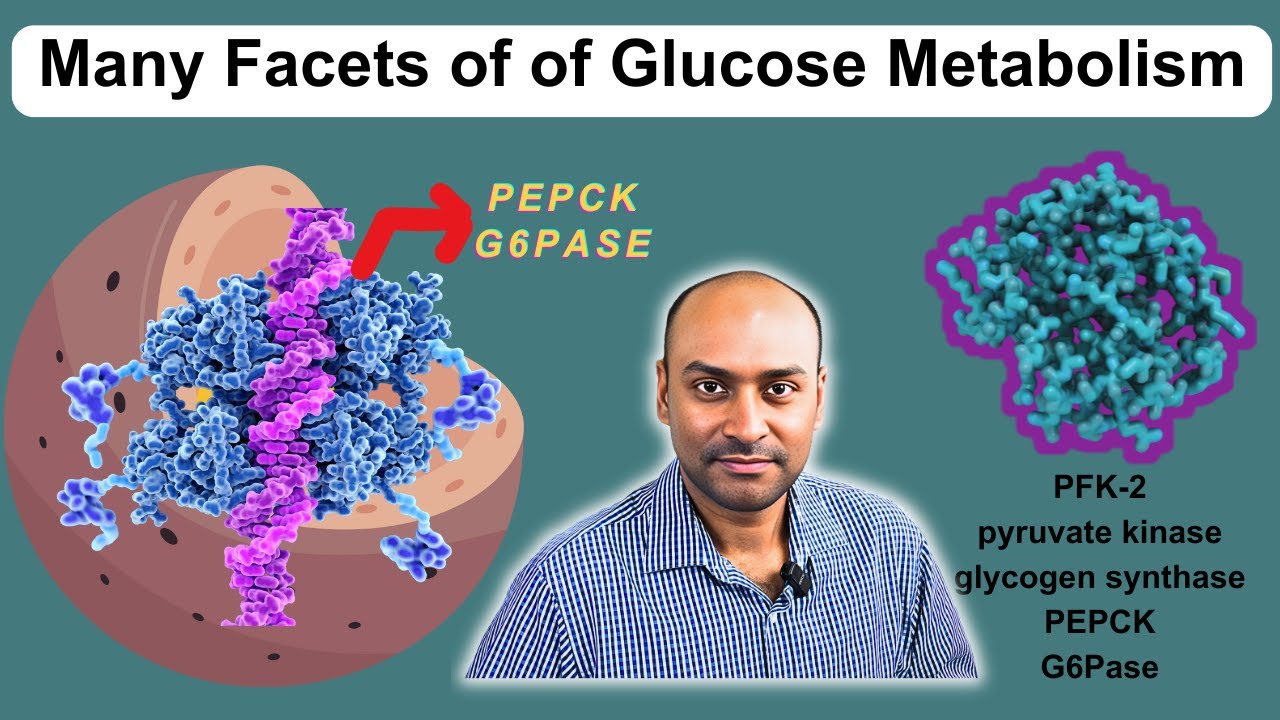
In this lecture, we explore how transcriptional regulation controls gluconeogenesis enzymes in response to metabolic states. We discuss how insulin signaling through protein kinase B (PKB) leads to the phosphorylation and degradation of FOXO1, a transcription factor that regulates genes for PEPCK and glucose-6-phosphatase (G6Pase)—key enzymes in gluconeogenesis. When insulin levels drop, FOXO1 is dephosphorylated, enters the nucleus, and activates gluconeogenesis.
Additionally, we cover enzyme regulation through phosphorylation and dephosphorylation in fed vs. starved states: ✔ Fed state → Insulin signaling promotes glucose utilization (glycolysis, glycogen synthesis).
✔ Starved state → Glucagon signaling promotes glucose release (glycogenolysis, gluconeogenesis).
This video is essential for MCAT, DAT, pre-med, pre-pharmacy, and biochemistry students who want to strengthen their understanding of metabolic regulation for exams and clinical applications.
📌 Subscribe for more biochemistry tutorials!
#Biochemistry #Metabolism #Gluconeogenesis #FOXO1 #InsulinSignaling #MCAT #DAT #MedicalSchool #PreMed #pharmacyschool
• "Glycogen Breakdown: Unlocking Energy in S...
• How Glycogen is Made | The Chemical Logic ...
• Fed vs. Starved States: How They Regulate ...
• Decoding Glycolysis & Gluconeogenesis: Key...
Повторяем попытку...
Доступные форматы для скачивания:
Скачать видео
-
Информация по загрузке:


