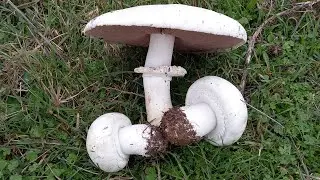
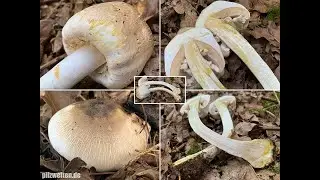
Agaricus augustus - Champiñón majestuoso - The prince
Автор: The wonderful world of mycology
Загружено: 2022-12-05
Просмотров: 1357
Описание:
Por: Manu Merino
Le llaman el príncipe de los hongos a este champiñón, ya que es uno de los mejores hongos comestibles, su color crema o marrón amarillento con escamas marrones y sobre todo, su olor a anís y almendras lo identifican fácilmente. Es raro en nuestra zona.
Agaricus augustus Fr. 1838
Características:
-Sombrero: Sombrero grande, hasta 25 cm, al principio globoso o troncocónico, después convexo, plano convexo y al final aplanado o extendido. Su margen es incurvado al principio con restos de velo.
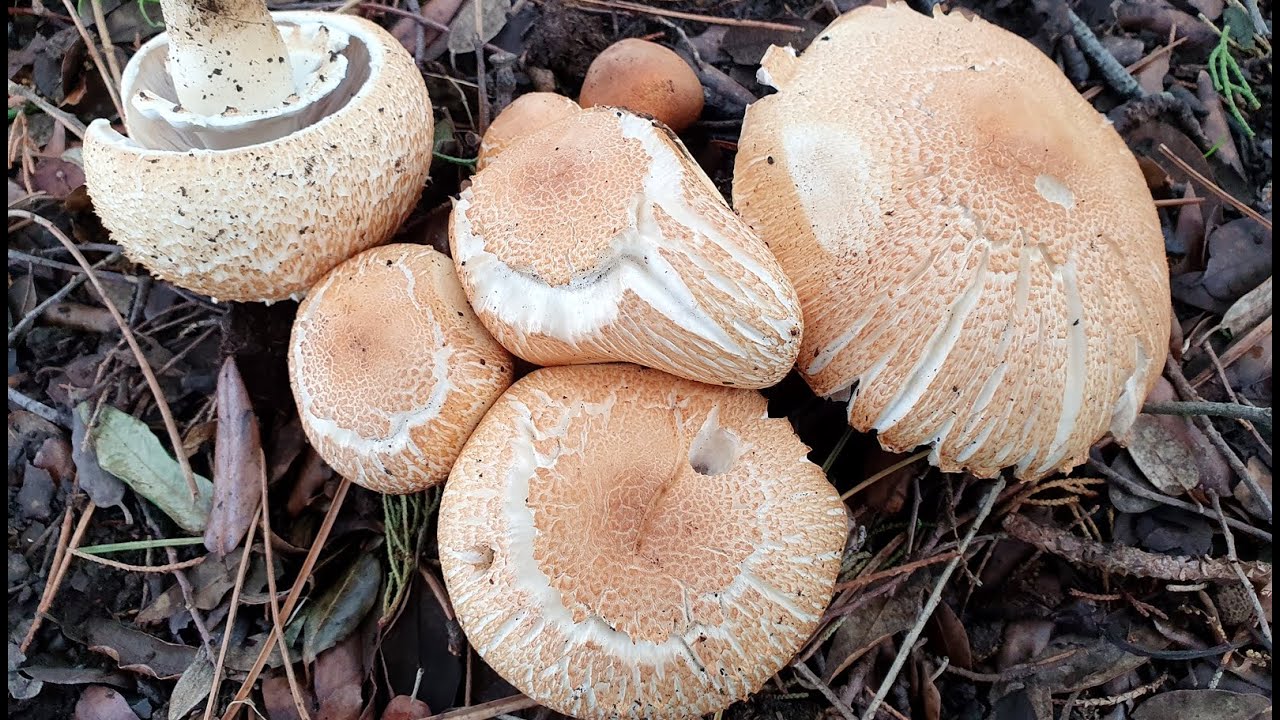
-La cutícula: Separable, de color crema o marrón amarillento y está cubierta de escamas marrones sobre todo en la parte central
-Láminas: densas, libres, de color blanquecino que va cambiando al blanco gris rosado, después rosa y finalmente rosa marrón muy oscuro
Pie: alto, robusto, de color un poco amarillento ocráceo con pequeñas escamas, un poco bulboso. Posee un amplio anillo membranoso colgante, que perdura mucho tiempo, con escamas algodonosas en la parte inferior de color blanquecino y con la edad amarillentas
Carne: Compacta, firme, de color blanco, olor anisado y almendras amargas, y sabor dulce
Comestibilidad: Muy buen comestible
-Hábitat: En este caso bajo encinas y pinos, con tierra muy abonada (donde se resguardan los caballos y vacas), crece en grupos.
-Época: Otoño, en este caso finales de noviembre
Lugar: Anillo Verde de Bilbao, País Vasco
English
They call it the prince of mushrooms, since it is one of the best edible mushrooms, its cream or yellowish brown color with brown scales and above all, its smell of anise and almonds easily identify it. It's rare in our area.
Agaricus augustus Fr. 1838
Characteristic:
-Cap: Large hat, up to 25 cm, at first globose or frustoconical, then convex, flat-convex and at the end flattened or extended. Its margin is curved at first with remains of a veil.
-The cuticle: Separable, cream or yellowish-brown in color and covered with brown scales, especially in the central part
-Gills: dense, free, whitish in color that changes to pinkish-grey white, then pink and finally very dark brown-pink
Stem: tall, robust, a little yellowish-ochraceous in color with small scales, a little bulbous. It has a large hanging membranous ring, which lasts a long time, with cottony scales on the underside that are whitish in color and yellowish with age.
Flesh: Compact, firm, white in color, smell of aniseed and bitter almonds, and sweet taste
Edibility: Very good edible
-Habitat: In this case under holm oaks and pines, with very fertilized land (where horses and cows are sheltered), it grows in groups.
-Time: Autumn, in this case the end of November
Place: Green Belt of Bilbao, Basque Country
Deutsch
Sie nennen ihn den Prinzen der Pilze, da er einer der besten Speisepilze ist, seine cremefarbene oder gelblich-braune Farbe mit braunen Schuppen und vor allem sein Geruch nach Anis und Mandeln lassen ihn leicht erkennen. In unserer Gegend ist es selten.
Français
On l'appelle le prince des champignons, puisqu'il fait partie des meilleurs champignons comestibles, sa couleur crème ou brun jaunâtre avec des écailles brunes et surtout, son odeur d'anis et d'amandes l'identifient facilement. C'est rare dans notre région.
Italiano
Lo chiamano il principe dei funghi, poiché è uno dei migliori funghi commestibili, il suo colore crema o bruno giallastro con scaglie marroni e soprattutto il suo odore di anice e mandorle lo identificano facilmente. È raro nella nostra zona.
Nerlandés
Ze noemen het de prins van de paddenstoelen, omdat het een van de best eetbare paddenstoelen is, zijn crème of geelachtig bruine kleur met bruine schubben en vooral zijn geur van anijs en amandelen gemakkelijk te identificeren. Het is zeldzaam in onze regio.
Polski
Nazywają go księciem grzybów, ponieważ jest to jeden z najlepszych grzybów jadalnych, jego kremowy lub żółtawo-brązowy kolor z brązowymi łuskami, a przede wszystkim zapach anyżu i migdałów łatwo go rozpoznać. W naszym regionie to rzadkość.
Português
Eles o chamam de príncipe dos cogumelos, pois é um dos melhores cogumelos comestíveis, sua cor creme ou marrom amarelado com escamas marrons e, acima de tudo, seu cheiro de anis e amêndoas o identificam facilmente. É raro em nossa região.
Русский
Его называют царевичем грибов, так как это один из лучших съедобных грибов, его легко узнать по кремовому или желтовато-коричневому цвету с коричневыми чешуйками и, прежде всего, по запаху аниса и миндаля. В наших краях это редкость.
Повторяем попытку...
Доступные форматы для скачивания:
Скачать видео
-
Информация по загрузке: