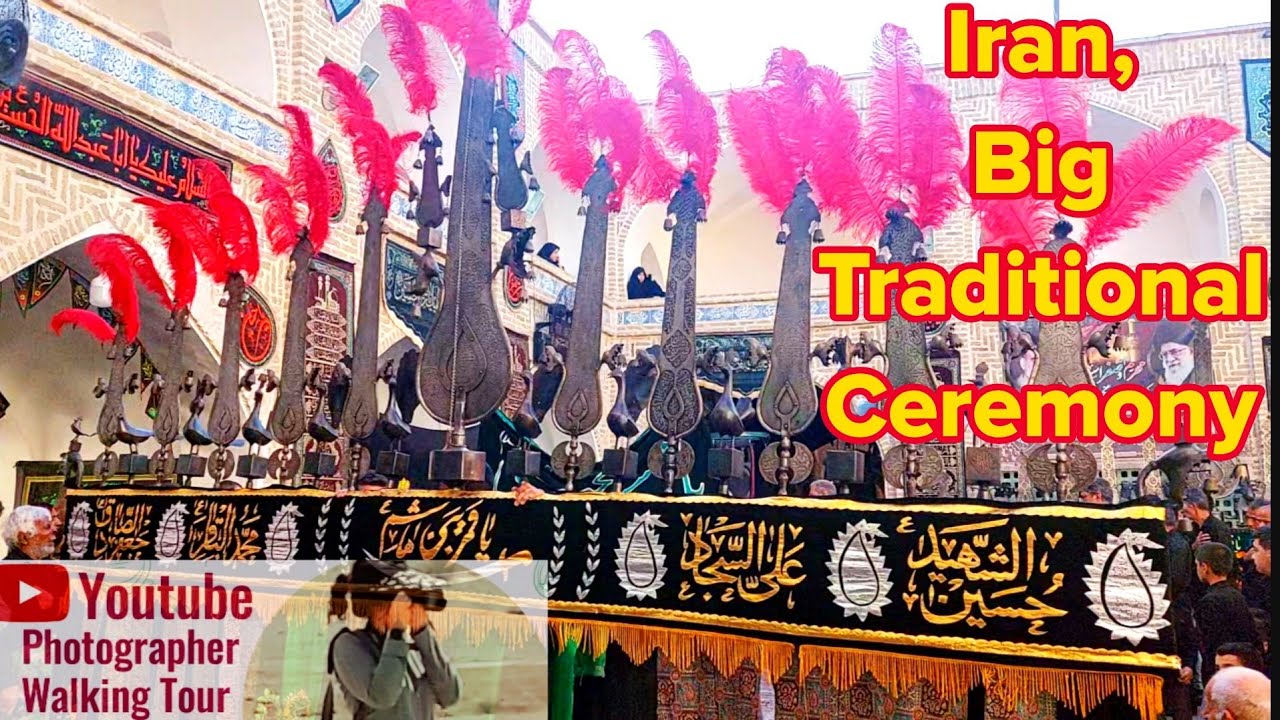
Iran,Big Traditional Mourning Ceremony in a Historical City:Naien Episode 1
Автор: Tourist attraction Iran
Загружено: 2025-08-29
Просмотров: 153
Описание:
In Photographer walking tour channel
The city of Naein (in Isfahan Province) has traditionally been divided into seven main districts, each with its own social and religious identity. One of Naein’s important cultural features is that during Muharram, especially in the Ashura period, each district holds its own mourning ceremonies and chest-beating rituals, with its own group and procession.
These old districts, which also carry historical and architectural identity, usually include:
Nowabad District
Chehel Dokhtaran District
Saray-e Now District
Kalvan District
Panjaheh District
Mohammadiyeh District
Kooy-e Sang District
This video is about Panjaheh district's Ceremony
(Some sources mention slightly different names.)
During Muharram, especially on Tasua and Ashura, each district enters Imam Square (or the central gathering place) in an organized manner, holding processions, elegy recitations, and chest-beating rituals. This tradition has made Naein’s mourning ceremonies one of the most renowned and magnificent rituals in Iran.
Key Aspects of Traditional Mourning Ceremonies in Iran:
1. Ashura and Muharram Ceremonies
The most significant mourning rituals are held during the Islamic month of Muharram, especially on the day of Ashura, which commemorates the martyrdom of Imam Hussein (AS) in Karbala (680 AD).
These ceremonies include processions, recitations, chest-beating (Sineh-zani), and dramatic re-enactments (Ta’ziyeh).
Streets are filled with participants wearing black, symbolizing grief and solidarity.
2. Local and Regional Traditions
In cities like Naien (Naein), Isfahan, Yazd, and Kashan, special processions take place in ancient neighborhoods and historic mosques.
Each mahalla (neighborhood) has its own mourning group and rituals. In Naien, for example, seven historic neighborhoods have their own processions, joining together in the central square in a grand display of unity.
3. Symbolic Rituals
Nakhl Gardani: In Yazd, a giant wooden structure (Nakhl) symbolizing Imam Hussein’s coffin is carried by hundreds of men.
Alam and Panja: Tall metal standards decorated with feathers, fabric, and inscriptions are carried as symbols of mourning and spirituality.
Nazri (food offerings): Families cook and distribute food freely to mourners and the poor, symbolizing generosity and remembrance.
4. Atmosphere and Aesthetics
Streets, bazaars, and mosques are decorated with black banners, calligraphy, and symbolic lights.
Rituals often include traditional music (Ney, Dammam drums), lamentations, and group chants.
5. Modern Reflections
Today, these ceremonies continue to be both spiritual and cultural gatherings.
They attract tourists, photographers, and researchers interested in Iran’s intangible cultural heritage.
Many travelers describe the experience as a unique opportunity to witness Persian devotion, unity, and traditions.
---
✨ If you’re making a travel guide or vlog about Iran, especially Naien or Isfahan, the mourning rituals are a powerful lens to show:
Iranian cultural heritage
Community traditions
The blend of spirituality, art, and history
Повторяем попытку...
Доступные форматы для скачивания:
Скачать видео
-
Информация по загрузке: