An Ancient “ KERALA STORY “ of Chess Board & Rice Grain !
Автор: Art of Chess - Watch & Learn
Загружено: 2023-05-23
Просмотров: 2575
Описание:
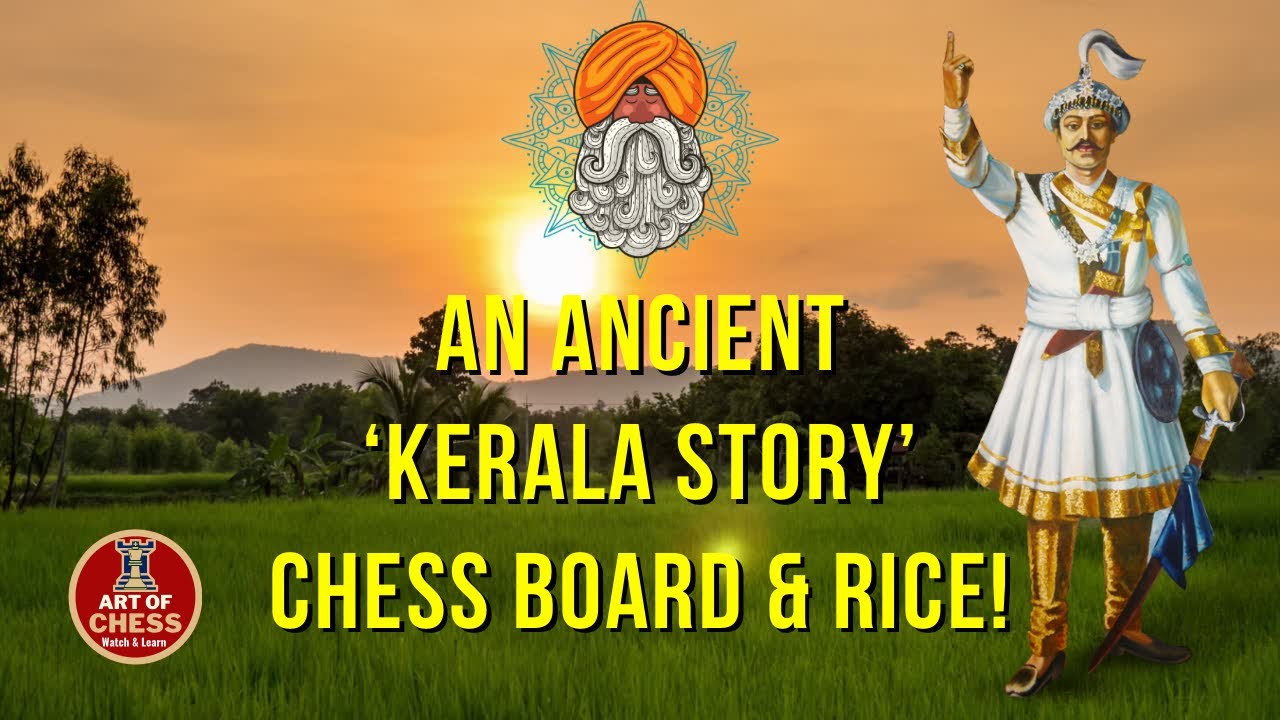
An Ancient "Kerala Story" about a King, Hermit, Chessboard, and Rice!
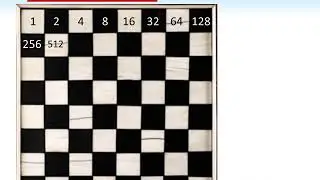
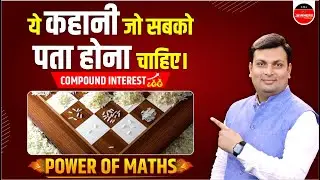
If you place one grain of rice on the first square of a chessboard, then double the amount on each subsequent square two on the second, four on the third, eight on the fourth, and so on how many grains of rice will the 64th square hold? This story holds the answer...
Long, long ago, the King of Ambalapuzha in Kerala, South India, was a great chess player. He had quite a bit of ego regarding his chess capabilities. One day, a hermit arrived at the King's Court, and as fate would have it, the King ended up challenging the hermit to a game of chess.
The King magnanimously asked the hermit what he wanted as a reward if he won.
"I am a poor man," said the hermit, "so it would be sufficient if you would give me just a few grains of rice. One grain of rice on the first square of the chessboard, two on the next, four on the following, and so on... for all 64 squares of the chessboard!"
"Done!" said the King without a second thought, and the game commenced.
Needless to say, the King lost the game miserably and ordered that the hermit be given his prize the rice grains!
They brought in a small sack of rice and began counting the grains. One, two, four, eight, sixteen, thirty-two, sixty-four, one hundred twenty-eight, two hundred fifty-six, five hundred twelve—that was the easy part.
By the twentieth square, they needed 524,288 grains of rice. At a rate of thirty-eight grains per gram of rice, that amounted to approximately 13.8 kilograms of rice. The twenty-seventh square required 1,766 kilograms of rice! The twenty-ninth square required 7,064 kilograms, and the thirtieth square on the chessboard required 14,128 kilograms!
Long before this point, the King's granaries had become empty, but a king's word is a king's word, isn't it? And he found himself in deep trouble.
It was then that he calculated the amount of rice required to fulfill his promise and realized that he would never be able to do so. His bravado disappeared completely.
And the story continues... The King prayed to his deity, Krishna, enshrined in the Ambalapuzha temple, for deliverance. At that moment, the hermit transformed, revealing that he was indeed Krishna himself!
Krishna informed the King that he didn't need to repay his debt immediately. All he needed to do was feed the devotees, no matter who they were, with "Pal Payasam" until the debt was repaid. With these words, Krishna vanished.
To this day, devotees at the Ambalapuzha Sri Krishna temple are offered delicious Pal Payasam, a famous local pudding made of rice, milk, and sugar. This tradition continues without interruption.
But why does this tradition persist? Let us calculate the amount of rice that the King of Ambalapuzha owed to Sri Krishna.
To fill all 64 squares on the chessboard, the King would require 485,440,633,518,672 kilograms of rice! That is 485,440 million kilograms.
The world's annual rice production is 700 million metric tonnes. Therefore, if we were to use the entire global rice production to fill all the squares of the chessboard, doubling the amount each time, it would take 694 years to complete! Moreover, the current rice production in Kerala is just about half a million metric tonnes!
Thus, Pal Payasam must continue to be offered to Sri Krishna at the Ambalapuzha temple for all eternity!
This illustrates the vastness and profound nature of the great game of chess! Its countless combinations of possible moves make it the world's most popular game!
Повторяем попытку...
Доступные форматы для скачивания:
Скачать видео
-
Информация по загрузке: