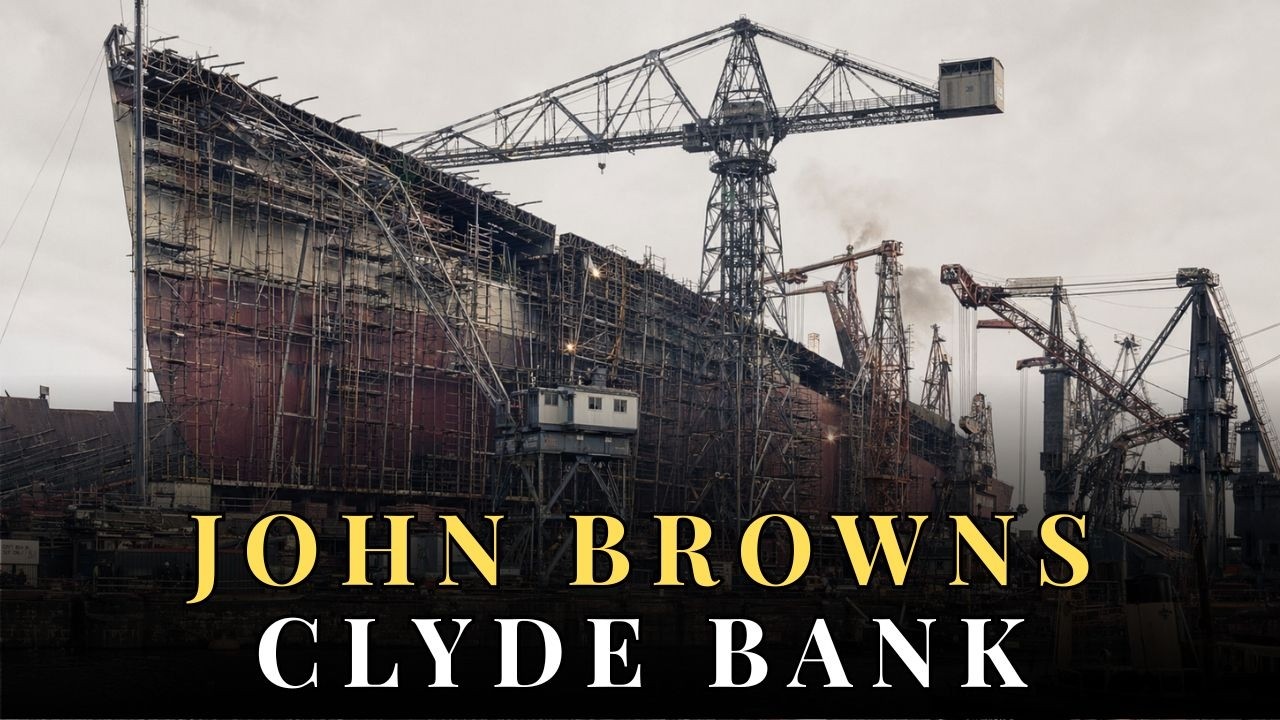
John Brown Clydebank: Why Britain’s Greatest Shipyard Was Destroyed ?
Автор: Lost British Factories
Загружено: 2026-04-21
Просмотров: 10394
Описание:
In September 1967, Queen Elizabeth II stood on a platform above the River Clyde and launched the most celebrated ocean liner ever built in Britain. The crowd numbered in the tens of thousands. The shipyard below her had been building the world's greatest vessels for over a century — RMS Lusitania, RMS Queen Mary, HMS Hood, and now Queen Elizabeth 2. At its peak, ten thousand men came through its gates every morning. The town surrounding it existed because this yard existed. Clydebank was not a town with a shipyard. It was a shipyard that became a town.
Four years later, it was gone.
Not because the orders had dried up. Not because the workers had failed. The yard entered receivership in 1971 with a full order book and ships half-built on the slipways — killed not by the market, but by a single government decision to refuse a six million pound loan on ideological grounds. What followed was one of the most dramatic episodes in British industrial history: sixteen months of a workers' work-in, led by Jimmy Reid, that captured the attention of the entire country and forced a government to reverse course — too late to save the yard that had defined a community for four generations.
This is the story of John Brown's Clydebank. The greatest shipyard Britain ever built. And how it was destroyed.
🔔 Subscribe for new documentaries every week — stories of the factories, the companies, and the communities that built Britain.
This video is a researched history documentary. The script and story are based on real events and verified sources to the best of our ability. Some visuals are AI generated and used only as illustrative context when authentic archival footage is limited; they are not presented as real photographs of the exact people or locations unless stated. Any archival images or footage shown belong to their respective owners and are used in a transformative way for commentary, education, criticism, and historical analysis under Fair Use.
#lostfactories #britishindustry #scottishhistory #industrialhistory #factorydocumentary #ClydeShipbuilding #workingclasshistory #UCSWorkin
Повторяем попытку...
Доступные форматы для скачивания:
Скачать видео
-
Информация по загрузке: