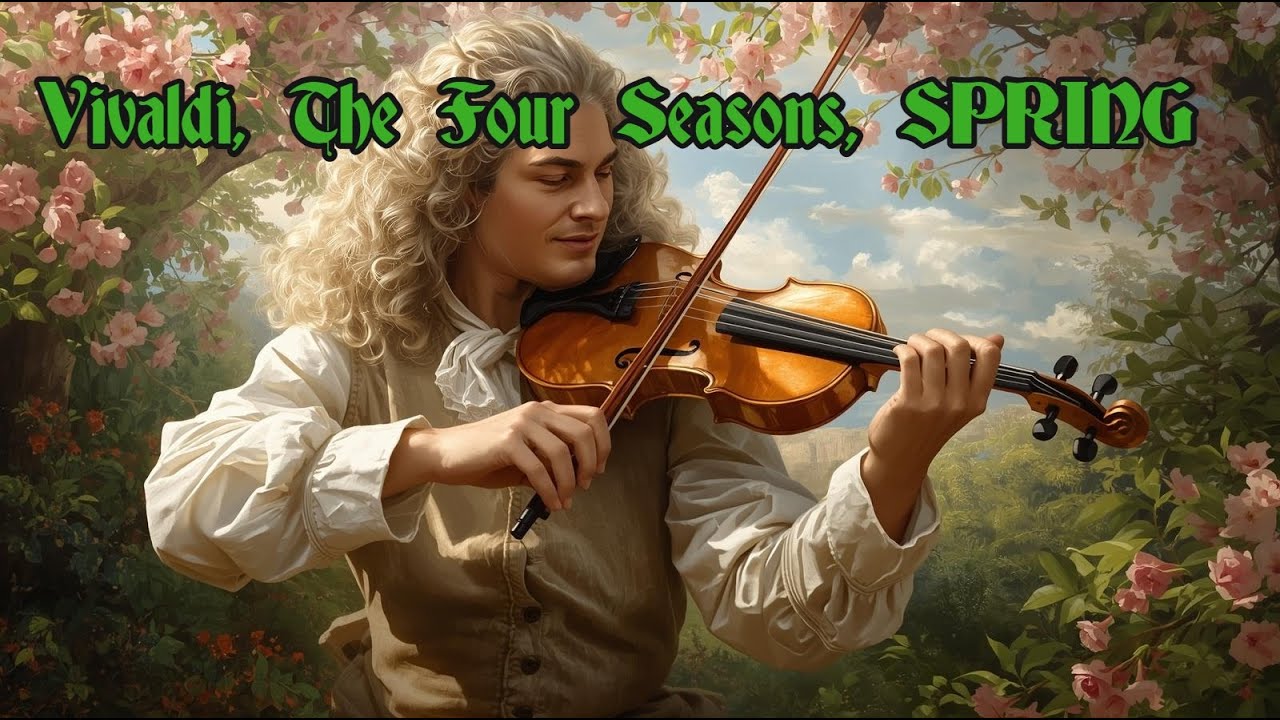
CLASSICAL MUSIC -VIVALDI Four Seasons: Spring (La Primavera)
Автор: BACKTOCLASSICAL MUSIC
Загружено: 2026-01-12
Просмотров: 169
Описание:
What Are The Four Seasons?
The Four Seasons (Le quattro stagioni) is a cycle of four violin concertos by the Italian Baroque composer Antonio Vivaldi. The works were composed around 1720 and published in 1725 in Amsterdam as part of the collection Il cimento dell’armonia e dell’inventione (“The Contest Between Harmony and Invention”). Each concerto musically depicts one season of the year.
Structure of the Work
Each concerto consists of three movements in the typical Baroque sequence fast – slow – fast. A distinctive feature of this cycle is that Vivaldi included sonnets that vividly describe scenes from nature and everyday life for each season. For this reason, The Four Seasons are considered one of the earliest examples of program music, that is, music that tells a story or depicts extra-musical ideas.
The Individual Seasons
Spring (La Primavera) – fresh and cheerful music depicting birds, shepherds, and blossoming nature.
Summer (L’Estate) – intense heat, storms, and human restlessness.
Autumn (L’Autunno) – the harvest, dancing, drinking, and celebrations.
Winter (L’Inverno) – cold, cracking ice, and silence.
Why Are They Important?
The Four Seasons are Vivaldi’s most famous work and one of the most well-known compositions in all of classical music.
The music vividly portrays nature and the emotions associated with the changing seasons—almost like a “film without images.”
The concertos are typically performed with a solo violin accompanied by a string orchestra and basso continuo (a supporting bass line).
credit: www.classicals.de ///
Повторяем попытку...
Доступные форматы для скачивания:
Скачать видео
-
Информация по загрузке: