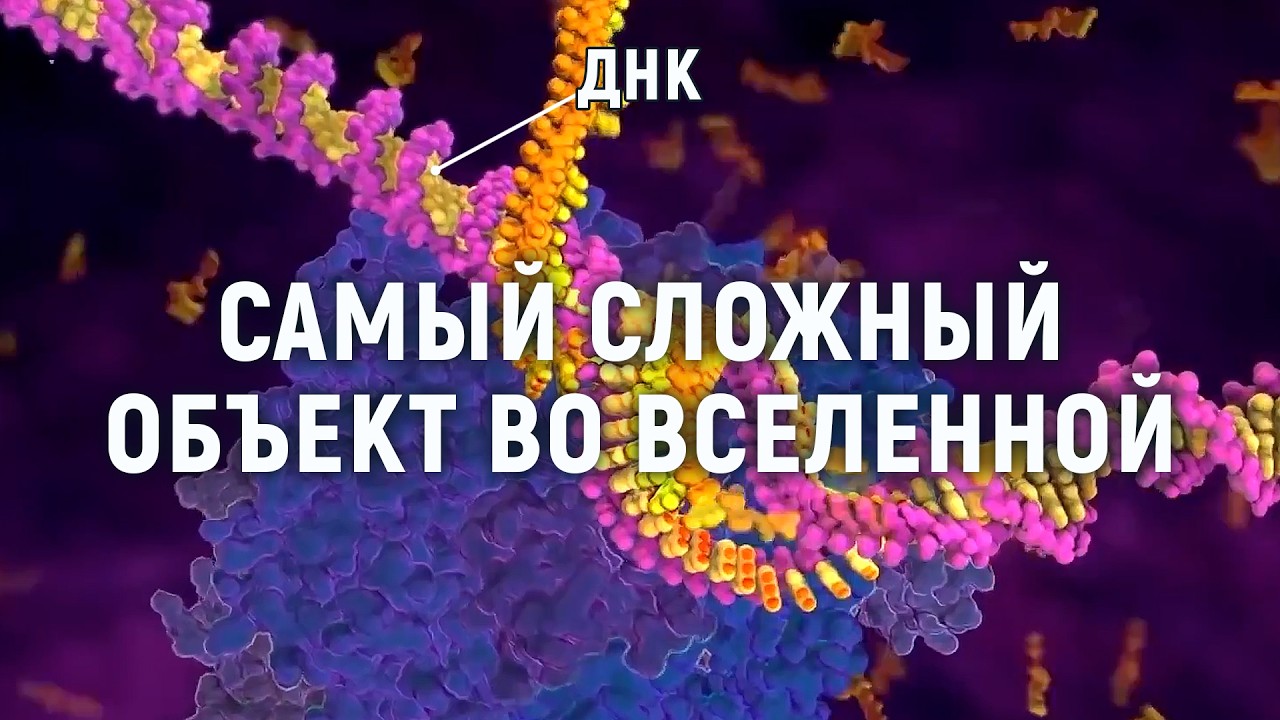
In silico PCR amplification on Microbial DNA | Prokaryotic Genomes | Lecture 79 |Dr. Muhammad Naveed
Автор: Dr. Muhammad Naveed
Загружено: 2022-11-11
Просмотров: 2683
Описание:
In silico PCR amplification on Microbial DNA (Prokaryotic Genomes).
weblink: http://insilico.ehu.es/PCR/
PCR may be simulated against up-to-date sequenced prokaryotic genomes. This service allows a maximum of 2 mismatches between primers and template, so the stringency of in silico PCR must be considered high.
The aim of in silico PCR is to provide an easy way to obtain the theoretical PCR results we may expect from DNA, by using up to date sequenced bacterial genomes (including, optionally, plasmids when available).
TEMPLATE DNA
Template DNA will correspond to the sequenced bacterial DNA chosen in the form, and when available, plasmids may be included in the experiment. The genera will be chosen at PCR main page, and the species or strain will be chosen in the corresponding form.
When the bacterial species has more than one chromosome (p.e Agrobacterium tumefaciens, circular chromosome), both will be used. In the experiment bacterial chromosomic DNA will be considered as circular unless is it linear (p.e. Agrobacterium tumefaciens, linear chromosome). Plasmids will be always considered circular.
PRIMERS
During in silico experiments one or two primers may be used, which must be at least 10 nucleotides long (A+T+C+G must be at least 10). Degenerated nucleotides are not allowed.
Primers must be introduced in the form in 5'-3' direction, and the theoretical amplification will consider all possible combinations which allow amplification (primer 1 to primer 1, primer 2 to primer 2, primer 1 to primer 2 and primer 2 to primer 1).
In all cases it will be considered primers have been design correctly, so they will not form dimmers, hairpin or any other aberrant results.
Maximum number of mismatches allowed (recognition errors between primers and DNA template) is two when only two primers are used (mismatches are limited to one when primers are inputed in fasta format). As a consequence, the theoretical experiment will not be totally stringent. Even this way, in silico PCR amplification may be considered as very restrictive (Sommer Tautz got amplification with 17 nucleotides long primers under non-stringent conditions with nine mismatches). We will try to increase the number of mismatches in the future (up to 4 mismatches for 20 mer primers is our goal).
The length of amplicons may be up to 10000 bp, and it can be customized. We have considered 3000 bp as a default value. The selected length includes primers.
RESULTS
The results page will show the starting position of the amplicon in the chromosome or plasmid and the length of each amplicon. Amplicons obtained in each chromosome or plasmid will be shown separately in tables.
Amplicons will also be shown in a picture which includes a 100 bp ladder. On the right of the picture the sorted length of all amplicons will be shown.
When clicking the starting position of amplicons in the tables, the following information will be provided:
Source of DNA, and starting and ending positions of amplicons
DNA sequence of amplicons
List of ORF to which the amplicons belong to.
About Dr. Muhammad Naveed
(Associate Professor, Biotechnology, University of Central Punjab, Lahore)
With distinction, Dr. Muhammad Naveed obtained a Ph.D. degree in Biotechnology (Genomics & Bioinformatics) from Quaid-e-Azam University, Islamabad. He has won Ph.D. indigenous & IRSIP scholarships from HEC. He has done Pre-Doc research at the University of Ghent, Belgium. HEC awarded him the best Ph.D. (IRSIP) Scholar of the year in 2013 & QAU honored him as a “Distinguished Alumni” in 2017. He is doing research projects in Bioinformatics, Molecular Biotechnology & Vaccine designing, and Drug designing against infectious diseases. He has supervised 70 MSc. and 60 MPhil. & 01 Ph.D. students. He has published 102 Research articles with 504 impact factors, 2000 citations, 01 book, and 03 book chapters. He was awarded the distinguished “Researcher of the Year” in 2016 (UoG) and 2018, 2019 & 2021 (UCP).
#pcr #Insilicopcr #prokaryotes
Повторяем попытку...

Доступные форматы для скачивания:
Скачать видео
-
Информация по загрузке: