Taste Evolution: Chemistry, Survival, and Biological Adaptation from Ocean Origins to Modern Diet
Автор: Crevoisier Philippe
Загружено: 2024-11-18
Просмотров: 107
Описание:
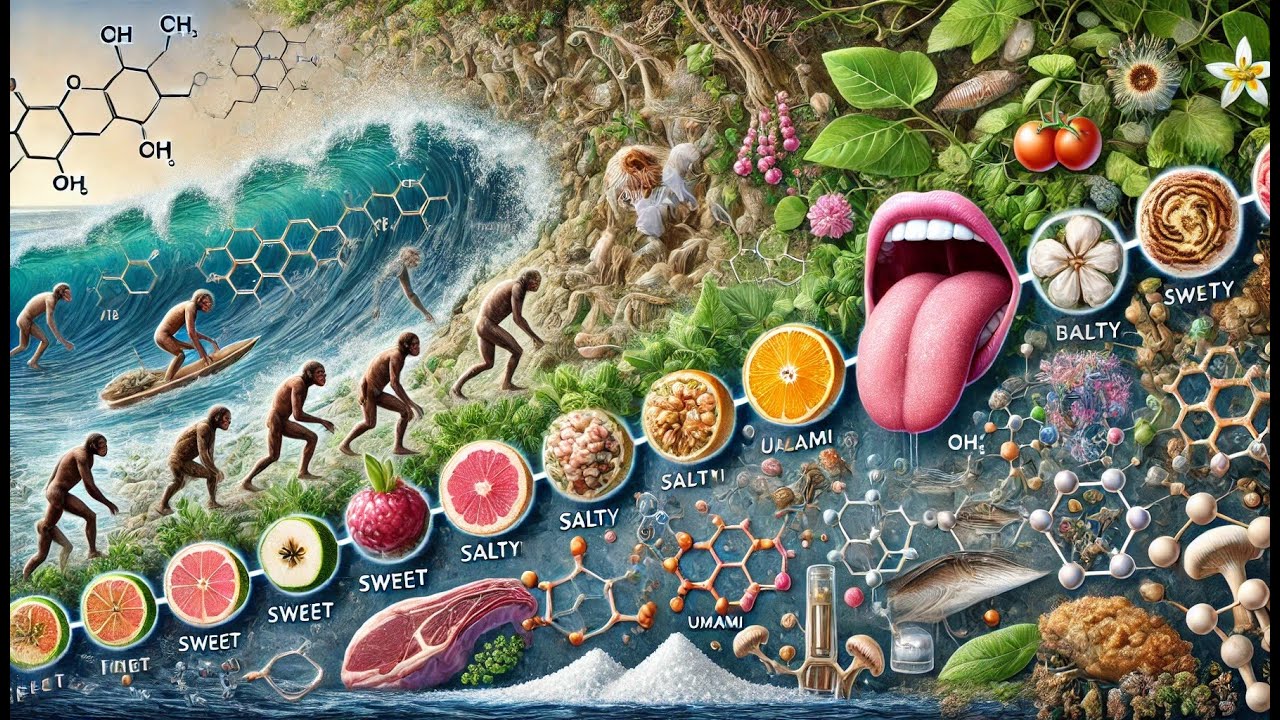
Taste is a fundamental survival mechanism shaped by millions of years of evolution. It helps guide living beings toward beneficial nutrients and away from harmful substances. The human tongue, along with receptors found throughout the digestive system, detects the basic tastes: sweet, salty, umami, and bitter. Each taste is linked to essential physiological needs, such as energy balance, electrolyte levels, and protection from toxins.
Sodium, a vital element, became ingrained in our diet through the early evolution of marine organisms. As vertebrates moved onto land, their need for sodium persisted, driving the development of specific salt receptors. Nitrogen, another key element, is detected by umami receptors, rewarding the intake of protein-rich foods. The discovery of the umami taste by Kikune Ikeda and the identification of glutamate highlight our biological response to nitrogen.
Cooking food breaks down complex molecules, enhancing taste perception and releasing nutrients, while bitter taste receptors evolved as a defense against toxins in plants. This dual role of taste, as both reward and warning system, underpins the survival strategies of organisms over billions of years.
For a deeper exploration of these mechanisms and more, read Living to the Power of 2, available on Amazon.
Повторяем попытку...
Доступные форматы для скачивания:
Скачать видео
-
Информация по загрузке:


