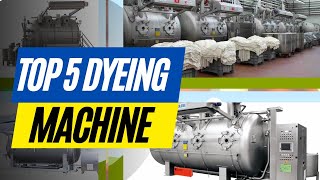
Virtual Visit to A Knit Dyeing Factory
Автор: Textile Technology
Загружено: 2025-10-23
Просмотров: 49
Описание:
In this video we can Virtual Visit to A Knit Dyeing Factory, knit dyeing factory, knit dyeing factory in Bangladesh, knit dyeing factory in chittagong, knit dyeing factory in china, knit dyeing, knit dyeing factory list in Bangladesh,
top 10 knit dyeing factory in Bangladesh, knit dyeing process, knit fabric dyeing process, how to dye knit fabric
knit dyeing process involves several key steps, including pretreating the fabric (scouring, bleaching), dyeing with the chosen color, and then finishing the fabric. The dyeing itself can be done using methods like exhaust dyeing in a winch dyeing machine or continuous methods like Cold Pad Batch (CPB) dyeing. After dyeing, the fabric is washed, dried, and finished to achieve the final desired properties.
1. Pretreatment
Receiving and Inspection: Grey fabric is received, inspected for defects, and prepared for production.
Singeing: Any loose fibers are burned off the fabric surface.
Backsewing: The fabric is stitched into a continuous rope or loop for processing.
Scouring and Bleaching: The fabric is cleaned and impurities are removed. Bleaching is often combined with scouring to achieve a uniform base color.
2. Dyeing
Sample Dyeing:
Before bulk production, a sample is dyed and sent to the buyer for approval. Once approved, the recipe is used for bulk production.
Batching:
The required amount of fabric is measured, stitched, and weighed for the batch.
Dyeing Method:
Exhaust Dyeing: The fabric is loaded into a machine, like a winch, where it circulates through a dye bath. The dye is gradually exhausted from the liquor onto the fabric.
Cold Pad Batch (CPB) Dyeing: The fabric is passed through a dye bath using a padding machine, saturated with dye, and then rolled into a batch. It is left to age for a period to allow the dye to penetrate the fiber, typically at a cool or room temperature.
Dyeing Temperature and Time:
Specific temperatures and run times depend on the fiber and dye type. For example, polyester blends may require higher temperatures than 100% cotton.
3. Post-treatment and Finishing
Washing and Rinsing: The fabric is rinsed to remove excess, unfixed dye and chemicals.
Neutralization: The fabric may be neutralized with an acid like acetic acid to stop the dyeing process.
Dewatering: Excess water is removed, often using a slitting machine that also opens the fabric from a tube to an open width.
Drying and Stentering: The fabric is dried and heat-set to control shrinkage and stretch.
Compacting and Calendaring: The fabric is further compressed to increase its density and thickness, and to improve its feel.
Quality Check: The final product is inspected for shade consistency and other quality parameters.
Повторяем попытку...

Доступные форматы для скачивания:
Скачать видео
-
Информация по загрузке: