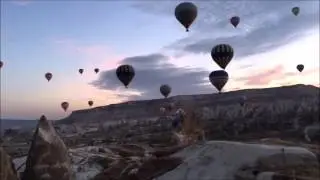
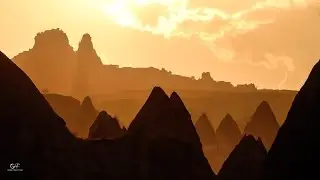
The peak of Cappadocia (Kapadokya'nın Zirvesi) - Uçhisar
Автор: Cappadocia Explorer
Загружено: 2015-12-13
Просмотров: 376
Описание:
Video from Sami Khan.
Photos from / ucasarlilar
Uçhisar-Üçhisar
Uçhisar is dominated by a huge plug of rock, a so-called kale (castle) which is mirrored in Ortahisar, a similar-sized but much less visited village just off the road from Nevşehir to Ürgüp. Way back in history Uçhisar’s was the “outer castle” in the defenses of Cappadocia. Ortahisar was the “middle castle.” Başkale, the first “castle”, was eventually renamed Ürgüp.
Mts Erciyes and Hasan aside, Uçhisar Kalesi (Uçhisar Castle) is by far the most conspicuous feature of the Cappadocian landscape. Forget any idea of a European-style built castle - this castle is a solid chunk of rock with a thinner offshoot; from a distance the two parts resemble a giant snail dragging its shell across the landscape.
In the past, families hollowed caves out of the rock and used them as retreats whenever enemies appeared; in more peaceful times those same caves provided homes for the locals, so that Uçhisar Kalesi functioned rather like a natural tenement block stuffed full of apartments.
In the 1950s the authorities moved residents out of the castle and into modern afet evleri (disaster houses) for fear of a landslide. They were only just in time - in the 1960s a serious rockfall caused the collapse of the Ağa’nın Konağı (the Lord’s Mansion), a palatial home that had been created inside it.
Today you can buy a ticket and climb up inside the castle to take advantage of the superb views available from the summit, all of 1,350m above sea level.
The rock formations that huddle in the wake of the kale are almost equally dramatic. Most soar above the surrounding houses, their sides pockmarked with pigeon-houses, their facades daubed with patterns in red and white pigments aimed at luring the vital, manure-supplying birds to a favoured roost.DSC00970
Although it’s often said that the rock of Uçhisar is called a castle because it looks like one, in reality it doesn’t look anything like the man-made castles with which most visitors will be familiar. Instead, the locals called all the jutting rock cones “kales” before the marketing people came up with the more evocative “fairy chimneys”.
Now it’s possible to climb up inside two of the fairy chimneys to take tea à la Cappadoce and get some impression of what it might have been like to live inside such structures. The local branch of the Jandarma has also taken up residence inside a fairy chimney. It’s just a shame that stalls selling tacky tourist souvenirs are creeping ever further in from the road, thereby encroaching on the dignity of the landscape.
From the road that whisks visitors past Uçhisar and on to Göreme it can look as if all the locals live in newly built and aesthetically banal houses. However, to one side of the castle it’s still possible to stroll around and admire the ruins of the old village where fine stone houses were built over and in front of cave networks.
Over the last decade foreigners and Turks from elsewhere in the country have moved in on these houses in a big way, converting them into houses and hotels of varying degrees of boutiqueyness. In some cases the end results are a joy to the eye – one thinks of Les Maisons de Cappadoce with their beautiful views over the Pigeon Valley, for example, of the much newer Kale Konağı, or of the wonderful Argos in Cappadocia complex.
Unfortunately some builders have chosen to ignore the essentially small-scale rural charms of the vernacular architecture with the inevitable detrimental consequences to the landscape.
Повторяем попытку...

Доступные форматы для скачивания:
Скачать видео
-
Информация по загрузке: