What is a 2-Way Speaker on Pro Acoustics Tech Talk Episode # 107
Автор: Pro Acoustics
Загружено: 2023-11-21
Просмотров: 6904
Описание:
https://www.proacousticsusa.com
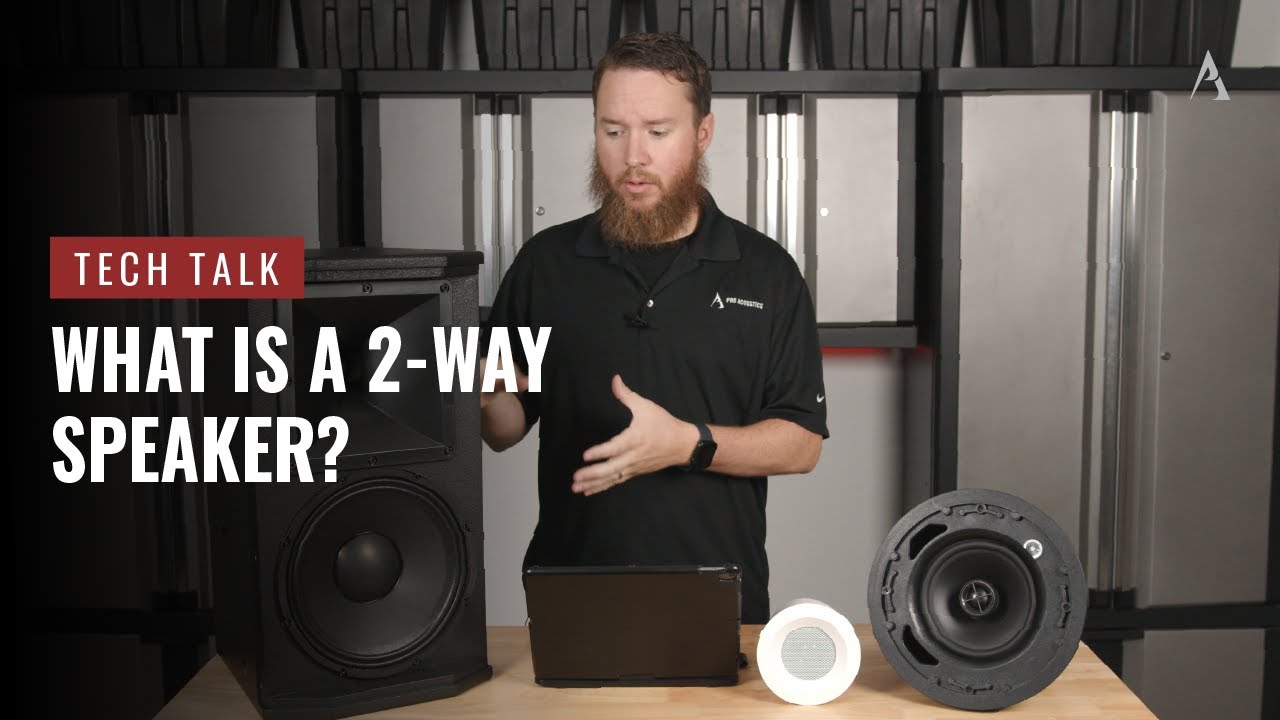
In this video, Nathan explains the concept of a 2-way speaker, a type of loudspeaker designed with two distinct components for different frequency ranges: the woofer and the tweeter. These components are typically separated and configured by an internal crossover.
The woofer is responsible for producing low-frequency sounds, including bass and mid-bass frequencies. It's a larger driver with a diaphragm designed to move back and forth to effectively produce these lower frequencies. On the other hand, the tweeter handles high-frequency sounds such as treble and upper midrange frequencies. It's a smaller driver with a diaphragm designed for rapid vibrations to accurately produce higher-pitched sounds.
These two drivers work in harmony to cover a broad range of frequencies, with the crossover network playing a crucial role. The crossover network filters the incoming audio signal and directs the appropriate frequency ranges to the woofer and tweeter.
While 2-way speakers strike a balance between cost, complexity, and audio quality, Nathan briefly touches on 3-way speakers. These speakers add a midrange driver to handle midrange frequencies, providing a more specialized approach to sound reproduction. However, 2-way speakers are widely used in various professional and commercial audio systems due to their good sound quality.
Ultimately, the choice between 2-way and 3-way speakers depends on your specific audio needs and budget. Watch the video to gain a deeper understanding of audio technology and make an informed decision for your audio setup.
Have additional questions about 2-way speakers? Let us know by commenting below, emailing [email protected], or calling us at (888) 256-4112.
Find us on Facebook: / proacousticsusacom
Follow us on Instagram: / proacousticsusa
Повторяем попытку...
Доступные форматы для скачивания:
Скачать видео
-
Информация по загрузке:


