Relativistic Momentum: UNIZOR.COM - Relativity 4 All - Conservation
Автор: Zor Shekhtman on UNIZOR Education
Загружено: 2023-09-24
Просмотров: 319
Описание:
UNIZOR.COM - Physics through a Looking Glass of Mathematician
Read full text of notes for this lecture on UNIZOR.COM - Relativity 4 All - Conservation - Momentum
Notes to a video lecture on UNIZOR.COM
Relativistic Momentum
One of the fundamental laws of Newtonian mechanics is the Second Law describing the relationship between a vector of force F, inertial mass m and a vector of acceleration a
F = m·a
where inertial mass m is considered a constant characteristic of an object independent of time, space or motion.
Since a vector of acceleration a, by definition, is the first derivative of a vector of speed v by time t, the same law can be written as
F = m·dv/dt = d(m·v)/dt
The product of mass and a vector of speed is a vector of momentum of motion p=m·v, so the same Second Law can be written as
F = dp/dt
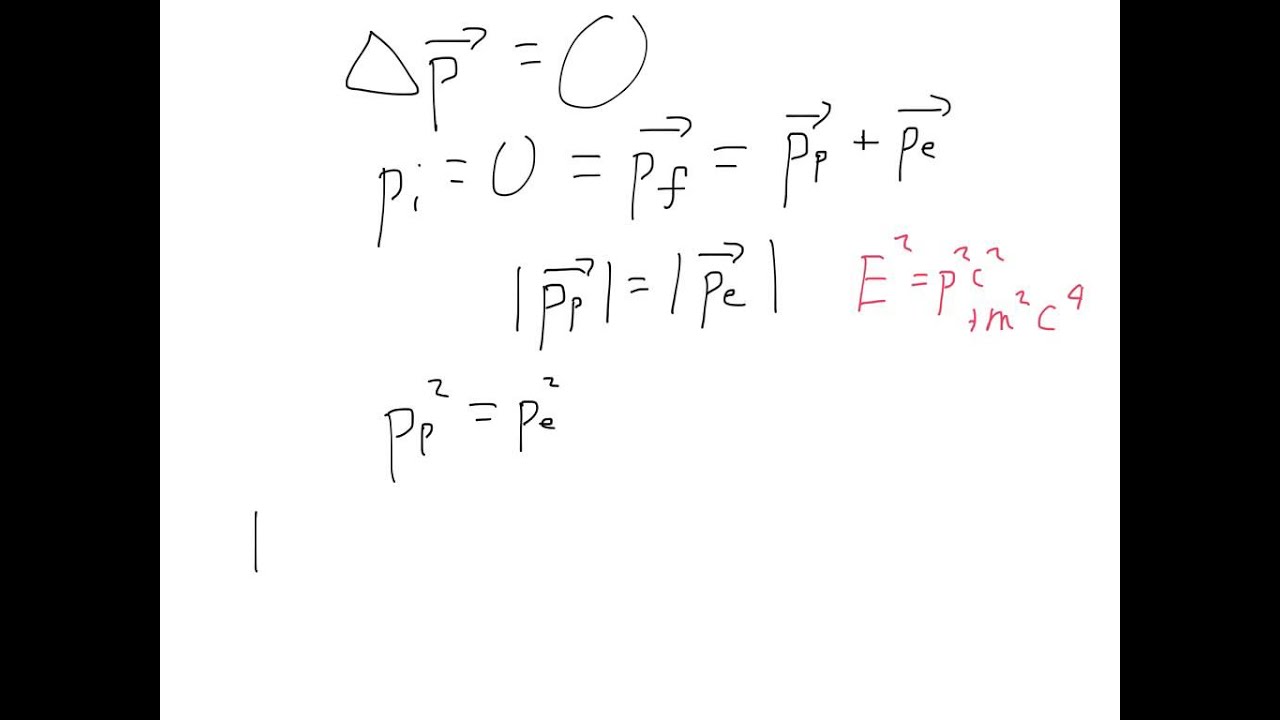
The Conservation Law of Momentum, based on uniformity of space, states that the conservation of momentum is universal and should be maintained through transformation from one inertial frame to another (see the previous lecture Noether Theorem in this course).
That's why it makes sense to consider the latter expression of the Newton's Second Law in terms of a derivative of the momentum of motion as the most appropriate form.
It makes sense to discuss the physical meaning of a momentum and its expression as a product of mass and velocity.
As seen from the last formula, a force is a rate of change of a momentum. The greater the change of momentum - the greater force that caused its change.
From another perspective, the momentum can be viewed as a degree of resistance to the change of motion.
Consider an object uniformly moving along a straight line and some external force that tries to change this motion.
It is intuitively acceptable that an object with greater mass resists the changes to its movement stronger and, therefore, requires stronger force to achieve similar change in motion.
Similarly, the faster an object moves - the more difficult to change its trajectory, and we can reasonably assume that an object with higher speed of movement requires stronger force to changes its movement.
The purpose of this lecture is to analyze the transformation of momentum from one inertial frame to another using the Law of Conservation of Momentum as a tool.
We do know how relativistic speed is transformed (see lectures Einstein View - Adding X-Velocitis and Einstein View - Adding Y-,Z-Velocitis in this course).
The Law of Conservation of Momentum will help us to determine how an object's momentum changes when viewed from different reference frames.
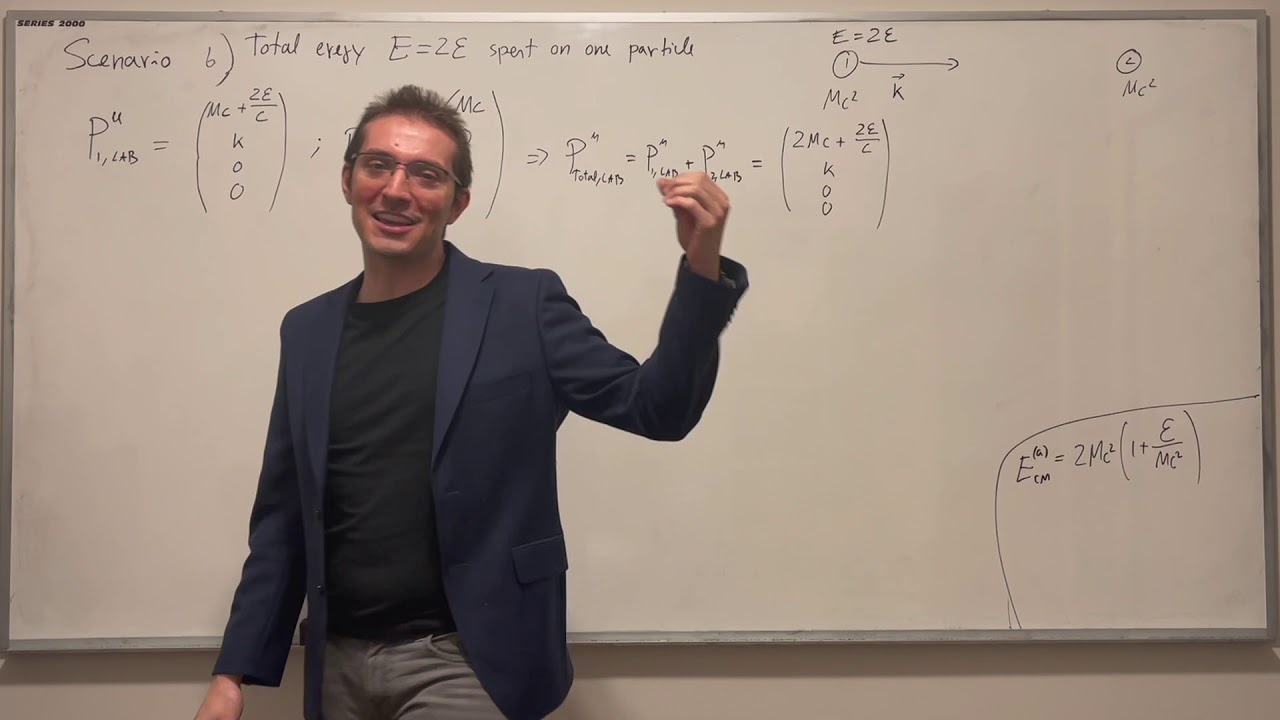
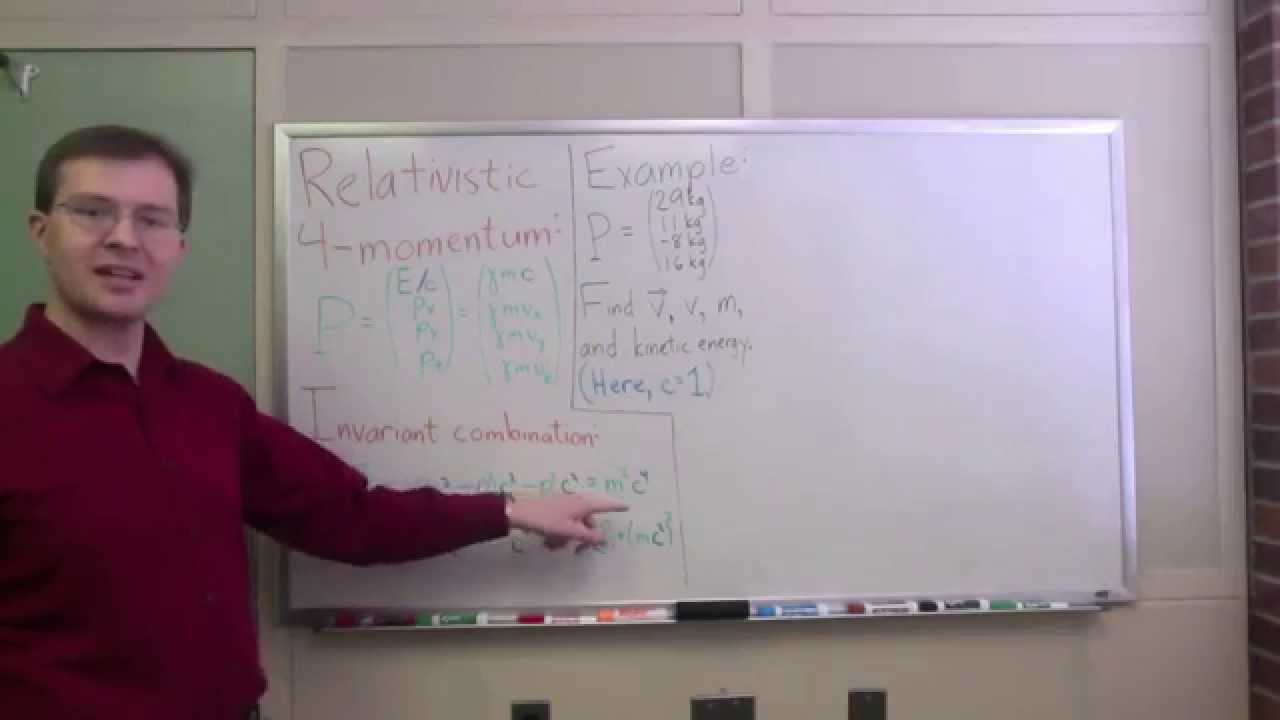
Relativistic momentum of an object is its Newtonian-like momentum (product of mass and velocity vector) multiplied by factor γ=1/√(1 − u²/c²), where u is the magnitude (length) of a velocity vector.
Modified this way, the relativistic momentum is preserved in the collision we use as an example.
The step-by-step proof of the Law of Conservation of Relativistic Momentum can be viewed on the linked from the main notes page of this lecture to the page Proof of Conservation of Relativistic Momentum (there are a lot of formulas there, so open it in a new tab for clarity by right-click and choosing to open in a new tab).
Повторяем попытку...

Доступные форматы для скачивания:
Скачать видео
-
Информация по загрузке: