Stalingrad’s Secret Weapon: The Loudspeaker Sergeant Who Broke the 6th Army
Автор: Unsung POW Chronicles
Загружено: 2026-03-04
Просмотров: 10
Описание:
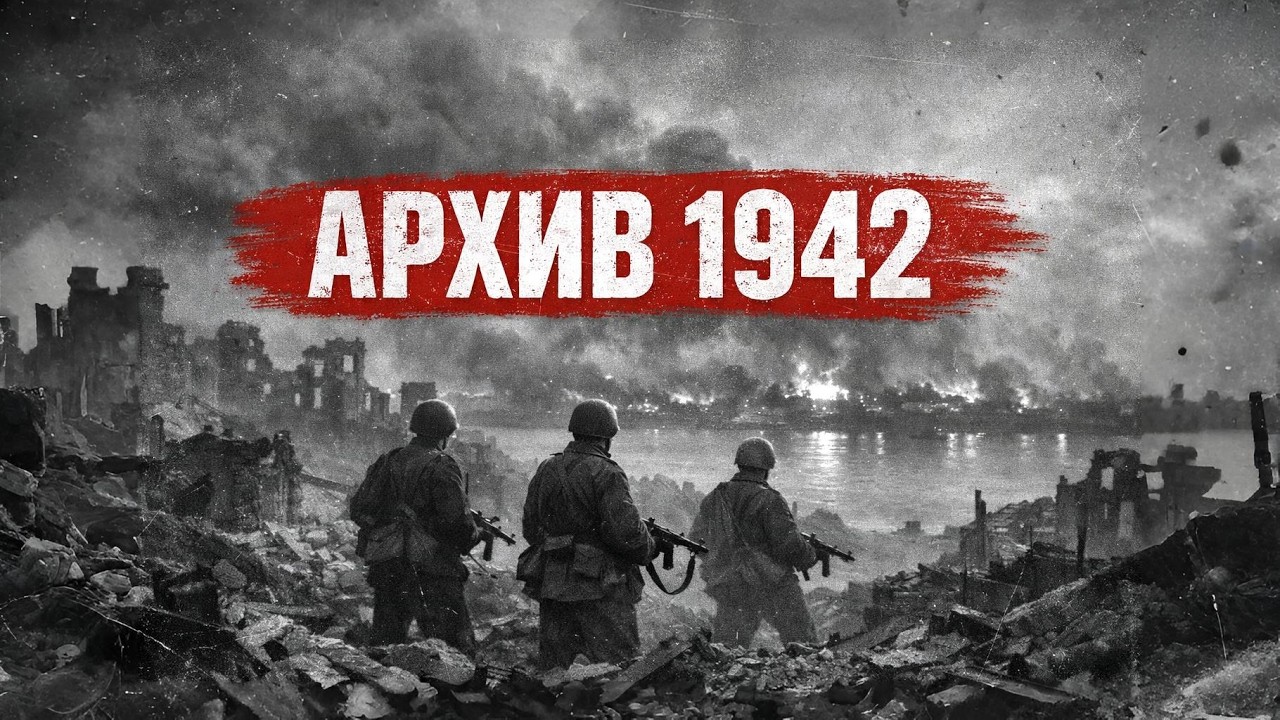
In the frozen hell of Stalingrad, 1943, one man’s weapon wasn’t a rifle—it was a generator and a loudspeaker.
Sergeant Ivan Petrov’s mission: to broadcast the 6th Army into surrender, one tick of the metronome at a time.
This is a true story from the Eastern Front’s most brutal siege.
WARNING: This video contains detailed descriptions of historical warfare, starvation, and psychological combat.
Sergeant Ivan Petrov’s job was simple on paper: support psychological warfare for the 64th Army by broadcasting surrender messages into the German lines. But on the ground, it meant dragging a generator and loudspeakers through a city where the front line ran through kitchens and bedrooms. He spliced cables with numb fingers as shrapnel peeled the insulation back like bark, and he learned that every meter of wire brought him closer to the enemy’s rifles and to the temptation to turn back. Using captured German ration figures, he turned statistics into a weapon: “Every seven seconds, one German soldier dies.” He played stolen gramophone records—tango and sentimental waltzes—to make homesick men despair. When he learned that Field Marshal Paulus had been promoted, he broadcast the news not as an honor, but as a death sentence: “Berlin expects him to die.” His voice became a door that prisoners walked through, but the cost was a body on the stairs, a frostbitten assistant, and a metronome that kept ticking in his own skull long after the guns fell silent. #Stalingrad #WW2History #psychologicalwarfare
SOURCES: • Antony Beevor — Stalingrad (1998) • David M. Glantz — Endgame at Stalingrad (2014) • William Craig — Enemy at the Gates: The Battle for Stalingrad (1973) • 64th Army — Operational reports, Stalingrad Front (January 1943) • German 6th Army — Captured personnel records and ration logs (January 1943) • Vasily Chuikov — The Battle for Stalingrad (1964) CONTESTED REFERENCE MATERIAL: • Date of Paulus’s surrender — Some accounts place it on January 31, others note formal capitulation of northern pocket on February 2 • Number of German prisoners — Commonly cited as 91,000, but exact count varies between Soviet and post-Soviet sources • Effectiveness of loudspeaker propaganda — Memoirs differ on whether broadcasts or starvation was the primary cause of mass surrenders • Pitomnik airfield closure — Exact date of operational cessation is debated between January 14–16, 1943 • Use of music in psychological warfare — Some German prisoner accounts claim it deepened despair; others reported it strengthened resolve
Повторяем попытку...

Доступные форматы для скачивания:
Скачать видео
-
Информация по загрузке: