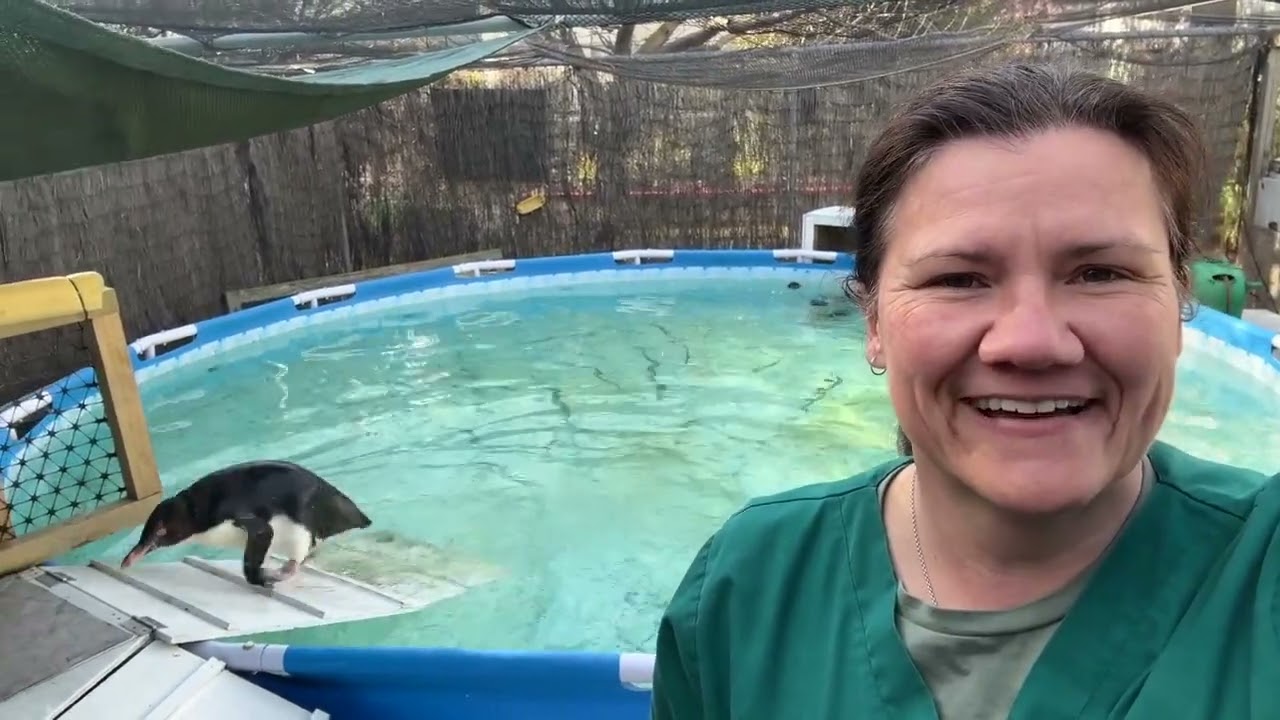
Thank You Video from Ghanaian Veterinary Student
Автор: Morris Animal Foundation
Загружено: 2025-01-15
Просмотров: 84
Описание:
This is a thank you video to Morris Animal Foundation donors from Richard Klottey Botchway, a veterinary student in Ghana. He recently received a Veterinary Student Scholars grant from the Foundation for his animal health research project, Welfare Concerns and Seroprevalance of Rabies in Hunting Dogs in the Northern Region of Ghana.
Hunters who employ hunting dogs have a responsibility to the dog and
its health. Hunting with dogs causes not only death and injury to wildlife, but also lifetime injuries to the dogs used, and may experience negative welfare outcomes (e.g., abrasions, injured muscles and joints, or broken limbs), injured while interacting with an animal (e.g., tusk injuries from wild pigs), or
exposed to infectious disease from the wild animal. A study conducted by the Royal Society for the Prevention of Animal Cruelty (RSPCA), found that, those responsible for hunting with dogs seek veterinary supplies from the internet and attempt to patch their hunting dogs up DIY-style (do-it-yourself) at home, and ultimately, they may prescribe the wrong medications which only enhances the suffering of these dogs ((RSPCA, 2024; NZSPCA, 2024).
The close proximity and contacts between hunting dogs and wild animals, increases the risk of exposure and opens up for cross-infections; particularly with rabies virus. The possibility that some of these viruses may be vertically transmitted from dam to puppy by transplacental transmission would confer
extra difficulty in terms of eradication (Ginsberg and Woodroffe,1997). In a study in 2017 by Johnstone- Robertson, et al, found that these in-contact dogs may horizontally transmit the disease to immediate ‘non-hunting’ household mammals, while percolate neighbouring households and
communities spatially. They found 21% of initial value settings resulted in canine spreading 120km and on doing so at a median spread of 67km/year (Johnstone-Robertson, et al., 2017).
The burden of the disease (rabies) is disproportionally borne by rural poor populations (WHO, 2021). The virus remains a great threat to public health worldwide due to the great diversity of rabies reservoirs, which has made prevention and control increasingly complex (Fisher et al. 2018). In Ghana, dog rabies is endemic and is among the top 5 priority diseases of the Ghana Health Services; notifiable in humans and in animals. The Global Alliance for Rabies Control (GARC), in its Stepwise Approach towards Rabies Elimination (SARE) 2018 ratings, scored Ghana, 1.5 out of 5. Thus; 1) Dog vaccination
coverage: 0.08%. 2) Cost of rabies vaccines/ year: $ 16,013,648. A Stepwise Approach towards Rabies Elimination (SARE) score of 1.5, signifies a country where small-scale rabies control programs are in place and the country is working towards developing a national rabies control program (GARC, 2022).
Even though agencies such as the Neglected Tropical Diseases (NTDs) and the Veterinary Services Directorate (VSD) are involved in rabies elimination, their efforts had not yielded the expected result (Vetsi et al., 2021). The major bottleneck against the anti-rabies campaign includes selective anti-rabies vaccination adopted and a lack of data on the dog population (Nel, 2013). Though the major burden of human rabies is attributed to dog-mediated transmission, a wildlife (sylvatic) cycle of rabies also exists,
with wild animals (e.g., bats, raccoons and foxes) serving as the maintenance host of the virus (WHO, 2024), which might possibly induce spillover. In recent years, a study by Beran, realized that not all rabies infections are fatal to every species, and that in some species, infections with some strains of
rabies virus are subclinical (Beran, 2017). Thus, it is prudent to conduct studies to ascertain the immunological statuses of hunting dogs, to bridge the knowledge gap, which has impeded the planning of anti-rabies campaigns and the control of the disease.
We therefore hypothesize that, the welfare and health care of hunting dogs is depraved, and due to their close proximity and interactions with wildlife, with unknown health status, there may be subclinical rabies circulating amongst hunting dogs.
Повторяем попытку...

Доступные форматы для скачивания:
Скачать видео
-
Информация по загрузке: