ycliper

Популярное

Музыка Кино и Анимация Автомобили Животные Спорт Путешествия Игры Юмор

Интересные видео

2025 Сериалы Трейлеры Новости Как сделать Видеоуроки Diy своими руками

Топ запросов

смотреть а4 schoolboy runaway турецкий сериал смотреть мультфильмы эдисон
Скачать

NASA | RXTE Detects 'Heartbeat' Of Smallest Black Hole Candidate

Автор: NASA Goddard

Загружено: 2011-12-15

Просмотров: 135171

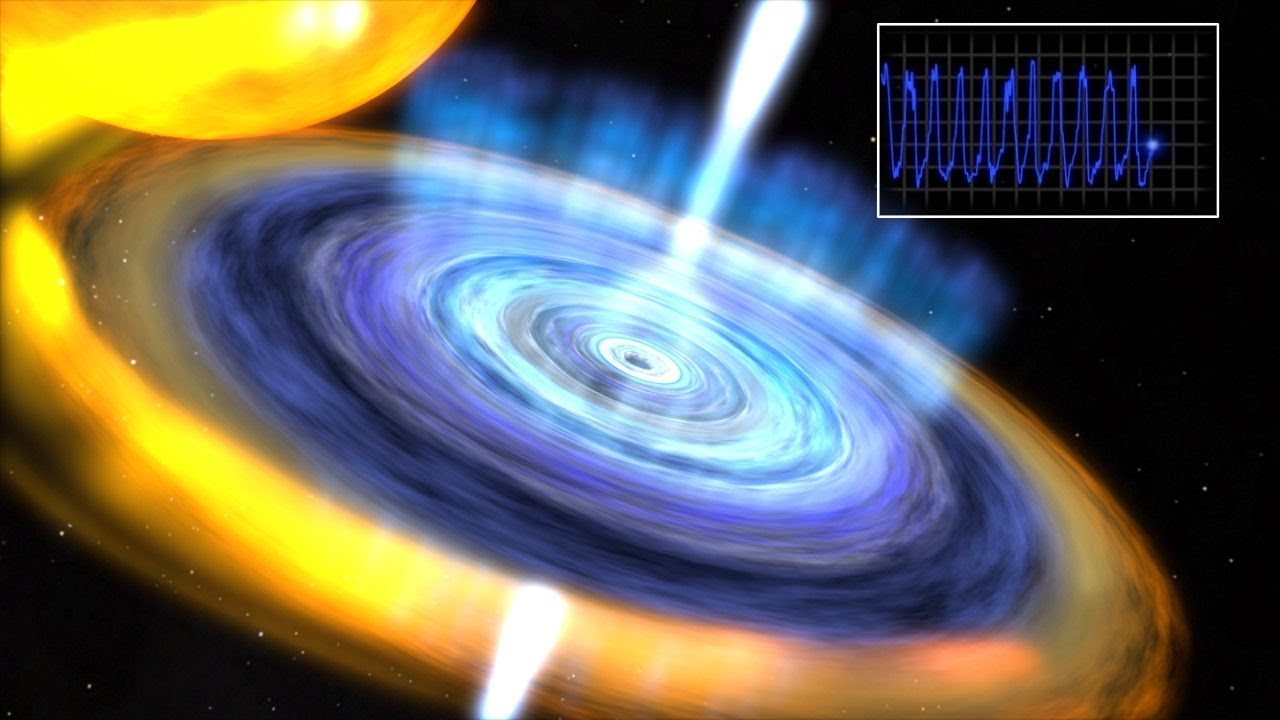
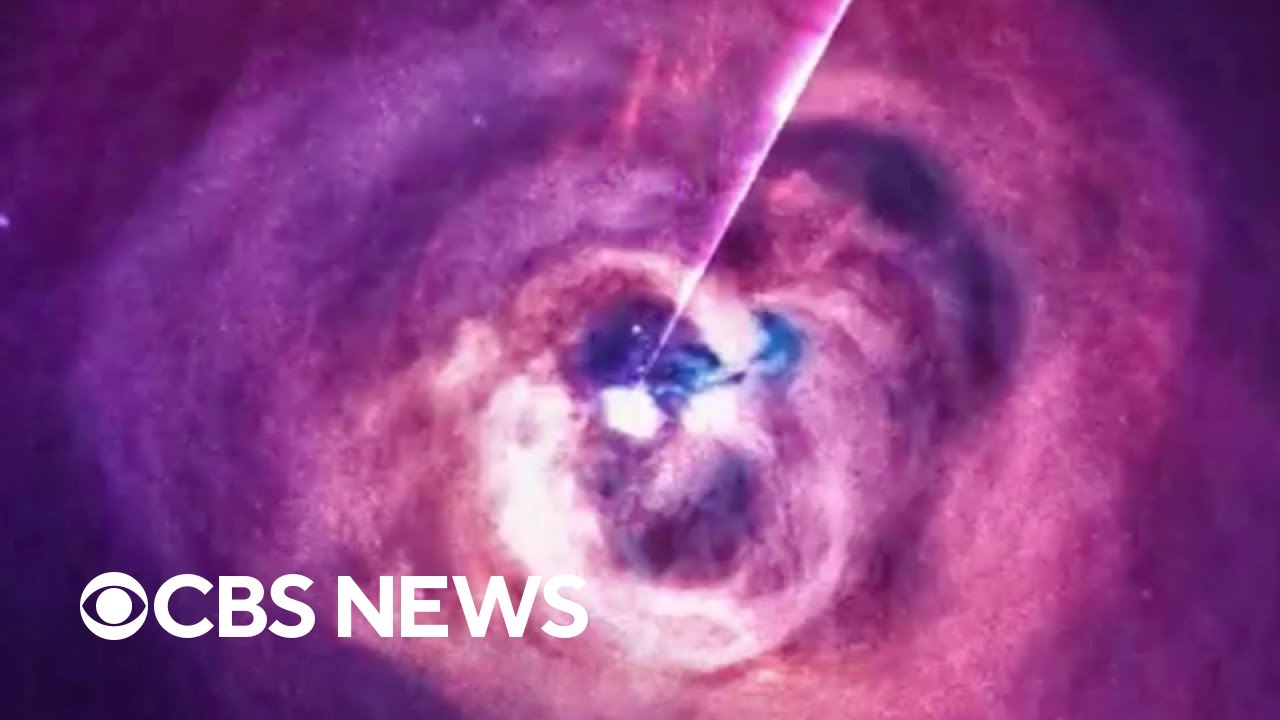
Описание: This animation compares the X-ray 'heartbeats' of GRS 1915 and IGR J17091, two black holes that ingest gas from companion stars. GRS 1915 has nearly five times the mass of IGR J17091, which at three solar masses may be the smallest black hole known. A fly-through relates the heartbeats to hypothesized changes in the black hole's jet and disk.
Data from NASA's Rossi X-ray Timing Explorer (RXTE) satellite has identified a candidate for the smallest-known black hole. The evidence comes from a specific type of X-ray pattern -- nicknamed a "heartbeat" because of its resemblance to an electrocardiogram -- that until now has been recorded in only one other black hole system.
Named IGR J17091-3624 after the astronomical coordinates of its sky position, the binary system pairs a normal star with a black hole that may weigh less than three times the sun's mass, near the theoretical boundary where black-hole status is first becomes possible. Flare-ups occur when gas from the normal star streams toward the black hole and forms a disk around it. Friction within the disk heats the gas to millions of degrees, which is hot enough to radiate X-rays.
Many black hole binaries show distinct and highly structured patterns of X-ray changes, which scientists distinguish by Greek-letter names. But to date only IGR J17091 and one other system, named GRS 1915+105, exhibit so-called rho-class oscillations that astronomers describe as a 'heartbeat' reflecting the accretion and ejection of matter.
It's thought that strong magnetic fields near the black hole's event horizon eject some of the gas into dual, oppositely directed jets that blast outward at nearly the speed of light. The peak of its heartbeat emission corresponds to the emergence of the jet. Changes in the X-ray spectrum observed by RXTE during each beat in GRS 1915 reveal that the innermost region of the disk emits enough radiation to push back the gas, creating a strong outward wind that staunches the inward flow, briefly starving the black hole and shutting down the jet. This corresponds to the faintest emission. Eventually the inner disk gets so bright and so hot that it essentially disintegrates and plunges toward the black hole, re-establishing the jet and beginning the cycle anew.
In GRS 1915+105, which at 14 solar masses is by for the more massive of the two, this cycle occurs in as little as 40 seconds. It occurs eight times faster in IGR J17091.

This video is public domain and can be downloaded at: http://svs.gsfc.nasa.gov/goto?10875

Like our videos? Subscribe to NASA's Goddard Shorts HD podcast:
http://svs.gsfc.nasa.gov/vis/iTunes/f...

Or find NASA Goddard Space Flight Center on Facebook:
  / nasa.gsfc  

Or find us on Twitter:
  / nasagoddard  

Не удается загрузить Youtube-плеер. Проверьте блокировку Youtube в вашей сети.
Повторяем попытку...
NASA | RXTE Detects 'Heartbeat' Of Smallest Black Hole Candidate

Поделиться в:

Доступные форматы для скачивания:

Скачать видео

  • Информация по загрузке:
Скачать аудио

Похожие видео

NASA Simulation’s Plunge Into a Black Hole: Explained

NASA Simulation’s Plunge Into a Black Hole: Explained

Обрушение Всемирного торгового центра | Полное объяснение с точки зрения физики

Обрушение Всемирного торгового центра | Полное объяснение с точки зрения физики

How big are supermassive black holes? NASA size comparison

How big are supermassive black holes? NASA size comparison

Смотрим на Юпитер и Сатурн в телескоп. Юпитер и Сатурн в 2021 году

Смотрим на Юпитер и Сатурн в телескоп. Юпитер и Сатурн в 2021 году

Целебная музыка для души и сердца - спокойные мелодии для нервов #24

Целебная музыка для души и сердца - спокойные мелодии для нервов #24

Бетельгейзе уже взорвалась?

Бетельгейзе уже взорвалась?

Neutron Star Merger Simulation with Gravitational Wave Audio

Neutron Star Merger Simulation with Gravitational Wave Audio

NASA Animation Sizes Up the Biggest Black Holes

NASA Animation Sizes Up the Biggest Black Holes

Большое путешествие по планетам Солнечной системы | Stream 24/7

Большое путешествие по планетам Солнечной системы | Stream 24/7

Zooming-in to the heart of M87 to see a new view of its black hole

Zooming-in to the heart of M87 to see a new view of its black hole

See the Sun's Active Region: Source of the Early-February Solar Flares

See the Sun's Active Region: Source of the Early-February Solar Flares

Кто создал «ничто», из которого образовалась наша Вселенная?

Кто создал «ничто», из которого образовалась наша Вселенная?

Black Hole Star – The Star That Shouldn't Exist

Black Hole Star – The Star That Shouldn't Exist

NASA | Massive Black Hole Shreds Passing Star

NASA | Massive Black Hole Shreds Passing Star

Что у планет внутри?

Что у планет внутри?

What do black holes sound like? NASA releases recording of black hole in distant galaxy

What do black holes sound like? NASA releases recording of black hole in distant galaxy

Меркурий: Планета, Которую Невозможно Достичь | Гениальный План NASA

Меркурий: Планета, Которую Невозможно Достичь | Гениальный План NASA

NASA | Colliding Neutron Stars Create Black Hole and Gamma-ray Burst

NASA | Colliding Neutron Stars Create Black Hole and Gamma-ray Burst

Live 4K video of Earth and space: 24/7 Livestream of Earth by Sen’s 4K video cameras on the ISS

Live 4K video of Earth and space: 24/7 Livestream of Earth by Sen’s 4K video cameras on the ISS

Сравнение планет, звезд и галактик

Сравнение планет, звезд и галактик

© 2025 ycliper. Все права защищены.


  • Контакты
  • О нас
  • Политика конфиденциальности


Контакты для правообладателей: [email protected]