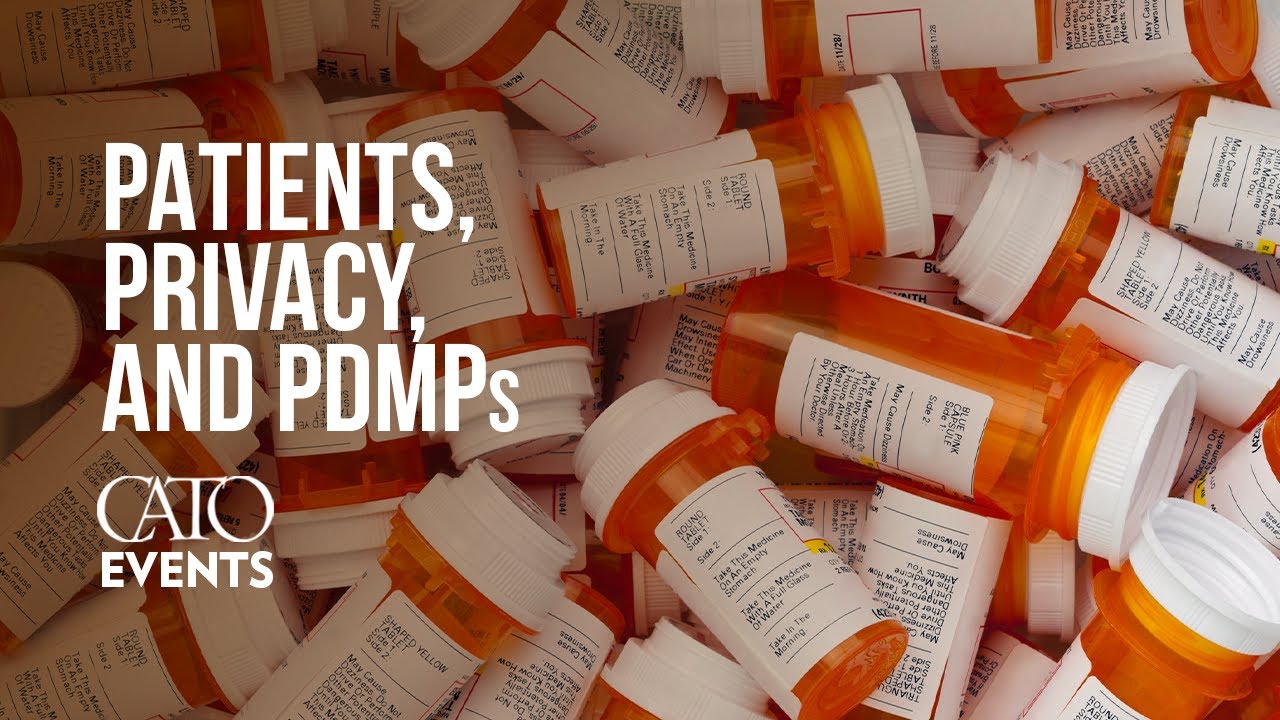
Patients, Privacy, and PDMPs: Exploring the Impact of Prescription Drug Monitoring Programs
Автор: The Cato Institute
Загружено: 2019-11-26
Просмотров: 5566
Описание:
Featuring David S. Fink, MPhil, MPH, Mailman School of Public Health, Columbia University; Kate M. Nicholson, JD, Civil rights attorney and pain patient advocate; Nathan Freed Wessler, JD, Staff attorney, ACLU Speech, Privacy, and Technology Project; Patience Moyo, PhD, Assistant Professor, Brown University School of Public Health; moderated by Jeffrey A. Singer, MD, Senior Fellow, Cato Institute.
Prescription drug monitoring programs (PDMPs) operate in all 50 states and the District of Columbia. These statewide electronic databases of prescriptions dispensed for controlled substances were established in response to the opioid overdose crisis. Their purpose is to facilitate drug diversion investigations by law enforcement, change prescribing behavior, and reduce “doctor shopping” by patients who seek drugs for nonmedical use. In 28 states it is mandatory for providers to access the database and screen each time before prescribing any controlled substance to any patient. There is evidence that PDMPs have contributed to the dramatic 42 percent decline in prescription opioid volume since 2011. Many healthcare practitioners cite the inconvenience and workflow disruptions of mandatory-access PDMPs as deterrents to prescribing, while others fear scrutiny from law enforcement and licensing authorities — even for appropriate medical prescribing. This is unintentionally causing the undertreatment of patients with acute and chronic pain and, in some cases, the abrupt withdrawal of treatment from chronic pain patients. There is also evidence that PDMPs increase crime by driving nonmedical users from diverted prescription opioids to more harmful heroin and fentanyl, thus fueling overdoses. Finally, PDMPs pose a serious risk to medical privacy by allowing law enforcement to access confidential medical records without a warrant based on probable cause, which may be in violation of the Fourth Amendment.
Learn more: https://www.cato.org/events/patients-...
Want to find the Cato Institute elsewhere on the internet?
Facebook - / catoinstitute
Twitter - / catoinstitute
Instagram - / catoinstitute -
Повторяем попытку...
Доступные форматы для скачивания:
Скачать видео
-
Информация по загрузке: