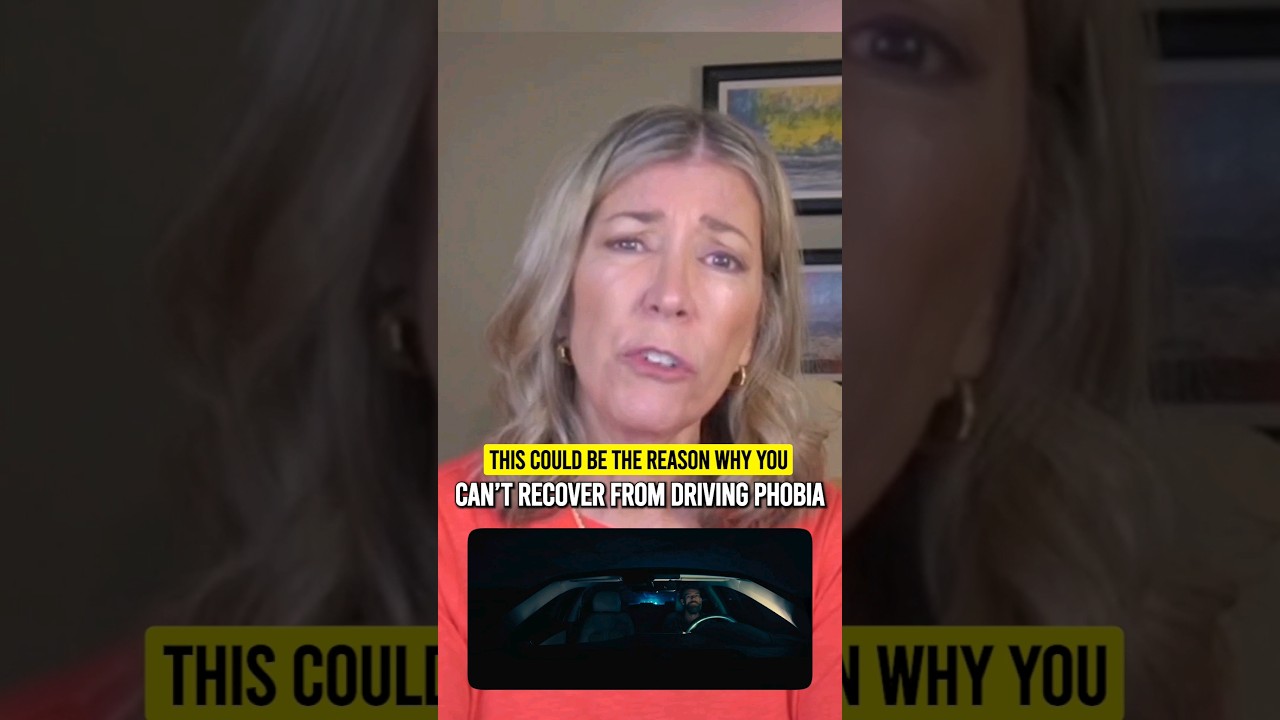
THIS COULD BE THE REASON WHY YOU CAN'T RECOVER FROM DRIVING PHOBIA
Автор: Paige Pradko
Загружено: 2024-05-16
Просмотров: 1214
Описание:
In this video I describe how to treat driving phobia or driving anxiety, often experienced by people that are also suffering from agoraphobia. Agoraphobia is an intense fear of becoming overwhelmed or unable to escape or get help, and it is often triggered by leaving places outside of their homes, like driving or traveling by public transportation. Although some people can have driving anxiety without having agoraphobia.
To recover from anxiety and a phobia, you exposure yourself to what you fear. That sounds simple, right? But, there actually is a lot to consider. Let me review a few basics on how to do exposure therapy.
You may use
• real life (in vivo) or situational exposures. Those would be driving exposures.
• You may use imaginal exposures like scripts or even virtual reality exposures.
• And, you may use interoceptive exposures.
Situational or real-life driving exposures are always going to be best here, but I often have my clients working on interoceptive exposures as well if they have panic attacks or are afraid of how high anxiety symptoms feel in their body. I have a panic course at paigepradko.com where I take you through an easy-to-follow program on how to do interoceptive sensitivity reduction exercises and exposures if you are interested.
Through exposures you are training your brain that the anxiety and panic symptoms are not harmful or dangerous and at the same time, you are building your confidence and learning to tolerate anxiety. When your brain learns through exposures and through your thoughts that you are safe, new neuropathways are formed in the brain that bypass or override the old fearful network that connected driving to your fear response. When you have practiced exposure therapy over time, without avoidance or safety or distraction behaviors, in a variety of situations, your fight or flight or fear response will diminish and whatever anxiety you may feel will be much more easily tolerated.
Doing the exposures is one part of treatment, and discontinuing the avoidances, safety, distraction, reassurance, and white knuckling behaviors is the other part. That part is called response prevention. You do nothing to make yourself feel safer or calmer or more secure in those exposures or even after the exposures.
Повторяем попытку...
Доступные форматы для скачивания:
Скачать видео
-
Информация по загрузке: