Corpse-paths and Chorographers: Can Deep Maps be Digital? (Dr Stuart Dunn, King's College London)
Автор: UCCDH
Загружено: 2020-02-20
Просмотров: 172
Описание:
In November 2017, Dr Stuart Dunn (King's College London) was invited to give a presentation on corpse-paths and deep maps at the Digital Humanities Research Colloquium, University College Cork.
See more about Digital Arts & Humanities at University College Cork:
https://www.ucc.ie/en/dah/
Abstract
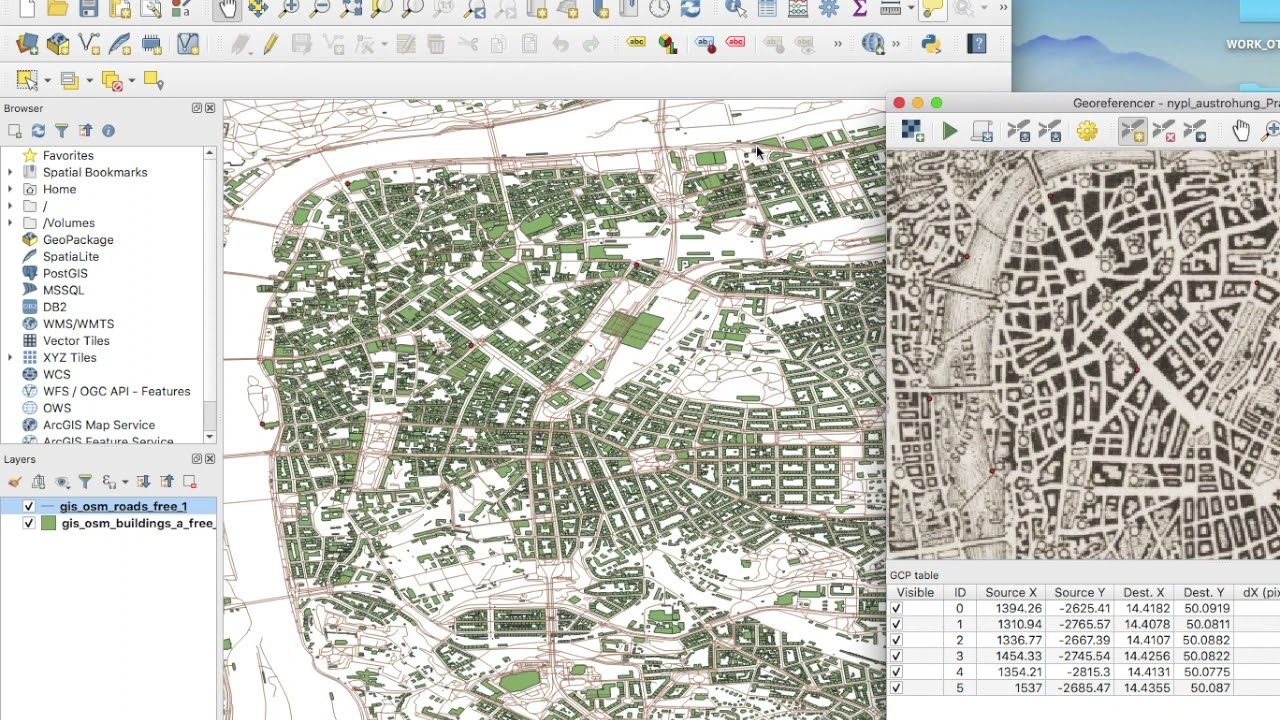
British antiquarian chorographers of the Elizabethan period and the decades which followed, such as John Leland, William Camden and William Stukeley, have long held a key – yet somewhat ambiguous – place in the history of landscape studies and, more recently, the spatial humanities. Their close observations of historical, topographical and geological phenomena, often informed by personal sensory experience and perambulation through the landscape, opened windows on the world which could be shared with (relatively) wide audiences in print, fostered a muscular brand of nationalism, and developed a newly-critical template for recording and discussing place. Their voices are still heard in some parts of the humanities; for example contemporary scholars have highlighted their role as antecedents of the phenomenological archaeology which became popular (but controversial) in the 1990s. Phenomenologists however are not the only humanists to have engaged with chorographic ideas. Historians, literary scholars and curators who have engaged with so-called “deep mapping” have done so implicitly, often in response to the limitations of conventional Geographical Information Systems (GIS) in historical, archaeological and literary research. This talk will consider whether the chorographic template can indeed help us to transcend the limitations of GIS in the (digital) humanities – and whether it can be usefully allied with spatial technology in the formation of a “deep map”.
About the Speaker
Stuart Dunn is Senior Lecturer in Digital Humanities at King’s. He started out as an archaeologist, with interests in the history of cartography, digital approaches to landscape studies, and spatial humanities. He currently works on projects in spatial narrative theory, critical GIS, Cypriot cultural heritage, and the archaeology of mobility. Stuart gained an interdisciplinary PhD on Aegean Bronze Age dating methods and palaeovolcanology from the University of Durham in 2002, conducting fieldwork in Melos, Crete and Santorini. In 2006 he became a Research Associate at the Arts and Humanities e-Science Support Centre, having previously worked at the AHRC, after which he became a Lecturer in the Department of Digital Humanities. He is also a Visiting Scholar in Stanford University’s Center for Spatial and Textual Analysis’s Spatial History project. Stuart welcomes enquiries about the supervision of PhD projects in any of the areas above. You can find his blog at http://www.stuartdunn.wordpress.com/a....
#digitalhumanities #digitalmapping #gis
Повторяем попытку...

Доступные форматы для скачивания:
Скачать видео
-
Информация по загрузке: