Lupus Nephritis and Pregnancy, Lupus Nephritis: Diagnosis and Management, Glomerulonephritis: Causes
Автор: EndlessMedical.Academy
Загружено: 2026-02-22
Просмотров: 14
Описание:
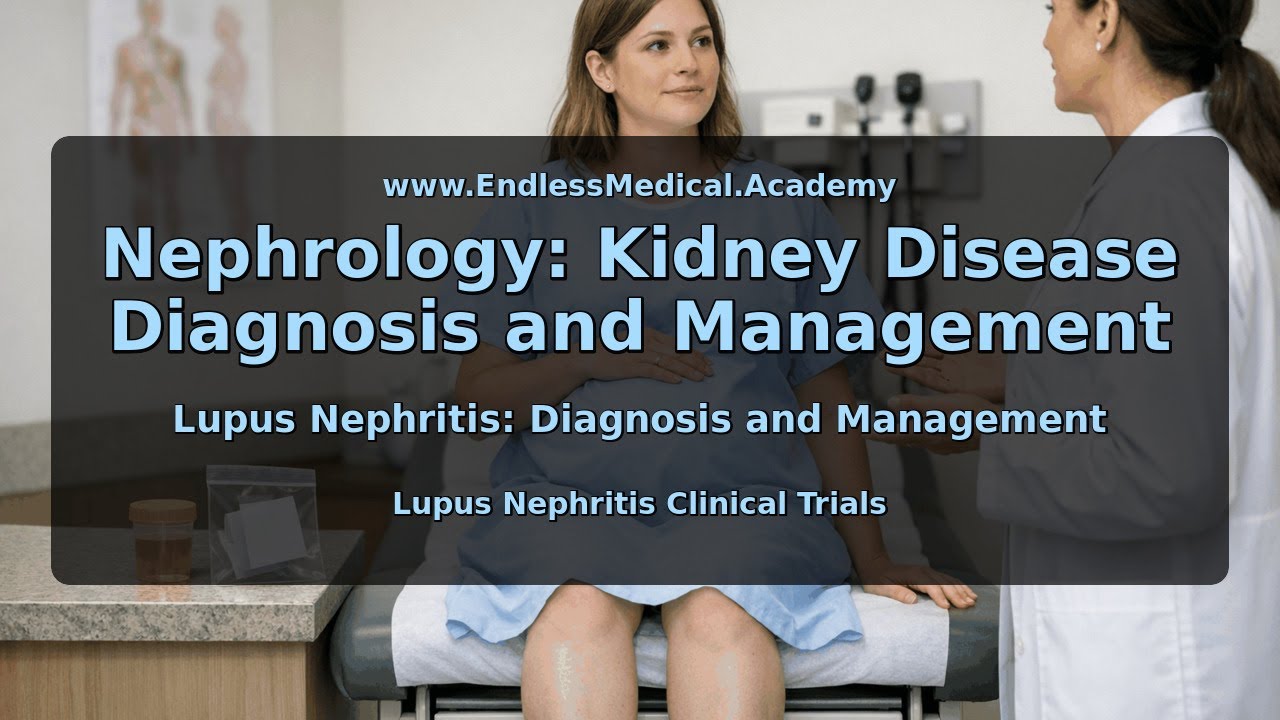
A 19-year-old pregnant patient with a history of systemic lupus erythematosus now develops new fatigue, lower extremity edema, proteinuria, and mild hypoxemia during her second trimester. Standard evaluations are inconclusive. How should clinicians approach the next diagnostic step when distinguishing between lupus nephritis activity, pregnancy-related changes, or early preeclampsia in this context? What findings or investigations are most crucial to guide management and optimize maternal-fetal outcomes?
VIDEO INFO
Category: Lupus Nephritis and Pregnancy, Lupus Nephritis: Diagnosis and Management, Glomerulonephritis: Causes, Diagnosis, and Management, Nephrology: Kidney Disease Diagnosis and Management
Difficulty: Expert - Expert level - For those seeking deep understanding
Question Type: Diagnostic Failure
Case Type: Common Scenario
Explore more ways to learn on this and other topics by going to https://endlessmedical.academy/auth?h...
QUESTION
A 19-year-old gravida 1 para 0 at 18 weeks with systemic lupus erythematosus diagnosed at age 16 presents with 3 weeks of fatigue and new lower-extremity edema. She has a history of mild tricuspid regurgitation and allergic rhinitis. Vitals: pulse 102 bpm, temperature 37.5 degreesC, respiratory rate 19 breaths/min, blood pressure 132/82 mm Hg, oxygen saturation 90% on room air. Exam shows 1-2+ edema, clear lungs, no rash, and normal neurologic exam....
OPTIONS
A. Proceed with ultrasound-guided percutaneous kidney biopsy in the early second trimester to clarify class and activity, then tailor therapy accordingly.
B. Delay invasive diagnostics and escalate prednisone empirically for the remainder of pregnancy, reassessing after delivery.
C. Initiate i.v. cyclophosphamide now without biopsy because treatment delay risks irreversible scarring and maternal renal failure, despite first-trimester teratogenicity concerns.
D. Plan preterm delivery at 27 weeks to obtain placental pathology rather than pursuing maternal renal histology during pregnancy.
CORRECT ANSWER
A. Proceed with ultrasound-guided percutaneous kidney biopsy in the early second trimester to clarify class and activity, then tailor therapy accordingly.
EXPLANATION
This 18-week primigravida with SLE has modest proteinuria with bland sediment (UPCR 0.9-1.1 mg/mg), a small creatinine rise from 0.8 to 1.3 mg/dL, low-normal complements without a clear downward trend, and stable anti-dsDNA. The serum sFlt-1/PlGF ratio is 35 (borderline), fetal growth and Dopplers are normal, and the clinical data do not clearly indicate active proliferative LN versus pregnancy-related changes or early placental disease. When noninvasive testing is inconclusive in the second trimester but renal findings would change treatment, KDIGO 2024 and ACR 2020 reproductive health guidance support proceeding with kidney biopsy to determine class and activity, enabling pregnancy-compatible therapy selection (glucocorticoids +/- azathioprine or calcineurin inhibitor) and avoiding over- or undertreatment.
Empiric steroid escalation for the remainder of pregnancy risks overtreating noninflammatory proteinuria and exposing mother/fetus to steroid toxicity. Cyclophosphamide without biopsy at 18 weeks is inappropriate given fetal risk and absence of life-threatening disease; cyclophosphamide is generally avoided during pregnancy except for refractory, severe organ- or life-threatening indications....
Further reading:
Links to sources are provided for optional further reading only. The questions and explanations are independently authored and do not reproduce or adapt any specific third-party text or content.
---------------------------------------------------
Our cases and questions come from the https://EndlessMedical.Academy quiz engine - multi-model platform. Each question and explanation is forged by consensus between multiple top AI models (i.e. Open AI GPT, Claude, Grok, etc.), with automated web searches for the latest research and verified references. Calculations (e.g. eGFR, dosages) are checked via code execution to eliminate errors, and all references are reviewed by several AIs to minimize hallucinations.
Important note: This material is entirely AI-generated and has not been verified by human experts; despite stringent consensus checks, perfect accuracy cannot be guaranteed. Exercise caution - always corroborate the content with trusted references or qualified professionals, and never apply information from this content to patient care or clinical decisions without independent verification.
Clinicians already rely on AI and online tools - myself included - so treat this content as an additional focused aid, not a replacement for proper medical education. Visit https://endlessmedical.academy for more AI-supported resources and cases.
This material can not be treated as medical advice. May contain errors.
---------------------------------------------------
Повторяем попытку...

Доступные форматы для скачивания:
Скачать видео
-
Информация по загрузке:












![ЛИМФА – эти 3 действия настолько эффективны, что даже ПУГАЮТ! [Бесплатно]](https://imager.clipsaver.ru/fBUrNm8GhNY/max.jpg)