Venom | Tarantula Mexican Flameknee & Guatemalan Tiger Rump Rehousing | Tarantula | Sling | S[ider.4
Автор: Exotic Pets
Загружено: 2021-02-24
Просмотров: 189
Описание:
Venom
#TARANTULA#SPIDER#MEXICAN FLAMEKNEE#GUATEMALATIGER
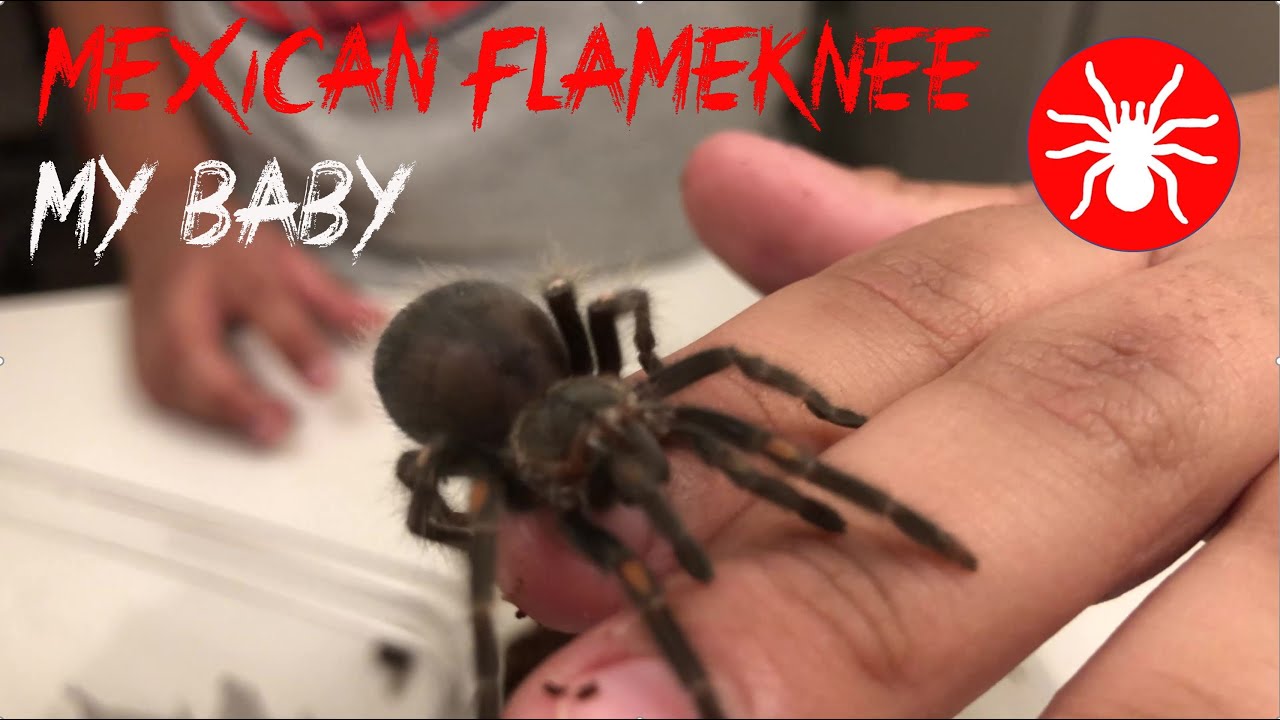
The Brachypelma auratum is commonly known as the Mexican Flame Knee, its scientific name has Greek and Latin roots meaning "short sole of the foot" and "airiness or glowing." It is commonly known as the Mexican Flame Knee.
Enclosure:
This is a terrestrial species. Surface area of the enclosure should be no less than two times the spider's diagonal leg span in one direction and three times the diagonal leg span in the other. The enclosure should be tall enough to accommodate 2"-3" of substrate for slings and 4"+ for adults. Never allow your terrestrial spider more than two times their diagonal leg span as head space above their substrate as a fall from any higher could be catastrophic.
Temperatures:
Ideally kept in the mid 70° range with a bit of wiggle room in either direction. Temperatures consistently below 65° or above 85° should be avoided.
Humidity:
60%-70%, slings should stay on lightly moist substrate, adults should have a water dish and a corner of their enclosure that goes through a wet/dry cycle, moistening the substrate and then leaving it alone until it dries out.
Size:
Specimens sold by Josh's frogs will be at least 3/4"-1" at time of sale. Adults can reach up to 6" diagonal leg span.
Age:
B auratum babies sold by Josh's Frogs are at least 2-3 months old. Males reach 4-5 years, with females drastically outliving them at 20+ years.
Feeding:
At time of sale they are eating 3-4 hydei fruit flies one time per week, food should be sized to about the size of the spider's carapace. Older spiders can eat less frequently, with adults eating every 10-14 days.
SOURCE BY :
https://www.joshsfrogs.com/mexican-fl...
======================
Davus pentaloris (Simon, 1888), als known as “Guatemalan tiger rump”, is a stunning bird spider due to its coloration and pattern from Mexico and Guatemala, Alta Verapaz. With an avarage span width around 11-12cm she’s rather small compared to other bird spiders. The distinct coloration, in combination with the pattern, should just like wasps scare possible attacker. That’s why she is sometime named as “wasptarantula”. The genus Davus was considered to be a synonym of Cyclosternum, but that’s no longer accepted. Don’t confuse Davus pentaloris with the Davus fasciatus either, commonly known as “Costa Rican tiger rump”, native to Costa Rica (San Carlos, Province of Alajuela). This is another species of which only a few people have had one (source). The difference between both species becomes visible in the color of the carapace, black in Davus fasciatus versus orange in Davus pentaloris, and the different pattern on the spider’s abdomen (picture). However you might have bought a “Cyclosternum fasciatum‘, as Davus pentaloris was referred to for years, the possibility you got a real Davus fasciatus (picture) is almost nonexistent.
I. SPECIFIC INFORMATION
Scientific name: Davus pentaloris.
Subfamily: Theraphosinae.
Common name: Guatemalan tiger rump.
Previous name: Crypsidromus pentaloris Simon, 1888b, Hapalopus ruficeps Simon, 1891a, Hapalopus pentaloris F.O.P.-Cambridge, 1897b, Pseudoschizopelma pentalore Smidt, 1995, Davus pentalore Schmidt, 1998h, Davus pentaloris Peters, 2003.
World spider catalog (≠ Davus fasciatus (picture)).
Type: Terrestrial bird spider. Opportunistic burrower.
Category: New world tarantula.
Urticating setae: Yes (abdomen).
Venom: Probably mild. No valuable scientific research has been done yet.
Origin: Mexico, Guatemala (San Cristobal, Alta Verapaz, Guatemala city).
SOURCE FROM:
https://www.theraphosidae.be/en/davus...
#SPIDER#TARANTULA#MEXICAN FLAMEKNEE#GUATEMALATIGER
Повторяем попытку...
Доступные форматы для скачивания:
Скачать видео
-
Информация по загрузке: