Why Humans Behave the Way They Do (5 Theories Explained) - Game Theory Part 1
Автор: Reflection of Power
Загружено: 2026-03-09
Просмотров: 1
Описание:
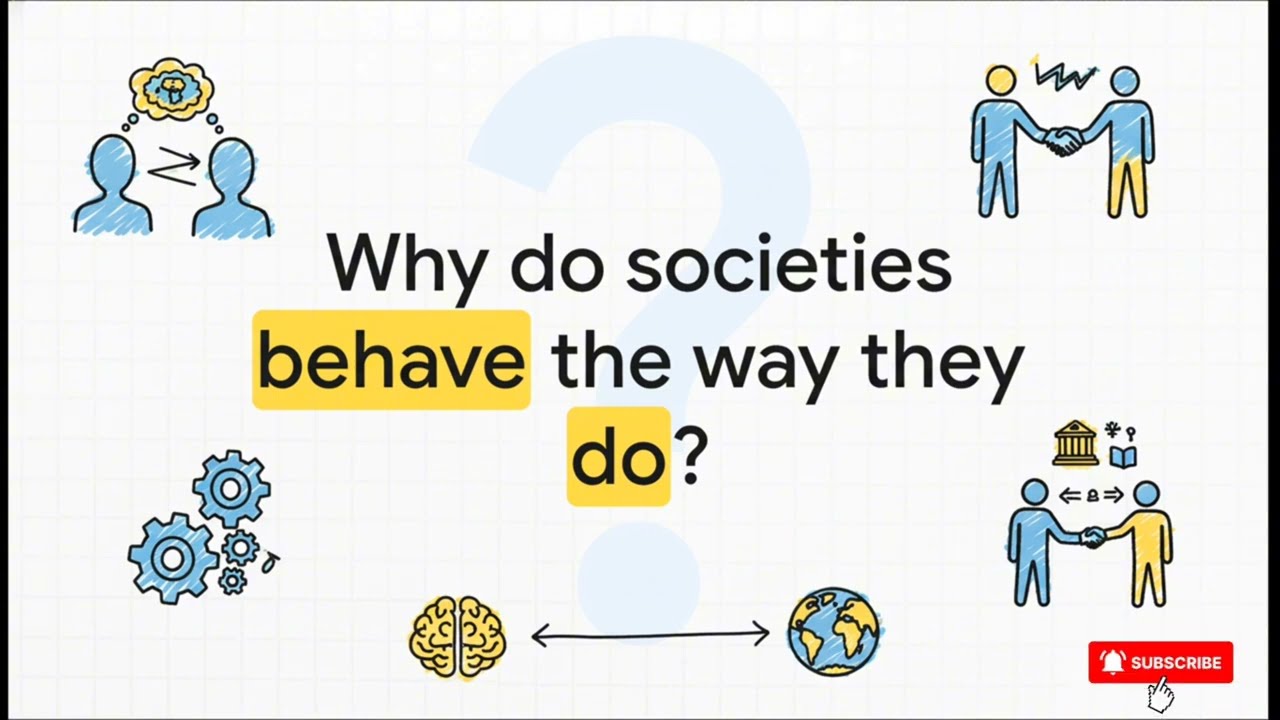
Why do humans behave the way they do? In this lecture we explore five major explanations of human behavior: religion, biology, race & culture, economics, and liberalism. We then introduce game theory as a powerful framework for understanding societies and decision-making.
#GameTheory #HumanBehavior #SocialTheory #Sociology #PoliticalScience #CriticalThinking
Source Note
Major Theories Explaining Human Behavior
One important question when studying societies is understanding how humans behave and what motivates their actions. Throughout history, scholars and thinkers have proposed different explanations for why individuals and societies act the way they do. These theories attempt to identify the main forces that shape human decisions, social structures, and the development of civilizations.
One perspective comes from religion. In this view, human life is understood as a moral struggle between good and evil. People are believed to possess both positive and negative impulses within themselves, and their lives involve constant choices between these opposing forces. Religious traditions aim to guide individuals toward moral behavior, encouraging them to pursue goodness and resist destructive influences. According to this theory, the moral conflict within individuals forms the foundation of human civilization and social order.
Another explanation is based on biology and evolution. From this viewpoint, many aspects of human behavior are shaped by the instinct to reproduce and ensure the continuation of one's genetic line. The survival of a species depends on passing genes to the next generation, and this goal influences social and personal behavior. Because reproduction involves different biological responsibilities for men and women, evolutionary pressures can shape their roles and strategies differently. Women typically invest significant time and physical effort in pregnancy and raising children, which can lead to greater selectivity in choosing partners, while men may compete more broadly for reproductive opportunities. These biological differences can influence patterns of behavior within societies.
A third theory focuses on the role of race and culture. According to this perspective, world history is largely shaped by competition among different cultural or civilizational groups. Each group is believed to possess particular traditions, values, and characteristics that influence its development and its interactions with others. Supporters of this idea argue that struggles for influence, power, and survival among cultures play a major role in shaping historical events. This theory has been historically influential, although it remains controversial and widely debated.
Another approach emphasizes economics. In this view, human behavior is largely driven by self-interest and the pursuit of material benefit. Individuals and societies attempt to improve their economic position by acquiring wealth, resources, and opportunities. Decisions in politics, business, and daily life are often influenced by financial incentives, making economic motivation a powerful force shaping human activity.
A fifth explanation emerges from the intellectual movement known as the Enlightenment. This perspective, often associated with liberal thought, suggests that human history gradually moves toward greater progress. According to this view, societies evolve toward increased knowledge, rational thinking, justice, and freedom. Although history may experience setbacks and conflicts, the overall direction of development is believed to move toward a more enlightened and just world.
These perspectives demonstrate the wide range of ideas that exist regarding the forces that drive human behavior. While each theory highlights different aspects of human nature and society, another framework can also be used to analyze these patterns. This framework is known as game theory. Game theory examines how individuals and groups make decisions in situations where the outcome depends on the choices of others. By studying incentives, strategies, and interactions, it offers a systematic way to understand the behavior of individuals, societies, and nations.
Prepared by:
Abiyuth Bharathvajan
Повторяем попытку...
Доступные форматы для скачивания:
Скачать видео
-
Информация по загрузке: