TYPES OF MYCOTA
Автор: ZEAL BIOEASY
Загружено: 2022-06-07
Просмотров: 106
Описание:
Mycota (Fungi)
Phycomycetes: - They have comparatively simple thallus, may be unicellular or filamentous. Filamentous body of fungi...
Ascomycetes (sac fungi): - They are mostly terrestrial, saprophytic and parasitic. - Hypha is septate and branched...
Basidiomycetes (Club Fungi): - They are mostly terrestrial, saprophytic, parasitic and symbiotic. - Hypha is septate...
Deuteromycetes:
Classification of fungi: Based on reproduction structure and life cycle patterns fungi are,Classification of fungi: Based on reproduction structure and life cycle patterns fungi are,
1. Phycomycetes:
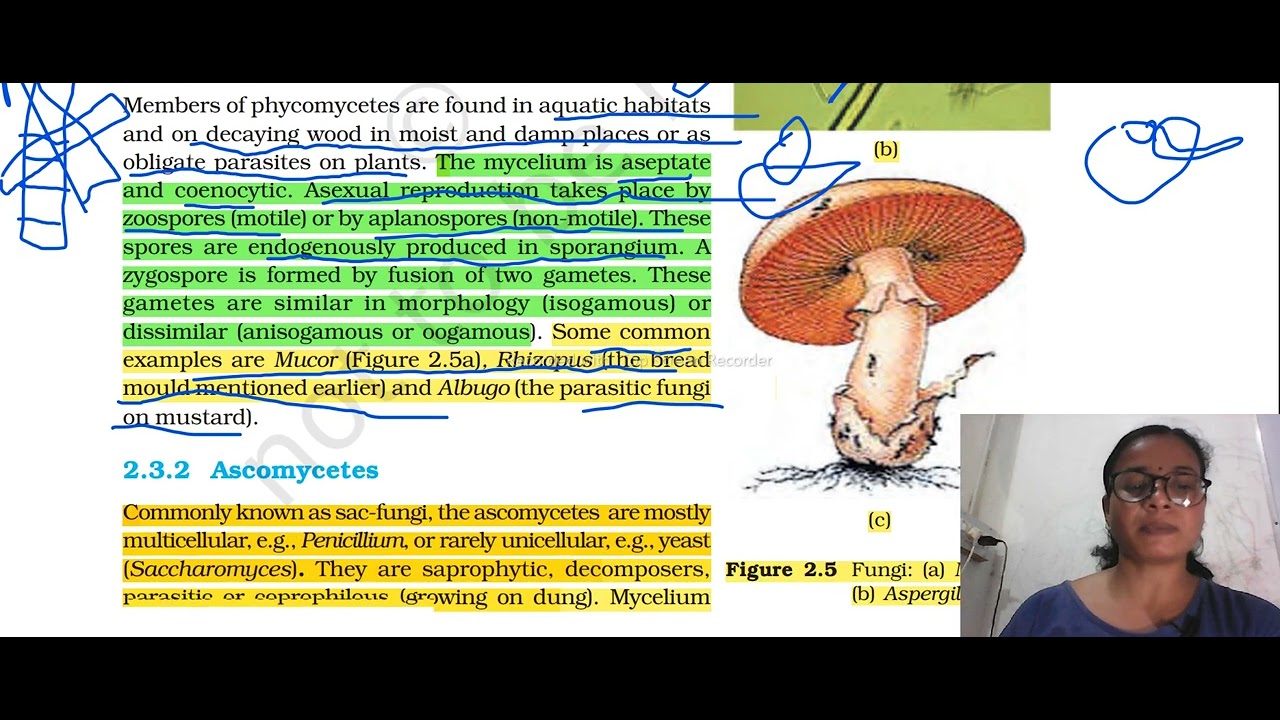
They have comparatively simple thallus, may be unicellular or filamentous. Filamentous body of fungi is known as hypha. Hypha is aseptate and coenocytic.
They may be aquatic or terrestrial, parasitic or saprophytic.
Asexual reproduction takes place by motile spore known as Zoospore and non-motile spore.
Sexual reproduction takes place by planogametic fusion, gametangial contact and gametangial conjugation.
2. Ascomycetes(sac fungi):
They are mostly terrestrial, saprophytic and parasitic.
Hypha is septate and branched but some species are unicellular.
-vegetative reproduction takes place by fragmentation budding and fission.
-Asexual reproduction takes place by conidia, chlymydospore etc.
Sexual reproduction takes place by gametengial conjugation, somatogamy.
A sac like structure called ascus is form after fusion of male and female gametes, e.g. Yeast
3. Basidiomycetes (Club Fungi):
They are mostly terrestrial, saprophytic, parasitic and symbiotic.
Hypha is septate and branched. Two types of hypha or mycelium are found, i.e. primary mycelium, secondary mycelium.
Asexual reproduction takes place by conidia and chlymydospore etc.
Sexual reproduction takes place by somatogamy. The two nucleus of dikaryotic mycelium fused to form club shaped zygote called basidia.
4. Deuteromycetes:
They are mostly terrestrial and parasitic. Only few are saprophytes.
Hypha is septate and branched.
Asexual reproduction takes place by conidia, oidia and chlymydospore.
Sexual reproduction is absent so they are known as fungi imperfect, e.g. Alternaria
1. Phycomycetes:
They have comparatively simple thallus, may be unicellular or filamentous. Filamentous body of fungi is known as hypha. Hypha is aseptate and coenocytic.
They may be aquatic or terrestrial, parasitic or saprophytic.
Asexual reproduction takes place by motile spore known as Zoospore and non-motile spore.
Sexual reproduction takes place by planogametic fusion, gametangial contact and gametangial conjugation.
They are classified into two further types.
a) Oomycetes:
They are mostly aquatic and parasitic. Only few are saprophytic.
Asexual reproduction takes place by zoospore and sexual reproduction takes place by plamogametic fusion and gametangial contact.
The name oomycetes due to the formation of diploid zygote known as oospore, e.g. Phytopthora.
b) Zygomycetes (conjugation fungi):
They are mostly terrestrial and saprophytic and only some are parasitic.
Asexual reproduction takes place by non-motile spores. Sexual reproduction takes place by conjugation.
The name Zygomycetes due to the formation of diploid Zygote called zygospore, e.g. Mucor
2. Ascomycetes(sac fungi):
They are mostly terrestrial, saprophytic and parasitic.
Hypha is septate and branched but some species are unicellular.
-vegetative reproduction takes place by fragmentation budding and fission
-Asexual reproduction takes place by conidia, chlymydospore etc.
Sexual reproduction takes place by gametengial conjugation, somatogamy.
A sac like structure called ascus is form after fusion of male and female gametes, e.g. Yeast
3. Basidiomycetes (Club Fungi):
They are mostly terrestrial, saprophytic, parasitic and symbiotic.
Hypha is septate and branched. Two types of hypha or mycelium are found, i.e. primary mycelium, secondary mycelium.
Asexual reproduction takes place by conidia and chlymydospore etc.
Sexual reproduction takes place by somatogamy. The two nucleus of dikaryotic mycelium fused to form club shaped zygote called basidia.
4. Deuteromycetes:
They are mostly terrestrial and parasitic. Only few are saprophytes.
Hypha is septate and branched.
Asexual reproduction takes place by conidia, oidia and chlymydospore.
Sexual reproduction is absent so they are known as fungi imperfect, e.g. . Alternaria.
#biology #ncert #Fungi
#typesoffungi
#typesofmycota
Повторяем попытку...
Доступные форматы для скачивания:
Скачать видео
-
Информация по загрузке: