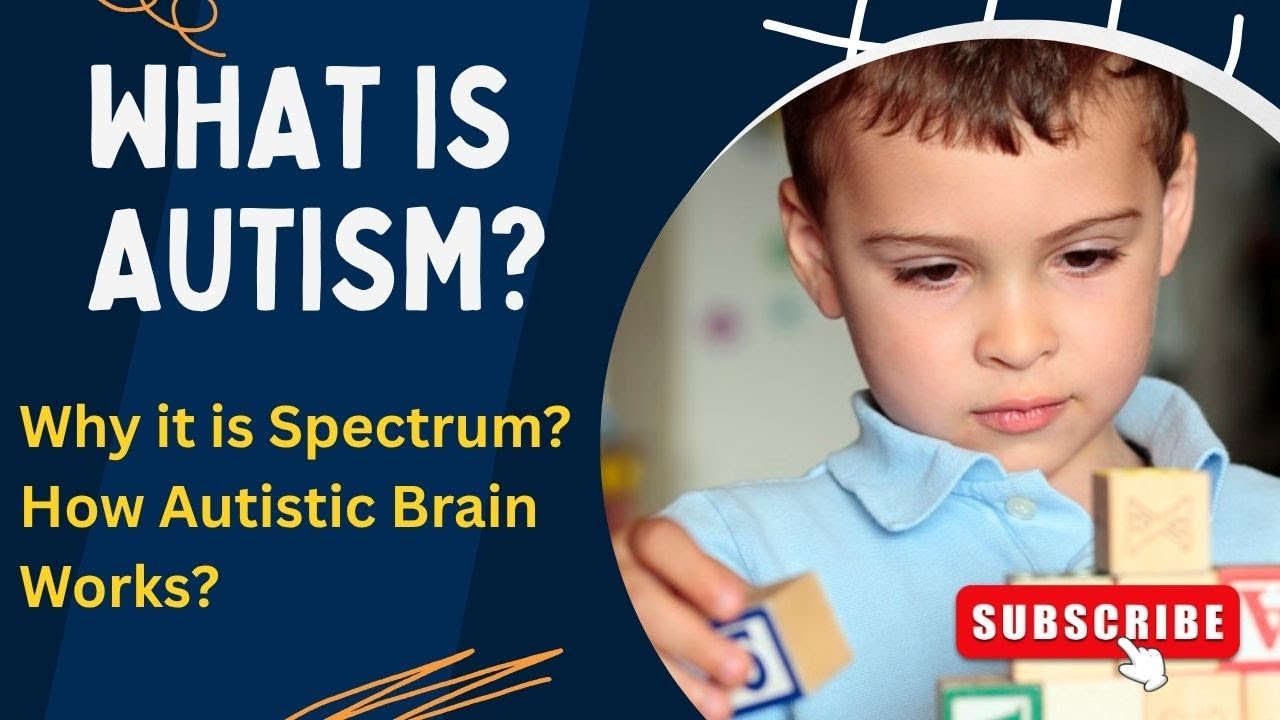
What is Autism? | Why Autism is Spectrum? | How Autistic Brain Works? |Urdu/Hindi
Автор: AUTISM: THE BLESSING
Загружено: 2025-07-24
Просмотров: 497
Описание:
What is Autism? | Why Autism is a Spectrum? | How Autistic Brain Works? | Urdu/Hindi
Difference between autistic and neurotypical brain
#AutismTheBlessing
#AutismisBlessing
#AutismUnderstanding
#AutismIsABlessing
#autismtheblessing
#AmritKaur
#AmritDeepKaur
What is Autism?
Autism, or Autism Spectrum Disorder (ASD), is a neurodevelopmental condition. This means it affects how a person’s brain develops and functions — especially in areas like communication, behavior, learning, and social interaction.
People with autism may:
Communicate in different ways (some may speak fluently, some may use few or no words)
Prefer routines and predictability
Show deep focus on specific interests
Be very sensitive (or less sensitive) to sounds, lights, textures, or touch
Find it challenging to understand social cues like facial expressions or tone of voice
But here’s what many people don’t realize: Autism is not an illness or something to be cured. It’s simply a different way of experiencing the world. Many autistic people are incredibly creative, honest, intelligent, and capable — they just think and interact differently from what society expects.
At AUTISM: THE BLESSING, our videos explain what autism is in simple terms — perfect for parents, teachers, students, or anyone curious about how to understand autism with respect and accuracy.
Why is Autism a Spectrum?
Autism is called a spectrum because it includes a wide range of abilities, traits, and challenges. No two autistic people are exactly the same. For example:
One person might be nonverbal and need a lot of daily support.
Another might speak clearly, live independently, and work a full-time job — but still find social situations exhausting or confusing.
The “spectrum” doesn't mean people are more or less autistic — it means autism shows up differently in different people. It's not a line from "mild to severe" — it’s more like a color wheel, where traits mix in unique ways.
On our channel, we explain what being on the spectrum really means. We show how every autistic person is different, and why we need to listen to each individual's story instead of putting everyone in the same box.
Understanding the spectrum nature of autism helps parents, educators, and society support autistic people in ways that actually help — not force them to "fit in" but to thrive as they are.
How Does the Autistic Brain Work?
The autistic brain doesn’t work in a wrong way — it simply processes information differently from the neurotypical brain.
Some key differences in how the autistic brain works include:
Sensory Processing: Many autistic people are extra sensitive to noise, light, touch, or smell. Others may not notice these things at all. The brain can either be overloaded or under-responsive to the senses.
Social Understanding: The autistic brain may not automatically pick up on things like tone of voice, sarcasm, or body language. This doesn’t mean they lack empathy — they just process emotions and social signals differently.
Thinking Patterns: Autistic minds often focus deeply on details, patterns, and logical thinking. They may excel at topics they love, think visually, or see connections others miss.
Routine and Predictability: Many autistic individuals feel calmer and more in control when life follows a routine. Sudden changes can cause anxiety because the brain needs more time to adjust.
In our videos, we break down how the autistic brain works in simple, relatable terms. We use research, real-life examples, and visuals to show how these differences affect daily life — and how they can be strengths, not just struggles.
Autistic Brain vs. Neurotypical Brain — What’s the Difference?
"Neurotypical" is a word used to describe brains that develop in a more common or expected way. Comparing an autistic brain to a neurotypical brain is not about saying one is better — it’s about understanding diversity in how people think, feel, and respond to the world.
Here are a few respectful, science-based comparisons we explore:
Autistic Brain Neurotypical Brain
May focus deeply on one task or topic May multitask more easily
May avoid eye contact (feels intense) Uses eye contact naturally in social settings
Sensitive to sounds, lights, textures Usually filters sensory input smoothly
Honest, direct communication Uses more social or “polite” filters
Prefers routine and structure More flexible with changes and surprises
May need time to process emotions Picks up emotional signals quickly
We use our videos to bridge the gap between autistic and neurotypical experiences — not by changing people, but by encouraging understanding. The goal is not for autistic people to become neurotypical — but for society to better accept how both brains work.
Повторяем попытку...
Доступные форматы для скачивания:
Скачать видео
-
Информация по загрузке: