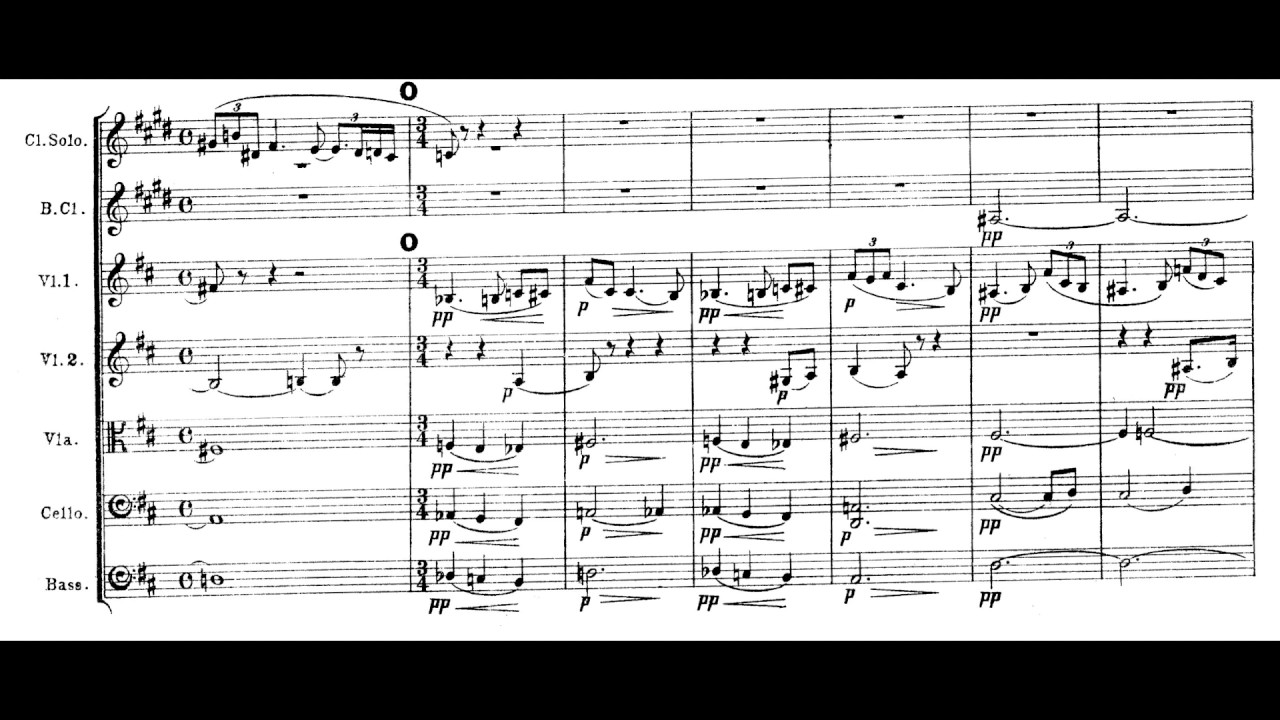
Bartok's "Két kép (Two Images), Sz. 46" (Audio + Score)
Автор: tomekkobialka
Загружено: 2016-11-08
Просмотров: 12209
Описание:
pf: Hungarian National Philharmonic Orchestra cond/ Zoltán Kocsis
0:00 - In Full Flower
7:28 - Village Dance
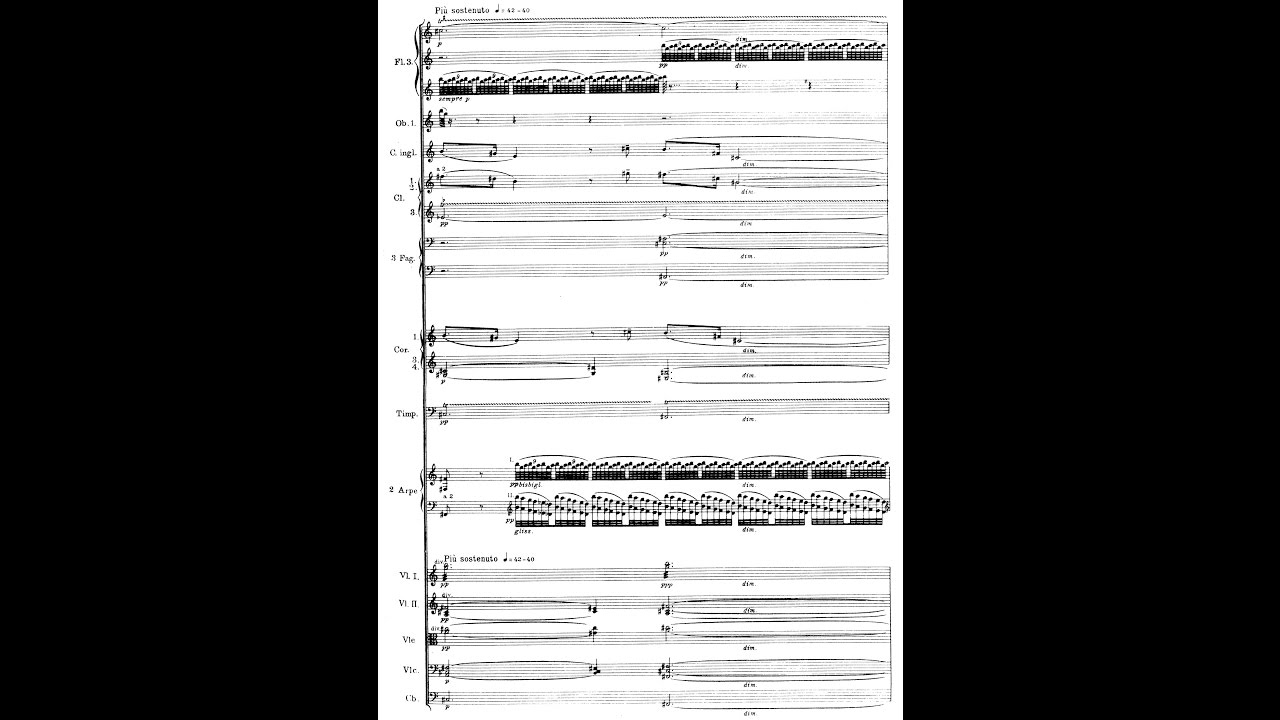
The Two Pictures are early orchestral works by Bartók, dating from the period in which the composer was becoming familiar with the music of French composer Claude Debussy. This work was among Bartók's most successful compositions, and was the orchestral work most performed during his lifetime. It is a vivid memento of Bartók's discovery of Debussy, and the French imprint on this work, though anachronistic, nonetheless contributes significantly to its charm. Two Pictures demands relatively large orchestral forces (large, that is, by Bartók's standards): he calls for not only the usual complement of horns, trombone, tuba, percussion, two harps, and strings, but also extra woodwinds (each woodwind group tripled instead of paired), an extra trumpet (totaling five), and a celesta. The first Picture is subtitled "Bloom," and clearly bears the mark of Debussy, with its whole tone scales, pedals, and ostinati. It is cast in a simple ternary form, and features music that would, in later years, be developed into motives for the opera Bluebeard's Castle and the ballet The Wooden Prince. This is a slow piece, an Adagio, and all of the pastel colors of Impressionism are in evidence here. The second Picture is subtitled "The Village Dance," and stands in sharp contrast to the first Picture, in terms of mood, form, and tonal language. While Debussyian whole tone scales are still used in this Picture, they are heard in the context of Bartók's folk tune-like melodies, which have a modal flavor. "The Village Dance" is in rondo form (ABACA), but the formal scheme is sometimes blurred in the course of Bartók's development of thematic material. The character of this second Picture is also radically different from its predecessor; the first Picture is gentle, suggestive, and Impressionistic, while the second Picture is loud, boisterous, and more folk-inspired. Musicologists have pointed out the similarities between the Two Pictures and some of Debussy's music, including his Images for piano, and the Nocturnes for orchestra. Debussy's Images really only share with Bartók's pieces a title (Bartók first published Two Pictures as Deux Images and some harmonic effects. The Nocturnes, however, are similar to the Two Pictures in orchestration, harmony, melody, and meter. Two Pictures, despite its success early in the century, has been criticized for its lack of balance--the second Picture is much more substantial than the first--and for its old-fashioned style.
SOURCE: Allmusic.com
PERSONAL NOTE: This video is a tribute to the pianist, conductor and composer Zoltán Kocsis, who sadly passed away last Sunday at the age of 64.
Повторяем попытку...
Доступные форматы для скачивания:
Скачать видео
-
Информация по загрузке:





![Bela Bartok - Two Elegies for Piano, Op. 8b Sz. 41 (1908-9) [Score-Video]](https://imager.clipsaver.ru/FXOA4GE0jy8/max.jpg)