Fogo volcano
Автор: TheFREDCAROLE
Загружено: 2013-11-24
Просмотров: 3785
Описание:
Pico do Fogo pronounced is the highest peak of Cape Verde, rising to 2,829 metres (9,281 ft) above sea level. It is an active stratovolcano lying on the island of Fogo. The main cone last erupted in 1675, causing mass emigration from the island, while a subsidiary vent erupted in 1995. The only deadly eruption was in 1847 when earthquakes generated in all the island claimed several lives.
The mountain's slopes are used to grow coffee, while its lava is used as building material. Near its peak is a caldera and a small village, Chã das Caldeiras, is inside this caldera.
1995 eruption :
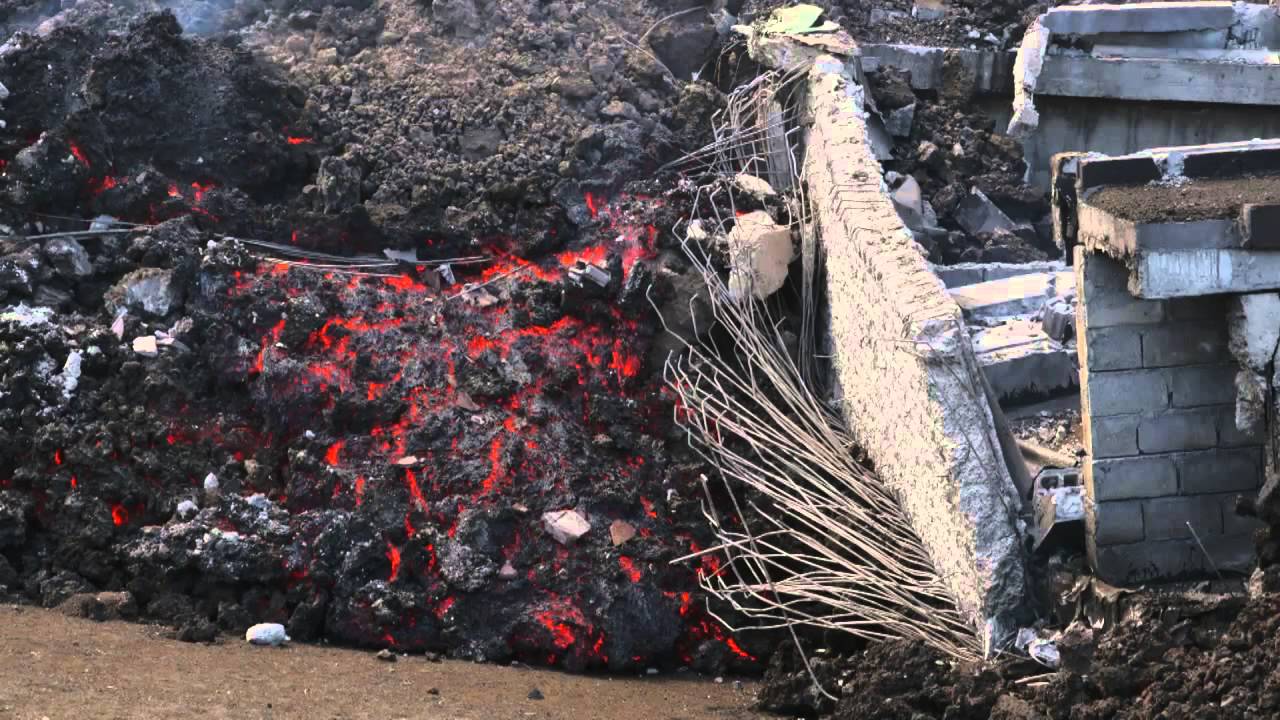
The eruption began on the night of 2--3 April, covering the island with a cloud of ash. Residents were evacuated from Chã das Caldeiras, as their homes were destroyed.
Like Hawaii, Fogo is a "hot-spot" volcanic island. It last erupted in 1951. It is the youngest and most active volcano in the Cape Verde Islands. The Cape Verde Islands, a short chain of volcanic islands that generally are younger at the western end, formed as the African Plate moved towards the east over the hotspot in much the same way that the Hawaiian Ridge formed as the Pacific Plate moved west-northwestward over a hotspot.
Unlike the island of Hawaii, Fogo consists of a single volcano, so the island is nearly round and about 25 kilometers (16 mi) in diameter. The large summit caldera (about 10 kilometers in the north-south direction and 7 kilometers in the east-west direction) is not located in the center of the island, but rather towards its northeastern corner. The caldera is bounded by steep near-vertical fault scarps on the north, west, and south sides but is breached to the east where lava can flow to the coast. The current north-northeast-trending eruptive fissures are located along the western flank of a large cone named Pico, which formed inside the caldera between about 1500 and 1760.
During the day on April 3, the island was covered by a thick cloud of dark ash that reached 2.5 to 5 kilometers high. The initial flows were pahoehoe lava, although their extent was apparently small. The violent eruption produced lava bombs up to 4 meters across that were ejected as far as 500 meters from the vents. On April 4, lava fountains reached 400 meters high beneath a cloud of ashes about 2 kilometers high. A new scoria cone formed that was open to the southwest and fed a growing 'a'a flow. On April 5, the new 'a'a flow reached the western caldera wall and destroyed about five houses and the main water reservoir. During these first few days, civil authorities evacuated about 3,000 people.
The eruption has become more steady following the first few days, and moderate, Hawaiian-style lava fountains about 100-120 meters high have built a spatter cone that now stands more than 140 meters high. The flows have been 'a'a and have flowed towards the west to the caldera wall and then turned north. These flows have advanced episodically as pressure builds from ponding and thickening of the flows. On April 13, a second 'a'a flow began to cover an earlier, stagnant 'a'a flow and was almost entirely on top of the earlier flow until April 15, when it spread out and destroyed another home. Cinder fell as far as two kilometers south of the vents on April 15. By the 17th, the flow had advanced to within 420 meters of the nearest house in the village of Portela, but was stagnant again.
On April 18, the portable sesismometer installed by the USGS team began to record much stronger volcanic tremor (continuous ground shaking) that indicated a change in eruptive style from fire fountains back to Strombolian activity. Spatter was discharged every 3-8 seconds with loud gas bursts. In addition, the eruptive rate increased and the upper 300 meters of the channel was largely pahoehoe lava. The eruption rates, estimated from the dimensions and flow rates in the channel, are between 4 and 8.5 million cubic meters per day. For comparison, the current eruption at Kilauea has been producing about one-half million cubic meters per day. In comparison, eruption rates exceeded 10 and 20 million cubic meters per day during the high-fountain phases of the Kilauea eruption (1983-1986) and the initial phases of the 1984 Mauna Loa eruption, respectively. Despite the increased eruption rate at Fogo during this time period, the flow fronts advanced only a few meters as the flows thickened.
During the night of April 18, a series of large, explosive bursts occurred that may have followed collapse of parts of the cone into the vents and subsequent explosive clearing of the debris. By morning, the activity had returned to fire fountains, and the seismic record was much quieter. The lava flows continued to thicken, and lava ponded along the central channel. As pressure builds within the flow, a rapid advance of the flow into Portela seems likely.
Повторяем попытку...

Доступные форматы для скачивания:
Скачать видео
-
Информация по загрузке:









![[4K] - DRONE over FOGO VOLCANO - FOGO Island - [CABO VERDE TRAVEL] 🇨🇻](https://imager.clipsaver.ru/I4Kq5S1KLkk/max.jpg)