Why the BOUGAINVILLE People are Extremely Dark and Blonde. (They're NOT African)
Автор: AfroArtista Films
Загружено: 2025-05-12
Просмотров: 1067970
Описание:
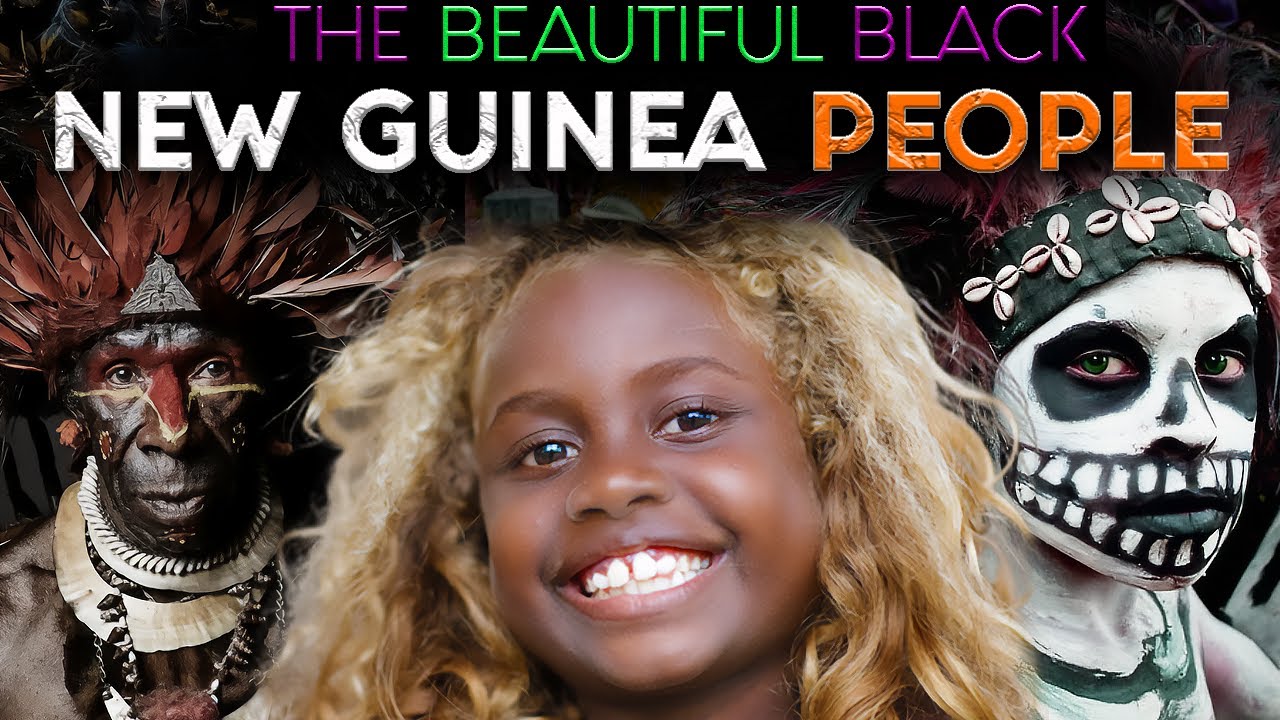
#melanesia #papua #blackhistory This video is about the Bougainville people of Papua New Guinea. They are Melanesian people.
Our ancestors were some of the first people to leave Africa, way back when. They were part of a group called the Australo-Melanesians, and they traveled across Southeast Asia, eventually settling here in what we now call Near Oceania, which includes Bougainville. That was tens of thousands of years ago—archaeological evidence from places like Kilu Cave on Buka Island, just north of us, shows that people have been here for at least 29,000 years. These early settlers brought with them the genes for dark skin, which was crucial for surviving in places with intense sunlight, just like in Africa.
You see, here in Bougainville, the sun is incredibly strong all year round because we’re close to the equator. Our dark skin, which has a lot of melanin, acts like a natural sunscreen. Melanin is the pigment that gives skin its color, and in our case, it’s mostly eumelanin, which makes our skin very dark. This protects us from the harmful effects of ultraviolet (UV) radiation. Too much UV exposure can destroy important vitamins in our body, like folate, which is essential for having healthy babies, and it can also cause skin cancer. So, over time, the people with darker skin were more likely to survive and have children, passing on those dark skin genes. It’s nature’s way of helping us adapt to our environment.
But our story doesn’t stop there. About 3,000 years ago, another group of people called the Austronesians came to our islands. They were from further north and probably had lighter skin. They brought with them new languages and cultures, and we mixed with them. You can see that influence in our languages and traditions today. But even though we intermingled, our dark skin remained a dominant feature. Maybe because the environment here still favored dark skin, or perhaps our genes for dark skin were just really strong. Either way, our skin stayed dark, and it’s a big part of who we are.
Scientists have been studying our genes to understand more about why we look the way we do. For example, some of us have blond hair, which is pretty unique for people with dark skin. It turns out that’s because of a special gene found only in our part of the world—it’s not the same as the blond hair gene in Europeans. This shows that we’ve evolved in our own way here in the Pacific. While there hasn’t been a specific study on our skin color yet, it’s likely that there are particular genes that make our skin so dark, genes that have been passed down and kept strong because they help us thrive in this sunny environment.
We’ve also been somewhat isolated on these islands for a long time, which might have helped keep our skin color consistent. Unlike places where there was a lot of mixing with lighter-skinned populations, our ancestors didn’t have as much of that, so our dark skin traits stayed prominent. Plus, in our culture, dark skin has always been seen as beautiful and desirable. We believe beauty is in the eye of the island—and for us, darker skin has always been admired and respected. There’s a pride in our appearance, and it’s possible that this cultural preference influenced who people chose to marry, keeping those dark skin genes strong in our communities. It’s something we’ve always valued.
Now, some people might think that because our skin is dark like Africans’, we must be more closely related to them than other groups. But that’s not the case. All humans outside Africa come from groups that left Africa tens of thousands of years ago. The reason our skin is dark is because we live in a place with lots of sun, just like Africa. It’s an example of how similar environments can lead to similar adaptations, even in different parts of the world. Meanwhile, people who moved to places with less sun, like Europe, developed lighter skin over time to help their bodies make vitamin D. But since we stayed in a sunny place, we kept our dark skin—it’s what works best here.
It’s not just a physical trait; it’s a testament to our history and our connection to this land. We’re proud of it, and it’s a big part of what makes us Bougainvilleans.
Each morning, as the first light glimmers on the waters of the Solomon Sea, we feel our ancestors’ gift coursing through our veins—blackness as beacon, guiding our footsteps through fields of sorghum and along forest trails alike. In markets and village squares, against the tides of colorism and erasure that sometimes swell even among ourselves, we stand rooted in pride, drawing resilience from tenacious hearts that refused to kneel.
The Voyage by Audionautix is licensed under a Creative Commons Attribution 4.0 license. https://creativecommons.org/licenses/...
Artist: http://audionautix.com/
Повторяем попытку...

Доступные форматы для скачивания:
Скачать видео
-
Информация по загрузке: