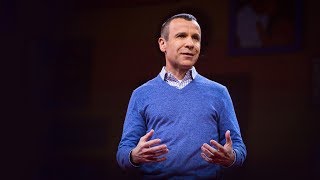
The Missing Skill We’re Never Taught: Emotional First Aid, Guy Winch Explains
Автор: Grow In Ten
Загружено: 2025-12-22
Просмотров: 2
Описание:
This explainer of Why We All Need to Practice Emotional First Aid from a TED Talk by Guy Winch explores a startling and deeply practical idea:
we take care of our bodies instinctively — but neglect our minds entirely.
Winch opens with a childhood story about growing up with his identical twin, where fairness was monitored down to the size of a cookie. That early sensitivity becomes the lens through which he later notices a much larger imbalance in adult life: society consistently prioritizes physical health over psychological health.
We know how to treat cuts, bruises, and cavities. Children learn these habits before they can tie their shoes. But when it comes to emotional wounds — rejection, failure, loneliness, loss — we are taught almost nothing. Worse, we are often taught to dismiss them. “Shake it off.” “It’s all in your head.” Winch asks us to imagine saying that to someone with a broken leg — and the absurdity becomes obvious.
Drawing from his clinical work and decades of psychological research, Winch explains that emotional injuries are not metaphorical. They are real, measurable, and dangerous when ignored. Loneliness, he shows, is not just painful — it is lethal. Chronic loneliness increases the risk of early death by 14 percent, suppresses the immune system, raises blood pressure, and poses a health risk comparable to smoking.
Yet loneliness also distorts perception.
Winch recounts a devastating personal story from his doctoral years in New York, when a missed phone call with his twin led him to believe he had been emotionally abandoned. Only later did he realize the truth: loneliness had altered his thinking, convincing him not to reach out when he needed connection most. Emotional pain, he explains, doesn’t just hurt — it lies to us.
He shows that failure does the same.
In a daycare center, Winch observes three toddlers given identical toys. Two give up without really trying, their minds convincing them they can’t succeed. The third persists — and succeeds. The difference isn’t ability, but belief. Adults, Winch argues, fall into the same trap. A single failure can convince us we’re incapable, triggering learned helplessness that shrinks our lives.
Rejection, too, leaves a wound.
Winch shares the story of a woman humiliated on a first date — and then devastated not by the rejection itself, but by the cruel voice in her own head that followed. We routinely say things to ourselves in moments of emotional pain that we would never say to a friend. This, Winch argues, is the psychological equivalent of reopening a wound and making it deeper.
From these examples, Winch introduces a radical but simple proposal:
we need emotional hygiene, just as much as physical hygiene.
He outlines concrete practices of emotional first aid:
reaching out when lonely instead of withdrawing
interrupting rumination before it spirals into depression
protecting self-esteem after rejection
treating emotional pain with compassion, not contempt
These are not abstract ideas. Winch explains that even a two-minute distraction can break a rumination cycle, and that changing small habits can dramatically improve emotional resilience.
He closes with a powerful vision.
A century ago, when societies adopted personal hygiene, life expectancy rose by over 50 percent. Winch believes emotional hygiene could transform quality of life just as profoundly — reducing depression, loneliness, anxiety, and despair, not through slogans, but through daily practice.
Key ideas covered
🩹 Emotional Pain Is Real — and just as dangerous as physical pain
🧠 Psychological Injuries Distort Thinking — loneliness, failure, rejection lie to us
🚫 “Just Shake It Off” Is Harmful — dismissal worsens wounds
📉 Loneliness Is a Health Risk — comparable to smoking
🔁 Failure Creates Helplessness — belief, not ability, stops us
💔 Rejection Attacks Self-Esteem — and we often join the attack
🧼 Emotional Hygiene Matters — daily care prevents long-term damage
🌱 Small Habits Build Resilience — healing begins with awareness
Winch’s closing message is both urgent and hopeful:
if we learned to treat emotional wounds with the same care as physical ones,
we wouldn’t just suffer less —
we would live fuller, braver, more connected lives.
📘 Watch the full talk: Why We All Need to Practice Emotional First Aid (TED)
https://www.ted.com/talks/guy_winch_w...
Support the original creator by watching and sharing the full TED Talk.
Повторяем попытку...

Доступные форматы для скачивания:
Скачать видео
-
Информация по загрузке: