USA Navy Vs Iran Navy: IRGC Swarm Tactic To Disrupt Strait Of Hormuz | How Iran Planned To Use Mines
Автор: Ministry of Weapons
Загружено: 2025-06-23
Просмотров: 59
Описание:
Iran Attacks US Base In Qatar | Iran Attacks US Base In Iraq | Iran Missiles Qatar | Iran Missile Iraq US Base Today | Iran Missile Qatar US Base Today
Iran Navy Vs USA Navy | Iran Navy Middle East | Iran Israel War News Today | Iran Israel War Update Today | Iran USA War News Today | Iran USA War Middle East | Iran Attack USA News Today | IRGC Swarm Tactic | IRGC Navy News Today | IRGC Warship News | Iran Naval Capability News | Iran Navy Vs Israel Navy | Iran Navy Strait Of Hormuz
During the recent Iran-Israel war, the Iranian Navy intensified its strategic posture in the Strait of Hormuz, using naval mines as a key deterrent and asymmetric warfare tool. As tensions escalated following Israeli airstrikes on Iranian territory and retaliatory missile attacks, Tehran signaled its readiness to disrupt regional shipping, especially oil tankers heading to or from allies of Israel and the United States.
Reports indicated that Iran’s Islamic Revolutionary Guard Corps Navy (IRGCN) deployed mine-laying vessels and fast boats capable of covert mine operations in and around the strait. Intelligence sources suggested that bottom and moored mines were placed in key transit zones, prompting international concern over freedom of navigation and global energy supplies. Several commercial tankers were forced to reroute or delay transit amid fears of underwater explosives.
Although no confirmed mine strikes were reported, the psychological effect on global markets was immediate—oil prices spiked, and maritime insurance premiums soared. The U.S. Navy, along with regional allies, increased mine countermeasure patrols, deploying specialized ships and drones to scan the waters.
Iran’s use of mines in the Strait of Hormuz during this conflict demonstrated its continued reliance on low-cost, high-impact tactics to threaten adversaries and gain leverage without engaging in direct naval warfare.
After U.S. airstrikes on Iran’s nuclear facilities, the world’s attention has swiftly shifted to the Strait of Hormuz — one of the world’s most critical oil chokepoints and a potential flashpoint for global conflict. At the heart of this tension is Iran’s naval strength and how it may respond to future provocations, especially in the narrow waters of the Persian Gulf.
Iran’s naval power is divided into two distinct branches:
The Islamic Republic of Iran Navy (IRIN), which is the conventional, blue-water fleet.
The IRGC Navy, tasked with asymmetric and fast-attack operations in the shallow, congested waters of the Gulf.
Iran has made significant advances in unconventional naval warfare. A standout addition to its fleet is the Shahid Bagheri, a converted cargo ship transformed into a drone aircraft carrier. Armed with UAVs, cruise missiles, and even light helicopters, the ship has a reported operational range of over 22,000 nautical miles, extending Iran’s reach into the Arabian Sea and beyond.
Another recent development is the Shahid Soleimani-class stealth corvettes — twin-hulled warships armed with anti-ship missiles, anti-aircraft systems, advanced radars, and UAV platforms. These vessels are designed for both combat and drone operations, offering strategic versatility.
Below the waves, Iran deploys its Fateh-class submarines, homegrown diesel-electric subs capable of launching torpedoes and cruise missiles. For deeper sea operations, Tehran still uses Russian-made Kilo-class submarines, which are quieter and more heavily armed.
But Iran’s most potent maritime doctrine revolves around swarm tactics. The IRGC Navy operates over 100 fast-attack speedboats, some reaching speeds up to 90 knots. These boats are small, fast, and heavily armed — intended to overwhelm much larger enemy warships, especially in tight waterways like the Strait of Hormuz.
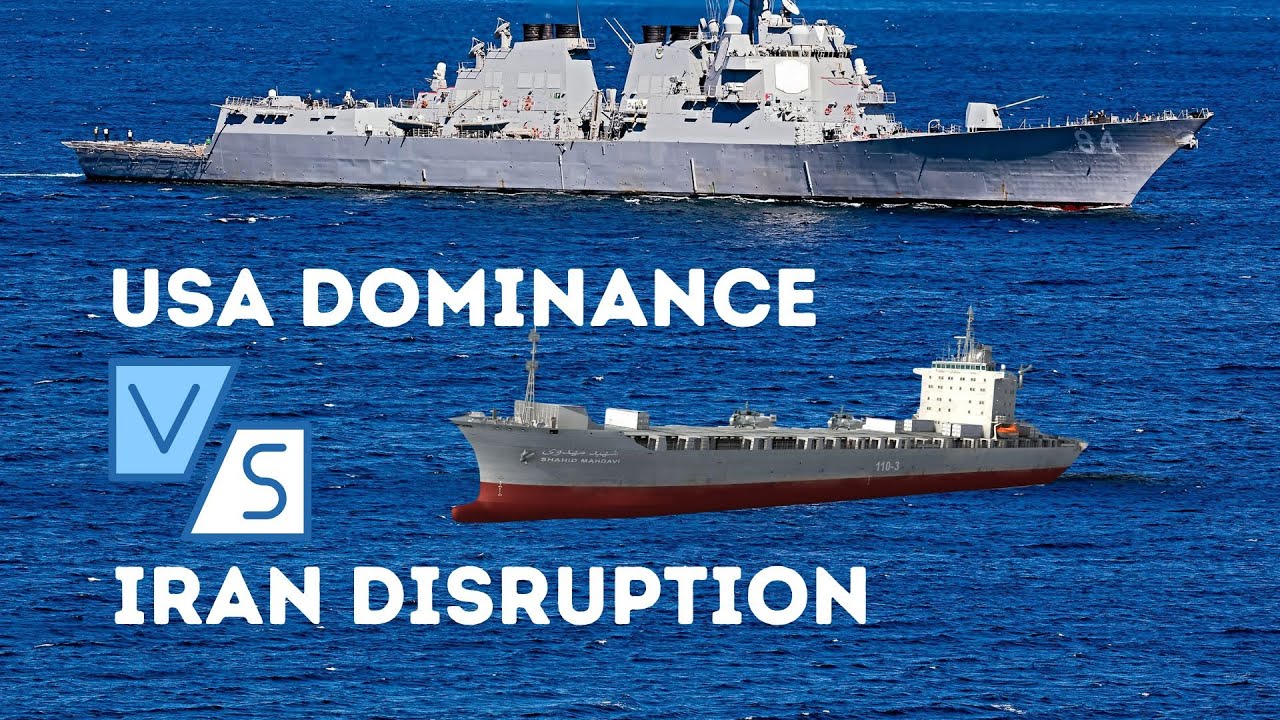
To enhance its naval deterrent, Iran is also integrating AI-powered cruise missiles, loitering drones, and unmanned suicide boats. Its newer drone and missile carriers like the Shahid Mahdavi and Makran are designed to act as floating platforms for launching drone strikes, supporting operations far beyond Iranian coastal waters.
However, the United States has not stood idle. In recent weeks, Washington has repositioned several key weapon systems across the Middle East:
The USS Dwight D. Eisenhower Carrier Strike Group remains in the region, supported by guided missile destroyers and cruisers.
Multiple B-2 stealth bombers and F-22 Raptors have been deployed to bases in Guam, Qatar, and UAE.
The THAAD missile defense system and Patriot batteries have been reinforced in Saudi Arabia and Kuwait.
Attack submarines and Arleigh Burke-class destroyers equipped with Tomahawk cruise missiles are stationed in the Arabian Sea and Gulf.
Повторяем попытку...
Доступные форматы для скачивания:
Скачать видео
-
Информация по загрузке: