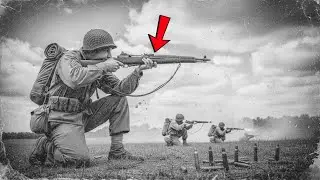
How This Paratrooper's "Illegal" M1 Carbine Hack Stopped 50 Germans in Market Garden
Автор: WW2 Real Stories
Загружено: 2025-11-29
Просмотров: 1620
Описание:
September 17th, 1944. Operation Market Garden. Staff Sergeant Thomas "Tom" Kovac, First Battalion, Five Hundred and Fourth Parachute Infantry Regiment, Eighty-Second Airborne Division, jumped into Holland with an M1 Carbine that worked perfectly on the practice range and jammed every third magazine in combat.
The M1 Carbine was supposed to be the answer for paratroopers. Light. Compact. Fifteen rounds instead of eight. Perfect for airborne operations where every ounce mattered. But the weapon had one fatal problem that was killing American paratroopers from Normandy to the Netherlands: the magazine spring tension was wrong for combat conditions.
On the firing range at Fort Benning, the M1 Carbine fed flawlessly. Clean weapons. Fresh magazines. Controlled conditions. But in combat, dirt got into the magazine feed lips. Mud clogged the spring housing. The weapon that worked perfectly in Georgia failed catastrophically in Europe. By September nineteen forty-four, the Eighty-Second Airborne had documented forty-seven incidents of M1 Carbine failures during critical engagements. Forty-seven moments when paratroopers pulled triggers and got clicks instead of shots. Some of those paratroopers died with fully loaded magazines in weapons that wouldn't fire.
Kovac had lost his assistant squad leader in Normandy because of a magazine failure. Private First Class Danny Morrison, twenty years old, Chicago. They'd cleared a hedgerow near Sainte-Mère-Église on June seventh. Morrison's Carbine jammed. A German machine gun crew cut him down while he was trying to clear the malfunction. Kovac found him three hours later. The Carbine was still in Morrison's hands. The magazine was fully loaded. The feed lips were clogged with mud.
The problem wasn't the shooter. It was the spring.
The M1 Carbine magazine used a single coil spring that fed rounds upward into the chamber. Standard military specification called for fourteen pounds of compression force. That worked fine when magazines were new. But after two months in combat, exposure to moisture and repeated compressions weakened the springs. Feed pressure dropped to nine or ten pounds. Not enough to reliably push rounds into the chamber against dirt, carbon buildup, or slightly worn feed ramps.
Army Ordnance knew about the problem. Their August nineteen forty-four technical bulletin recommended replacing magazine springs every ninety days. But replacement springs weren't reaching frontline units. Supply chains were focused on ammunition, rations, medical supplies. Magazine springs were low priority. So paratroopers jumped into Holland with the same magazines they'd carried since Normandy. Same weakened springs. Same reliability problems.
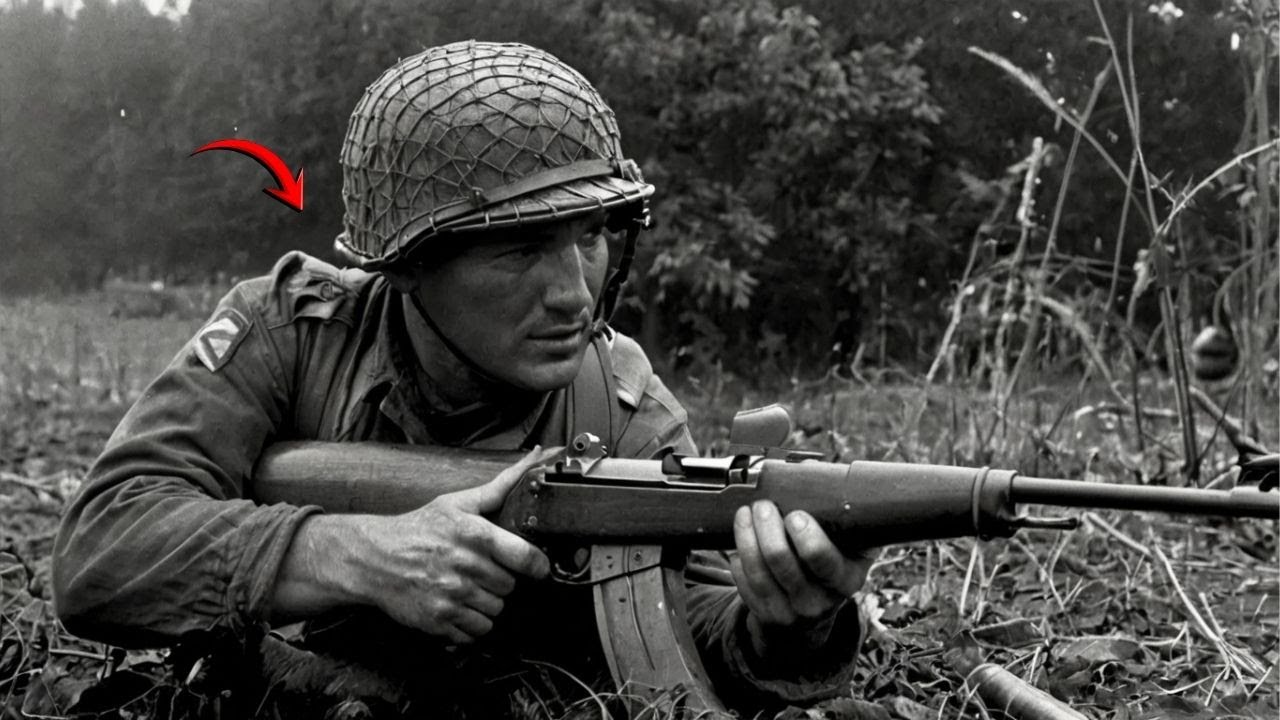
Kovac refused to watch another man die because his weapon wouldn't fire. On September fourteenth, three days before Market Garden, he did something that violated every regulation in the Army technical manual. He took apart six M1 Carbine magazines. Removed the springs. Stretched each spring by hand to increase tension. Then he doubled them—inserted two springs into each magazine instead of one.
The modification worked. Feed pressure increased from ten pounds to eighteen pounds. Enough to overcome dirt, mud, carbon. The magazines fed reliably even after firing three hundred rounds without cleaning. But the modification violated specifications. Used non-standard components. Could void the weapon warranty.
Kovac didn't care about warranties. He cared about firepower.
Because on September seventeenth at fourteen hundred hours, his stick would jump into Groesbeek, and within six hours, he'd be facing fifty German infantry with a Carbine that couldn't afford to jam.
What happened in the next seventy-two hours would prove that sometimes survival requires breaking the rules.
Повторяем попытку...
Доступные форматы для скачивания:
Скачать видео
-
Информация по загрузке: