Chapter 2 | Carbohydrates | Cambridge AS & A Level Biology (9700)
Автор: TeachMe
Загружено: 2025-09-28
Просмотров: 425
Описание:
Our Website | teachmebio.org
They're not just pasta—they're your body's primary fuel source and a structural marvel. Unwrap the sweet science of carbohydrates for A-Level Biology. This video breaks down the sugars, from the simplest monosaccharides to the complex polymers. We'll make it crystal clear:
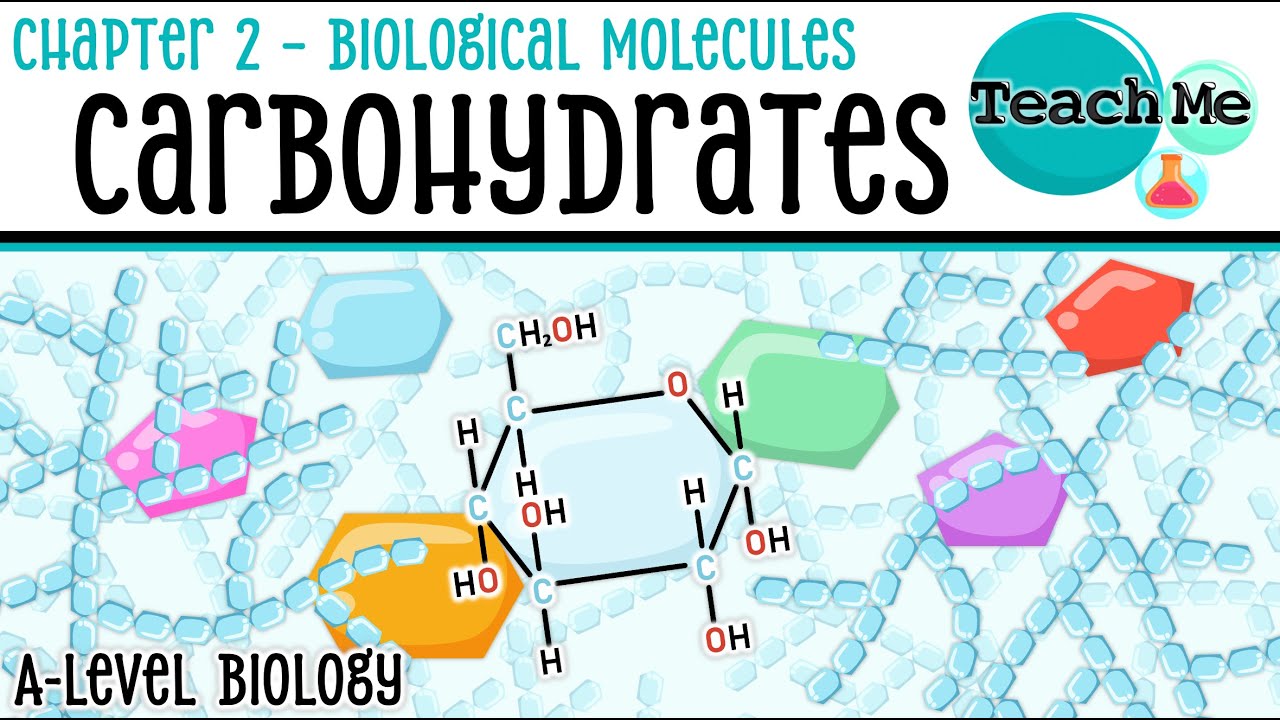
How a glucose molecule is structured (and why its isomerism matters).
The difference between glycogen, starch, and cellulose (and why you can digest one but not the other).
The Benedict's Test: A step-by-step guide to mastering this core practical.
Why cellulose is the ultimate plant superhero.
Stop cramming and start understanding the energy of life.
Time Stamps (Carbohydrates):
00:00:00 Intro
00:00:13 Overview Of This Video
00:00:50 Levels Of An Organism
00:04:57 Monomers V.S Polymers
00:07:04 What Are Carbohydrates?
00:11:10 Monosaccharide Structure
00:21:35 Monosaccharide Functions
00:28:38 Condensation V.S Hydrolysis
00:31:44 Disaccharides
00:39:56 Polysaccharides - Glycogen
00:45:35 Polysaccharides - Starch
00:48:01 Why does glucose NEED to be stored as a polysaccharide?
00:54:32 Polysaccharides - Cellulose
00:59:54 Putting The Pieces Of The Puzzle Together…
01:03:18 Iodine Test
01:05:28 Benedicts Test For Reducing Sugars
01:12:42 Testing For NON-Reducing Sugars
01:15:14 Questions & Answers
01:20:33 Outro
Some quick clarifications:
Number 1:
The formula CnH2nOn is the formula for carbohydrates, more specifically the monosaccharides that serve as building blocks for larger carbohydrates. You will notice that disaccharides and polysaccharides don't suit this formula anymore because of the condensation reactions that occurs to form them. During the condensation reactions water (H2O) is lost which results in the the molecule not suiting the formula anymore.
Number 2:
The term "sugar" is confusing to most people. That is because it has two meaning depending if a scientist says it or a common everyday normal person. In science it refers to ANY monosaccharide or disaccharide. Because they are considered SWEET. Therefor "sugar" does not refer to any polysaccharide as they are NOT SWEET. NOW, when a common everyday normal person says "sugar" they refer to table sugar or sugar in candy. This specifically refers to SUCROSE (a specific disaccharide) which is what table sugar and candy is primarily made off.
Повторяем попытку...
Доступные форматы для скачивания:
Скачать видео
-
Информация по загрузке:


