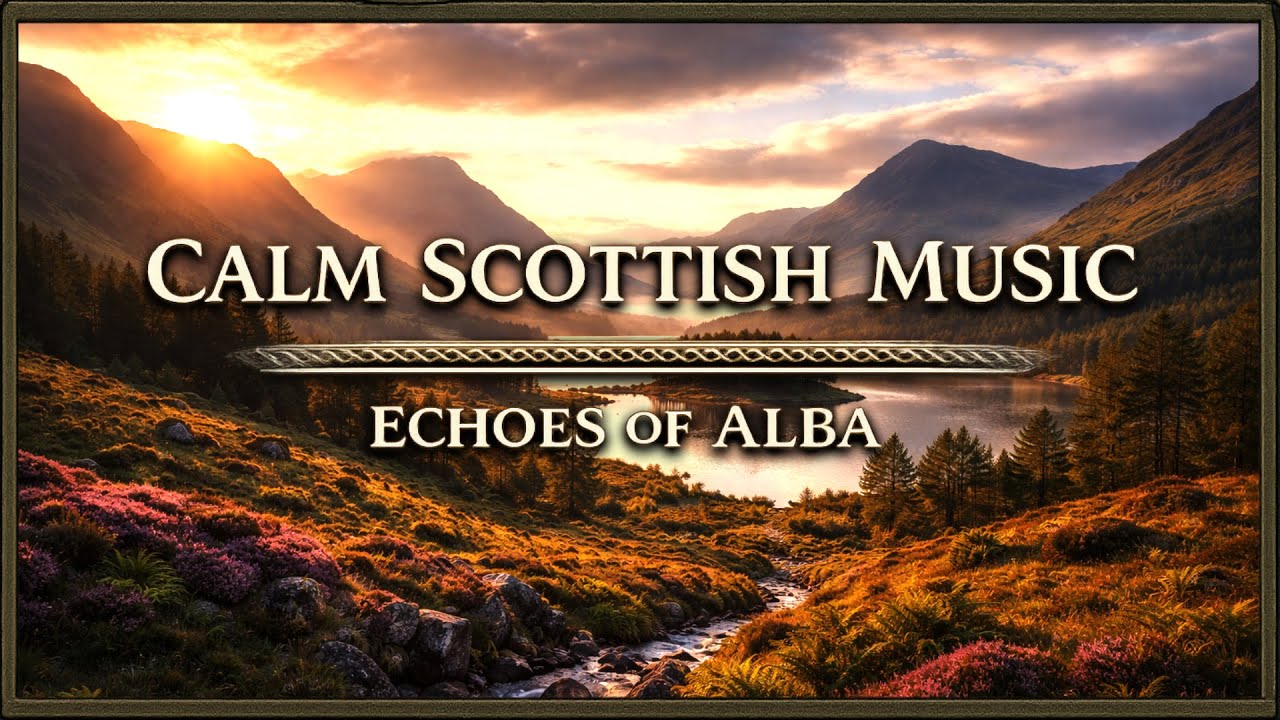
In the Media, scenes from the Braemar Gathering 2018
Автор: Tony Zaccarini
Загружено: 2019-09-16
Просмотров: 390
Описание:
Braemar’s premier cultural and sporting event is the Braemar Gathering which takes place on the first Saturday of September every year.
It is the most famous and best-attended Highland Games in Scotland and features the finest pipe bands, Highland dancers and athletes in a stunning setting surrounded by heather clad mountains.
Braemar Gatherings have a rich history, dating back 900 years but its modern roots can be traced to 1832 when the Braemar Royal Highland Society took responsibility for organising the Highland Games. Royal patronage began with Queen Victoria in 1848 and continues today with regular attendance by many of the Royal Family and Her Majesty the Queen.
It is recommended to stay for the weekend to soak up the atmosphere, pageantry and spectacle of the Games. The massed pipe bands, the tossing of the Braemar caber and the inter services tug o war are just some of the highlights not to miss.
This year, the Queen has joined the crowds to watch the annual Braemar Gathering alongside Prince Charles and Camilla, and royal watchers will be thrilled. Her Majesty attended the annual Braemar Gathering in Scotland after finishing up her summer break at Balmoral, and the Queen is said to thoroughly enjoy the event, which features traditional highland games such as tug-of-war and stone-throwing, as well as charming highland dancing and pipe band performances.
The History
The modern village sits over the Clunie Water, a strategically important crossing on the Elsick Mounth, an ancient trackway used by Picts and Romans. It is located in the upper end of the historical Earldom of Mar, literally the Braes o' Mar. The Scottish Gaelic name Bràigh Mhàrr or upland of Mar was originally applied to the general area; using Braemar for the village dates to around 1870.
Before the 11th century, there were separate hamlets on each bank of the Clunie, Auchendryne on the west and Castleton on the east, or Bail Chasteil. The names are clearly marked on the current Ordnance Survey maps, below 'Braemar'. 'Castleton' refers to Kindrochit Castle, located within the modern village, rather than Braemar Castle to the south, while Kindrochit means 'bridge end'.
According to legend, Malcolm III came to the area in around 1059, and built a timber bridge connecting the east and west banks. 'Kindrochit' means bridge end and the castle is assumed to have been built to protect the crossing. The ruins are considered to be largely of 14th-century origin, replacing the presumed timber-construction of the original castle.
Following the accession of George I in 1714, the Earl of Mar launched the 1715 Jacobite Rising on 6 September at Braemar. In 1795, a Roman Catholic chapel was built on the high-ground to the west of Auchendryne, giving the name to Chapel Brae, which was used as a school.
Until the 20th century, Braemar was largely owned by one of the adjoining Mar Estates, with Auchendryne and Invercauld on one side, Castleton on the other. Allegedly, inter-estate rivalry was a factor in each having its own pub, the Fife Arms Hotel in Auchendryne, and the Invercauld Arms Hotel in Castleton, built over the mound where the Earl of Mar raised the Jacobite standard in 1715.
Auchindryne (to use the spelling by Wyness) from ach' an droighinn (field of the thorn) belonged to a branch of the Farquharsons until it was forfeited in the aftermath of the Jacobite rising of 1745. Later that century it was acquired by William Duff, 1st Earl Fife.
Catholicism has traditionally been strong in the Braemar area, and the bones of Saint Andrew rested in Braemar before being taken to the place now known as St. Andrews. The Catholic Church in Braemar is dedicated to Saint Andrew and was built in 1839.
Johann von Lamont (1805–1879), the Scottish-German astronomer and astrophysicist who pioneered the study of the Earth's magnetic field was born in nearby Corriemulzie
Повторяем попытку...

Доступные форматы для скачивания:
Скачать видео
-
Информация по загрузке:






![Mass Effect 2 - Normandy: Galaxy Map / Scanning Themes (1 Hour of Music) [4k]](https://imager.clipsaver.ru/jqvcqe9KOW0/max.jpg)