Belgium's far-right, anti-immigration Vlaams Belang party finishes 2nd in general election
Автор: AP Archive
Загружено: 2024-06-14
Просмотров: 410
Описание:
(9 Jun 2024)
RESTRICTION SUMMARY:
AGENCY POOL
Londerzeel, Belgium - 9 June 2024
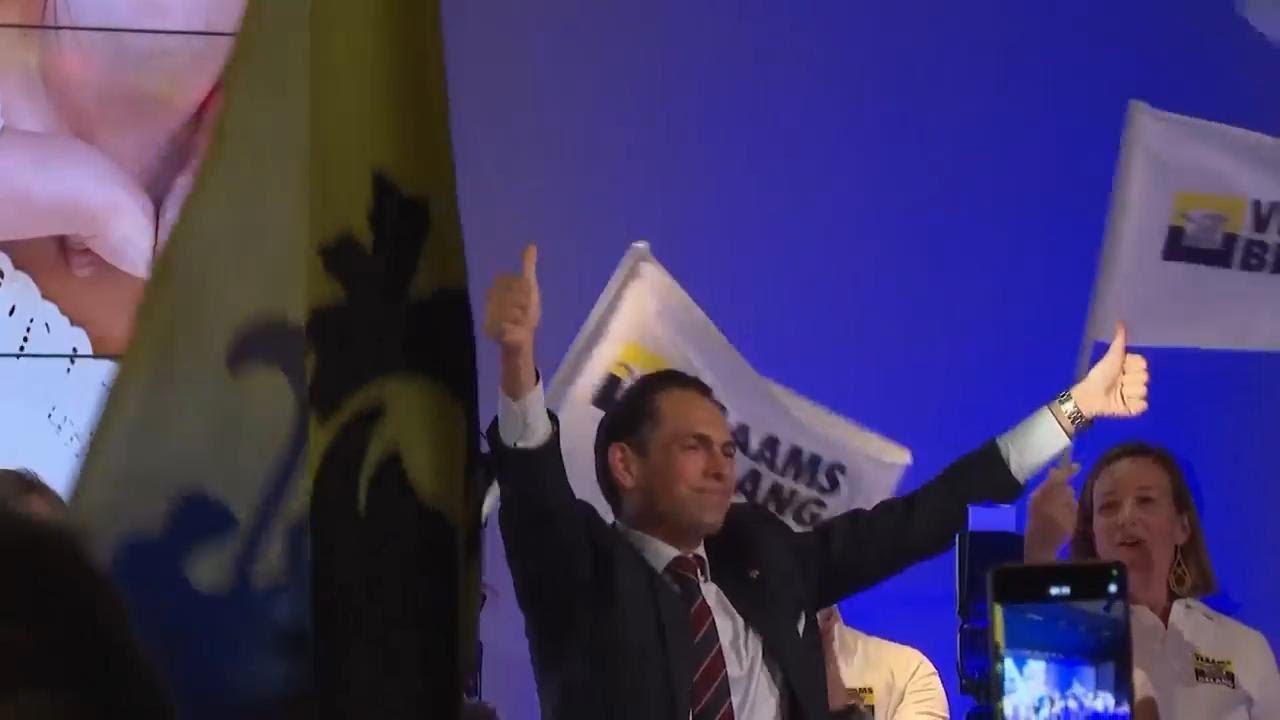
1. Mid shot Far-right Flemish leader Tom van Grieken of the Vlaams Belang party arrives on stage, cheered by supporters
2. Vlaams Belang supporters wave flags and sing the Flemish anthem
3. SOUNDBITE (Dutch) Tom Van Grieken, Vlaams Belang leader:
"Dear friends, in three of the five provinces we have become the largest party, but we have to be honest, we had the ambition to become the largest party in the whole of Flanders. We did not succeed in that. The biggest party is the N-VA and I sincerely congratulate Bart De Wever and all N-VA party workers. They also deserve applause."
4. Mid of supporters clapping
5. SOUNDBITE (Dutch) Tom Van Grieken, Vlaams Belang leader
"Flanders sent a clear message tonight. Flanders want a right-wing and Flemish policy. Therefore, dear Bart, don't drop this historic chance."
6. Mid of supporters clapping
7. Various exterior shots outside a venue where the far-right party Vlaams Belang was hosting election night results watch, replete with party insignia
8. Wide of supporters arriving at venue
STORYLINE:
Flemish nationalist parties dominated general elections in Belgium on Sunday as Prime minister Alexander De Croo’s liberal party took a hit, with difficult coalition talks to form a new government now looming.
Despite polls predicting that the far-right, anti-immigration Vlaams Belang party would become the main political force in the country with 11.5 million inhabitants, the right-wing nationalist New Flemish Alliance (N-VA) retained its first spot, with an expected 22% of the votes, according to provisional results provided by the Interior ministry.
The Vlaams Belang came in second position, with a share of 17.5%, ahead of the Socialist Voruit party, which garnered about 10.5% of the votes.
De Croo’s party managed less than 7% of the votes, lagging well behind the far-left.
Belgian voters returned to the national polls on Sunday, in conjunction with the European Union vote and elections for regional chambers.
Sunday’s results will result in complex negotiations in a country divided by language and deep regional identities. Belgium is split along linguistic lines, with francophone Wallonia in the south and Dutch-speaking Flanders in the north, and governments are invariably formed by coalitions made of parties from both regions.
Vlaams Belang has so far been blocked from entering governments as mainstream parties vowed to exclude it from power under a “cordon sanitaire” doctrine referring to the protective barrier put in place to stop the spread of infectious diseases.
===========================================================
Clients are reminded to adhere to all listed restrictions and to check the terms of their licence agreements. For further assistance, please contact the AP Archive on: Tel +44(0)2074827482 Email: [email protected].
Find out more about AP Archive: http://www.aparchive.com/HowWeWork
Twitter: / ap_archive
Facebook: / aparchives
Instagram: / apnews
You can license this story through AP Archive: http://www.aparchive.com/metadata/you...
Повторяем попытку...
Доступные форматы для скачивания:
Скачать видео
-
Информация по загрузке: