Iran has discovered a weapon that Israel's $2.5 million defense system cannot stop.
Автор: US Wealth Lab
Загружено: 2026-03-10
Просмотров: 6
Описание:
A day-eight dispatch examining the cluster munition campaign against Israel and the cold financial mathematics that make it one of the most strategically effective weapons Iran has deployed.
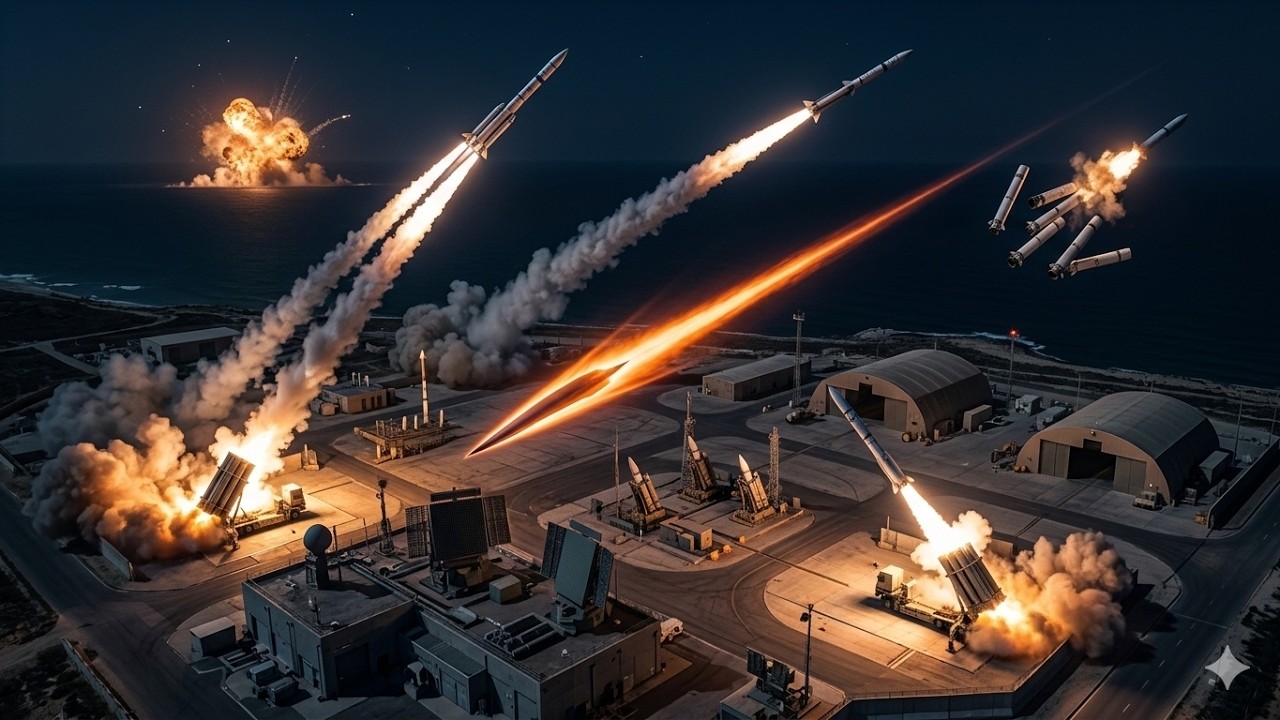
The piece opens with the physical reality of a cluster warhead — a single missile that opens at altitude and scatters between 24 and 80 individual submunitions across an eight-kilometer radius with no guidance, landing silently on rooftops, in gardens, under cars, and on sidewalks, with unexploded units remaining as long-term hazards for anyone who finds them. Iran has confirmed at least six cluster warhead launches against Israel in eight days, killing 11 people and injuring over 1,000.
The core argument is economic. An Arrow interceptor costs $2.5 million per round. An Iranian ballistic missile costs $200,000 to $500,000 to build. Israel fires multiple interceptors per incoming threat because a miss over a city of four million people is unacceptable — producing a cost ratio of 6-to-1 to 15-to-1 in Iran's favor on every single launch. Intercepting over 200 ballistic missiles has already cost Israel between $270 million and $540 million in eight days. Iran's total expenditure to fire them was a fraction of that.
The cluster warhead specifically breaks the logic of missile defense in a way that is conceptual rather than technological. The missile arrives as a single trackable target. Interceptors are fired. But if the warhead opens before destruction, the submunitions are already in free fall — no propulsion, no predictable trajectory, nothing for Arrow or Iron Dome to engage. The defense system was built for one threat architecture. Iran is executing a different one.
The dispatch closes by framing the broader exhaustion problem: the IDF has already expended in eight days roughly the same munitions used across the entire twelve-day war last June, one Gulf ally was requesting emergency interceptor resupply by day four, and THAAD production runs at six units per month — a rate Trump has ordered quadrupled, which itself confirms the stockpile crisis is real. The defense is not failing, it argues. It is being exhausted. And in the economics of modern warfare, exhaustion and failure arrive at the same address.
Повторяем попытку...
Доступные форматы для скачивания:
Скачать видео
-
Информация по загрузке: