आरक्षण हटाओ आंदोलन : कामयाबी की सबसे पहली शर्त क्या है? |
Автор: The News Lens
Загружено: 2026-08-24
Просмотров: 12
Описание:
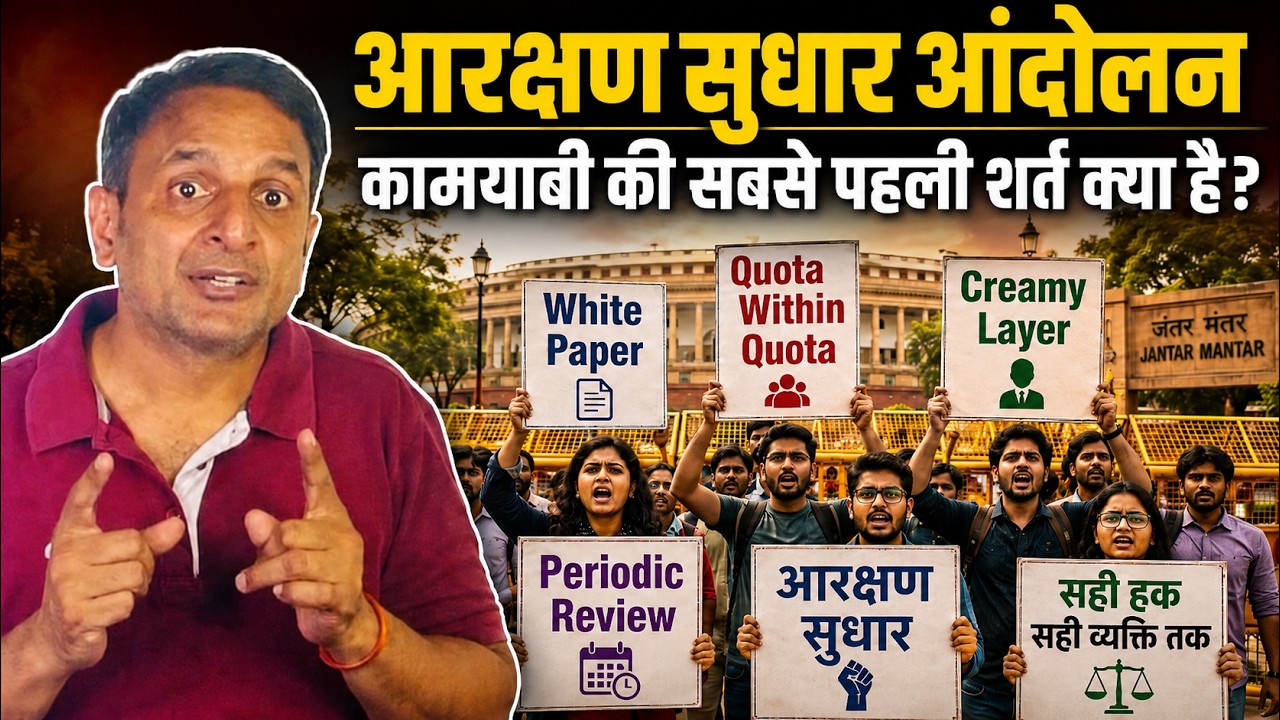
This video from " The News Lens " examines the future of the Reservation Hatao Andolan and asks a crucial question: What is the first condition required for this movement to succeed? In our previous discussion, we examined five major demands associated with the movement— a White Paper on reservation, Quota Within Quota, debate over extending the Creamy Layer principle to SC/ST, Minimum Qualifying Marks, and stronger educational support for economically weaker students. The larger argument is that the movement may be better understood as a Reservation Reform Movement rather than simply an anti-reservation campaign.
The biggest challenge is participation. Many of the proposed reforms—especially Sub-Categorisation, Creamy Layer and Representation Audit—could directly benefit SC, ST and OBC communities that have received comparatively little benefit from the existing reservation system. However, these under-represented communities are not yet prominently visible in the movement. If they themselves begin demanding their fair share, the narrative could shift from Anti-Reservation to Targeted Social Justice.
The video also argues for a Periodic Review of Reservation Benefits. Instead of issuing a White Paper only once, representation and outcomes could be reviewed every 10–15 years to determine which communities have progressed and which remain under-represented. The discussion also explores whether the Creamy Layer formula should become simpler and more transparent, potentially focusing primarily on combined family income—mother, father and candidate—while those crossing the prescribed limit compete through Open Competition.
Another major issue is Quota Within Quota or Sub-Categorisation. The upcoming 2027 Census and caste-wise data could provide important population information, while government jobs and higher-education representation data could help identify which communities remain behind. Such information could strengthen the case for more targeted distribution of reservation benefits.
The video then examines the politics of increasing reservation quotas. Building better schools, hospitals, industries and employment opportunities requires money, time and measurable performance. By contrast, promising a higher quota can create an immediate political message among organised communities. Telangana, for example, currently has 29% BC reservation in jobs and education and 34% in local bodies, while the state government has pushed for 42%. Madhya Pradesh has debated increasing OBC reservation from 14% to 27%, while Tamil Nadu already operates a 69% reservation framework.
If the Reservation Reform movement grows, the political debate could shift from “How much more quota?” to “How effectively is the existing quota working?” It may also change caste politics by giving smaller and under-represented communities greater bargaining power, new political leadership and a stronger electoral voice.
Ultimately, the movement’s success will not depend only on crowds or social-media support. Its first and most important condition is to bring the very SC, ST and OBC communities that stand to benefit from these reforms into the movement in large numbers. Only then can Reservation Reform emerge as a credible electoral issue, political opportunity and targeted social justice agenda.
#ReservationReform #ReservationHataoAndolan #QuotaWithinQuota #CreamyLayer #SCSTReservation #OBCReservation #SubCategorisation #CastePolitics #SocialJustice #TheNewsLens #beyondheadlines
Повторяем попытку...
Доступные форматы для скачивания:
Скачать видео
-
Информация по загрузке: