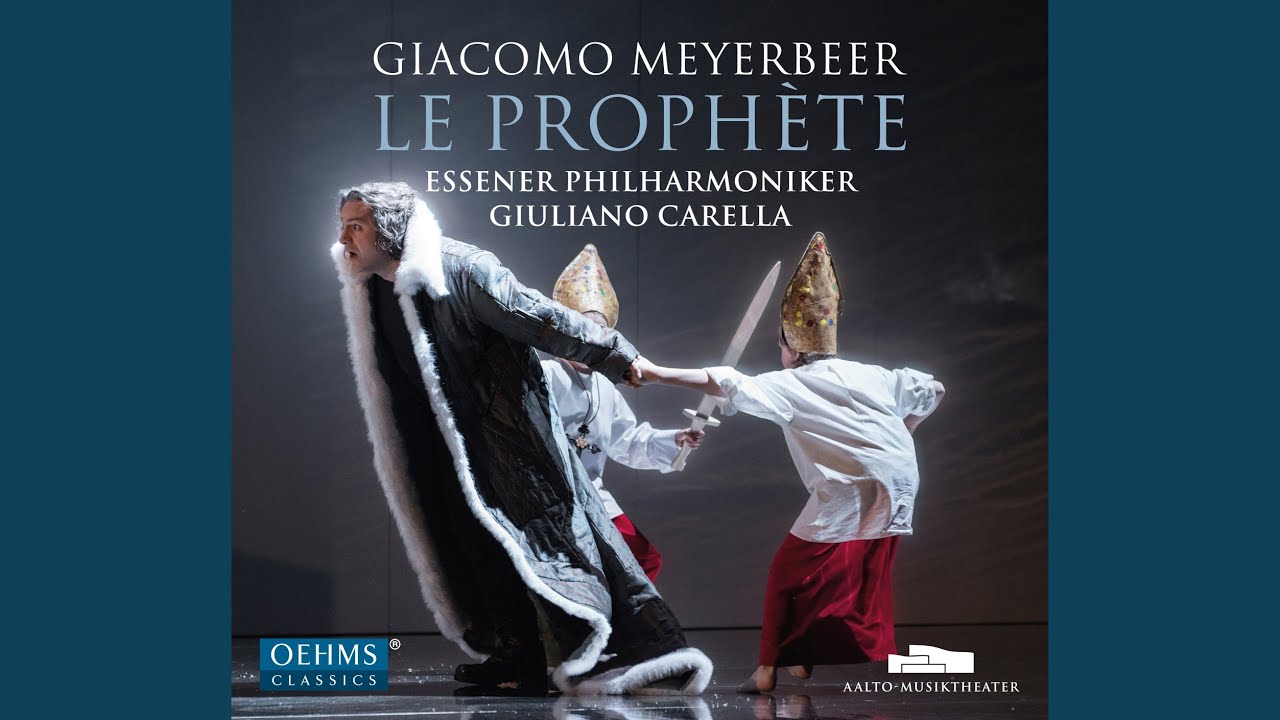
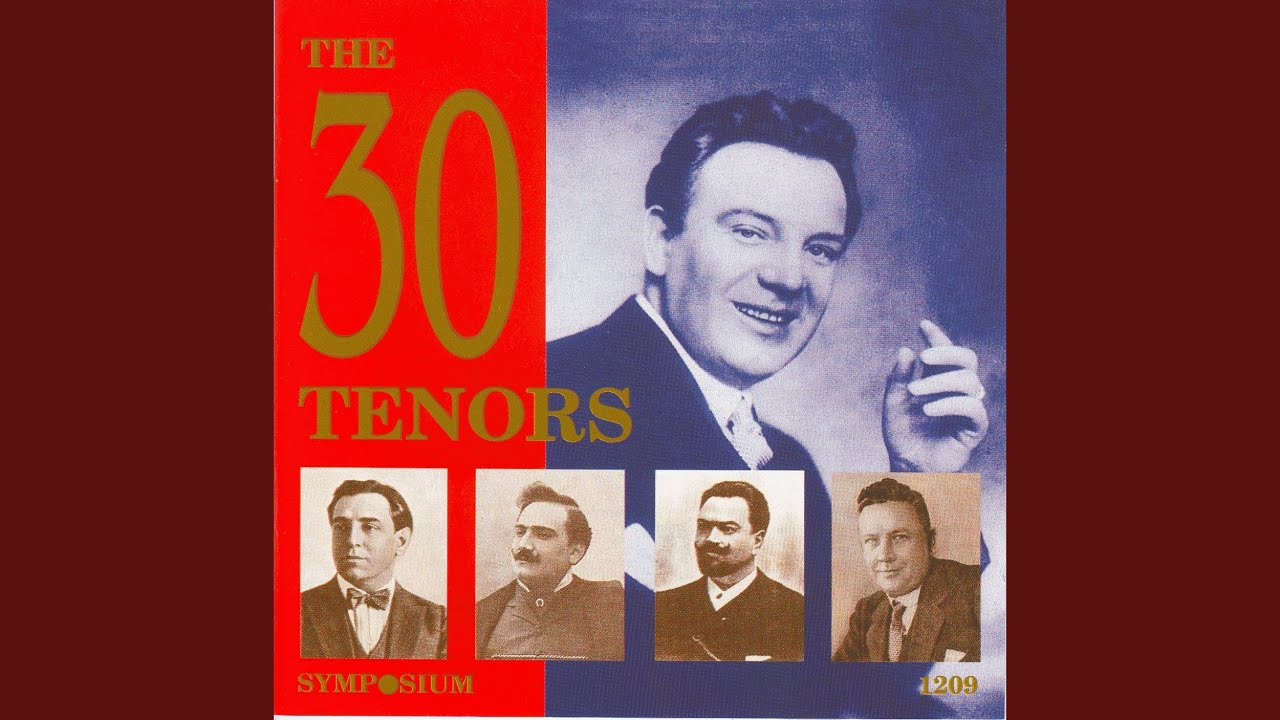
Ivan Ershov - Pour Berthe (Le Prophète)
Автор: Dead Tenors' Society
Загружено: 2018-02-14
Просмотров: 855
Описание:
Ivan Ershov (1867-1943) was the greatest Russian dramatic tenor of his generation. His origins were quite humble. An illegitimate child, he was born in Novocherkassk in Western Russia and raised in poverty. When he reached his teens, Ershov began studies to become a railroad engineer. The young man also began singing in local amateur choirs and found that his singing was attracting much more attention that his mechanical skills. At age 19, he abandoned his railroad career and traveled to Moscow to begin his vocal studies. In order to scrape together enough money to survive (and to pay for lessons), Ershov did odd jobs and sang at fairs and cafes. The struggling artist caught the attention of famed conductor and composer Anton Rubinstein, who secured a scholarship for him to study at the St. Petersburg Conservatory. While there, Ershov worked with Stanislav Ivanovich Gabel and Joseph Palacek, but it is not known if he actually graduated. Ershov’s operatic debut came about in 1893 as Gounod’s Faust in St. Petersburg. However, realizing that he needed further study, Ershov left St. Petersburg for Milan, where he spent a year working on stagecraft with celebrated actor Enrico Rossi. During his time in Italy, the young tenor sang with a small company in Reggio Emilia, performing Don José in Carmen and Canio in Pagliacci before returning to his homeland in 1894.
Back in Russia, Ershov accepted a contract with the opera in Kharkov, where he spent a season singing a variety of roles in such works as I Puritani, Roméo et Juliette, Ernani, Samson et Dalila, Prince Igor and Les Huguenots. He made a guest appearance as Faust at St. Petersburg’s Mariinsky Theater in the spring of 1895, which led to a permanent contract with the company. Ershov spent the next three decades as leading tenor at Mariinsky. His repertoire grew steadily larger with more and more dramatic roles added as the years passed. Eventually, Ershov would amass a repertoire of over 50 roles including Lensky in Yevgeny Onegin, Tsar Berendey in The Snow Maiden, Grishka in Legend of the Invisible City of Kitezh, Truffaldino in The Love For Three Oranges, Bogdan Sobinin in The Life for the Tsar, Mikhail Tucha in The Maid of Pskov, Prince Vasily Golitsyn in Khovanshchina, Faust in Mefistofele, Radames in Aïda, Roland in Esclarmonde, John of Leyden in Le Prophète, Florestan in Fidelio, and the title roles in Kashchey the Deathless, Sadko, Otello, Tannhäuser, Lohengrin, Siegfried, and Tristan und Isolde.
In spite of (or, perhaps, because of) his enormous success in St. Petersburg, Ershov never found it necessary to make appearances abroad. Lucrative offers from major European theaters were all turned down, including an invitation from Cosima Wagner to participate in Bayreuth’s 1901 Ring Cycle. Ershov politely declined the offer, explaining that he had grown accustomed to singing all of his Wagnerian parts in Russian and did not wish to relearn them in the original German.
In 1915, Ershov began teaching at the Conservatory in St. Petersburg, but continued his operatic performances as well as appearing in concert, recital and oratorio. He also dedicated much of his time to producing operatic productions for young artists, with the intention of bringing opera to the masses. Ershov retired from the stage in 1929 but remained a major part of the St. Petersburg (or Leningrad, as it was known following the Revolution) arts scene. He was granted the award of People’s Artist of the USSR in 1938 and was awarded an honorary doctorate by the Conservatory in 1941. After the German invasion made living in Leningrad perilous, the elderly tenor was evacuated to the Uzbekistani city of Tashkent, where he passed away two weeks after his 76th birthday on November 21, 1943.
Ivan Ershov’s recordings are among the rarest of the rare. He made fewer than a dozen discs for G&T and Columbia, both sets being made in 1903. Ershov’s voice recorded remarkably well, allowing the modern listener to hear the clarion tone and impeccable artistry of this magnificent tenor. In this recording, Ershov sings a Russian translation of the Pastorale, "Pour Berthe, je moi soupire" from Meyerbeer's Le Prophète. This was recorded in St. Petersburg for G&T in 1903.
Повторяем попытку...

Доступные форматы для скачивания:
Скачать видео
-
Информация по загрузке: